Kirjojen hintavertailu – 12 859 829 kirjaa ja 27 kauppaa

Kirjailija

Monroe E. Price

Kirjat ja teokset yhdessä paikassa: 9 kirjaa, julkaisuja vuosilta 1989–2014, suosituimpiin kuuluu Public Service Broadcasting in Transition. Vertaile teosten hintoja ja tarkista saatavuus suomalaisista kirjakaupoista.

9 kirjaa

Kirjojen julkaisuvuodet: 1989–2014.

Public Service Broadcasting in Transition

Public Service Broadcasting in Transition

Monroe E. Price; Marc Raboy

Kluwer Law International
2003
sidottu
Few will deny that public service broadcasting--broadcasting that is controlled neither by the state nor by private media corporations--is an essential ingredient in modern democracy. But, as a number of initiatives in transition economies have shown, the inception and development of a strong public broadcasting system is a Herculean task that is easily sidetracked by politics or ideology, or stalled by lack of funding. Especially when state budgets are stretched, the expense is hard to justify. This collection of documents, comments, and cases brings all the major issues in public service broadcasting policy into focus and sets the problems to be addressed in sharp relief. It draws on white papers from NGOs and broadcasters, legislation from a wide range of countries (and a model law), accounts of public broadcasting efforts in transition states, analyses of evolving policy in established systems, government regulatory guidelines, and a great deal more. Among the matters touched upon are the following: the principles of public service broadcasting and their cultural and economic justification; limiting state interference; the place of public broadcasting in a multi-channel, "market-driven" world; the appropriate mix of public and private revenues; objectivity and impartiality in broadcasting; how institutional structures can shape programming strategies; the use of competition law to adjust relations between public and private broadcasting; EU accession standards for public service broadcasting; and the impact of digital broadcasting.
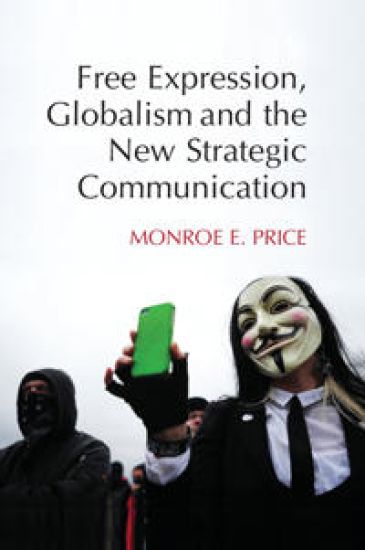
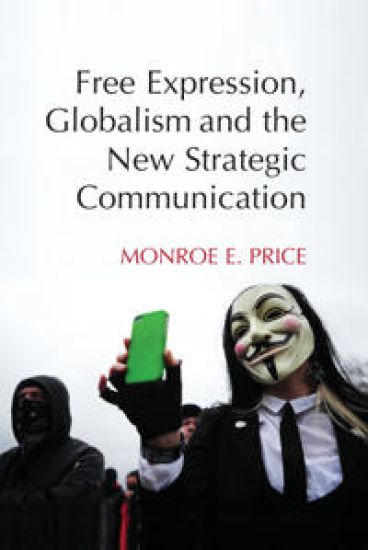
Free Expression, Globalism, and the New Strategic Communication
Vast changes in technologies and geopolitics have produced a wholesale shift in the way states and other powerful entities think about the production and retention of popular loyalties. Strategic communication has embraced these changes as stakes increase and the techniques of information management become more pervasive. These shifts in strategic communications impact free speech as major players, in a global context, rhetorically embrace a world of transparency, all the while increasing surveillance and modes of control, turning altered media technologies and traditional media doctrines to their advantage. This book exposes the anxieties of loss of control, on the one hand, and the missed opportunities for greater freedom, on the other. 'New' strategic communication arises from the vast torrents of information that cross borders and uproot old forms of regulation. Not only states but also corporations, nongovernmental organizations, religious institutions, and others have become part of this new constellation of speakers and audiences.
Objects of Remembrance

Objects of Remembrance

Monroe E. Price

Central European University Press
2009
nidottu
This is a memoir about the power of American assimilation and opportunity in the face of persisting refugee realities. Like Isaac Bashevis Singer, Monroe Price recounts the continuing impact of European identities as families, cast from their homes by the rise of Hitler and the Third Reich, struggle to find their way in a new and challenging environment. In a series of reflections, Price, who was born to a Jewish family in Vienna in 1938 and left when he was seven months old, seeks to create the Vienna of his infancy, including Jewish life, anti-Semitism, the Anschluss, and Kristallnacht (during which his father was arrested). He shifts to scenes of American socialization in the places he moved with his parents:: Macon, Georgia, Cincinnati, Ohio, and the experience of New York City. Through these reflections, Price illuminates ideas about family, religion, friends and schooling as well as deeply personal issues such as home, food and intimacy. Price’s memoir weaves complicated strands—his Viennese origins, campaigns to distribute Jewish refugees away from New York City, the special qualities of Midwestern Ohio life in the 1950s—and the contrasting patterns of adjustment by different generations in his family in the American landscape. As he traces the particular path of his own life, Price reveals a more universal story of adjustment, and the relationship between a marginal community and the drama of American citizenship.
Self-Regulation and the Internet

Self-Regulation and the Internet

Monroe E. Price; Stefaan G. Verhulst

Kluwer Law International
2004
nidottu
Self-Regulation and the Internet examines how self-regulatory entities for content relate to other quasi-legal and state institutions, what powers are accorded to or seized by self-regulatory institutions, and how the use of self-regulation can contribute to the more effective and more efficient realization of both economic and societal goals. This book offers: - a general and theoretical examination of self-regulation, focusing on codes of conduct; - approaches to the methodology and process for adopting such codes; - descriptions and evaluations of technical devices as self-regulatory tools; and- an analysis of Internet self-regulation in a converged and digital environment.
Russian Media Law and Policy in the Yeltsin Decade

Russian Media Law and Policy in the Yeltsin Decade

Monroe E. Price; Andrei Richter; Peter K. Yu

Kluwer Law International
2002
sidottu
One of the great transitions as the Soviet Union dissolved involved the transformation of state broadcasting in Russia and the Newly Independent States. This book deals with the turmoil associated with struggles in Post-Soviet Russia: struggles for journalistic editorial autonomy, the bloody media wars between the Yeltsin government and the legislature, the role of the media in the coup, and the role of the United States, other governments and non-government organizations in shaping the new media. The story in which the media oscillates between independence and renewed modes of control.
Parental Control of Television Broadcasting

Parental Control of Television Broadcasting

Monroe E. Price; Stefaan Verhulst

Routledge Member of the Taylor and Francis Group
2001
sidottu
This project, originally developed for the European Community, examines parental roles in controlling television programs watched by children in Europe. The structure of the study includes: *an analysis of the technical devices available to assist in parental control of television broadcasting services, including descriptions of devices, their cost, availability, and the infrastructure needed to introduce them; *a corresponding analysis of potential ratings or labeling systems to work in conjunction with or in the place of technical devices, enabling a comparative analysis of rating systems used in film, video, and online services; and *an overview and assessment of the educational and awareness measures in the field of protection of minors and harmful content, providing the data for the review of available considerations in this field of viewer literacy. In addition to these main strands of analysis, the study provides for background information and analysis in the following areas: *an overview of the main media theories focusing on the effect and impact of specific types of content on children and their behavior; *an assessment of the economic impact and social efficacy of different protective measures; and *a comparison of the regulatory contexts and rating systems for film, video, television, and online services concerning the protection of minors from harmful content. This volume is intended for scholars and students in comparative media studies, media policy, and regulation.
Parental Control of Television Broadcasting

Parental Control of Television Broadcasting

Monroe E. Price; Stefaan Verhulst

Routledge Member of the Taylor and Francis Group
2001
nidottu
This project, originally developed for the European Community, examines parental roles in controlling television programs watched by children in Europe. The structure of the study includes: *an analysis of the technical devices available to assist in parental control of television broadcasting services, including descriptions of devices, their cost, availability, and the infrastructure needed to introduce them; *a corresponding analysis of potential ratings or labeling systems to work in conjunction with or in the place of technical devices, enabling a comparative analysis of rating systems used in film, video, and online services; and *an overview and assessment of the educational and awareness measures in the field of protection of minors and harmful content, providing the data for the review of available considerations in this field of viewer literacy. In addition to these main strands of analysis, the study provides for background information and analysis in the following areas: *an overview of the main media theories focusing on the effect and impact of specific types of content on children and their behavior; *an assessment of the economic impact and social efficacy of different protective measures; and *a comparison of the regulatory contexts and rating systems for film, video, television, and online services concerning the protection of minors from harmful content. This volume is intended for scholars and students in comparative media studies, media policy, and regulation.
Shattered Mirrors

Shattered Mirrors

Monroe E. Price

Harvard University Press
1989
sidottu
The AIDS epidemic has touched the lives of all Americans. An entire generation has been forced to redefine the way it looks at intimacy. Our very images of ourselves are being altered in the wake of this tragic illness. Yet we are only now beginning to discover the true extent of the change AIDS has wrought on American society. This massive challenge to public health is creating a fault line beneath our institutions, threatening to undermine much that we have taken for granted about the pillars of our culture. Looking out across the landscape of AIDS, we sense a fundamental shift in the way we think about ourselves, about others, and about government. Shattered Mirrors is a deeply moving meditation on the impact AIDS is having on American consciousness. AIDS has become a moral lesson for our nation, Monroe Price argues, but not the narrow lesson about the dangers of deviancy that certain segments of society have professed. The AIDS epidemic challenges some of our most cherished ideas about individual autonomy, free expression, fairness, and confidence in the future. As this book points out, the ultimate legacy of the AIDS epidemic is far more than its terrible impact on the health of the citizenry. As the disease grinds on, several traditional barriers between church and state, government and the media, citizen and consumer have begun to erode, while other barriers of class, race, and lifestyle are growing larger. It is too early to say whether these and similar changes will be permanent, but as long as there is uncertainty about how devastating AIDS will prove to be to our society, we will continue to debate its meaning and how we should respond to the threat it poses to all of us. In the long run, Price maintains, AIDS may force us to reexamine the role government should play in shaping our personal lives. More than this, it may well oblige us to redefine what we mean by identity and community in a democracy under siege.