

Kirjailija
Montague Summers
Kirjat ja teokset yhdessä paikassa: 140 kirjaa, julkaisuja vuosilta 1928–2026, suosituimpiin kuuluu The Works of Aphra Behn. Vertaile teosten hintoja ja tarkista saatavuus suomalaisista kirjakaupoista.
140 kirjaa
Kirjojen julkaisuvuodet: 1928–2026.


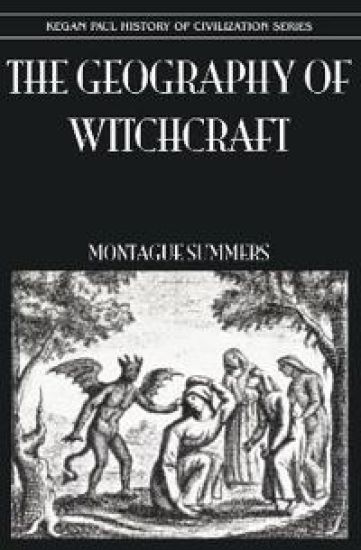
In this work the author gives detailed evidence for the ascent of Witchcraft set out in his previous volume of The History Witchcraft and Demonology. The epedemic that occurred is trated as it appeared in various countries and comprehensive chapters deal with Grece, rome, England, Scotland, New England, France, Germany, Italy and Spain.
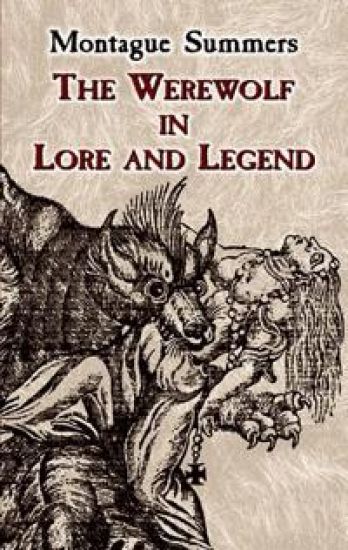
Werewolf in Lore and Legend
Montague Summers
Dover Publications Inc.
2003
nidottu
Halvin toimitettuna 21,30 €
The first definitive work on werewolfery, this book was written by a venerable author of occult studies. Unsurpassed in its sheer scope and depth, it employs a theological and philosophical approach, incorporating an extensive range of historical documentation and folklore. Summers examines the supernatural practice of shapeshifting, notes the finer distinctions between werewolfery and lycanthropy, and explores the differences of opinion on exactly how ordinary humans are transformed into creatures of "unbridled cruelty, bestial ferocity, and ravening hunger." His Gothic style, rich in fascinating examples and anecdotes, offers compelling fare for lovers of esoteric lore.







"Throughout the whole vast shadowy world of ghosts and demons there is no figure so terrible, no figure so dreaded and abhorred, yet looked upon] with such fearful fascination, as the vampire, who is himself neither ghost nor demon, but yet who partakes the dark natures and possesses the mysterious and terrible qualities of both." So begins this riveting study by one of the foremost authorities on witchcraft and occult phenomena. An indefatigable researcher, Summers explores the presence of vampires in Greek and Roman lore, in England and Ireland during Anglo-Saxon times, in Hungary, Czechoslovakia, Russia, Romania, and Bulgaria, even in modern Greece. More than just a collection of library lore, however, this detailed examination of the history of vampirism in Europe also includes anecdotes and firsthand accounts gathered by the author from peasants in places where belief in vampires was still common. A fascinating, sometimes terrifying book, "The Vampire in Lore and Legend" is a "mine of out-of-the-way information full of unspeakable tales," writes "The New York Times"; and according to "Outlook," "a fascinating inquiry into the vampire legend . . . a storehouse of curious and interesting lore." Of great interest to any enthusiast of the supernatural and the occult, this book will appeal as well to the legions of general readers captivated by this ancient myth.
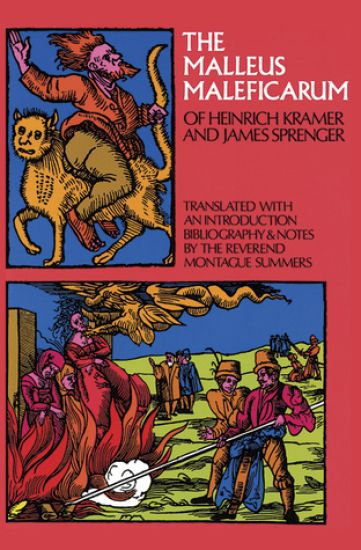
The Malleus Maleficarum
Heinrich Kramer; James Sprenger; Montague Summers
Dover Publications Inc.
2000
nidottu
Halvin toimitettuna 22,40 €
For nearly three centuries Malleus Maleficarum (The Witches' Hammer) was the professional manual for witch hunters. This work by two of the most famous Inquisitors of the age is still a document of the forces of that era's beliefs. Under a Bull of Pope Innocent VIII, Kramer and Sprenger exposed the heresy of those who did not believe in witches and set forth the proper order of the world with devils, witches, and the will of God. Even if you do not believe in witchcraft, the world of 1484 did. Contemporary cases illustrate methods by which witches attempt to control and subvert the world: How and why women roast their first-born male child; the confession of how to raise a tempest by a washwoman suspended "hardly clear of the ground" by her thumbs; methods of making a formal pact with the Devil; how witches deprive men of their vital member; and many others. Methods of destroying and curing witchcraft, such as remedies against incubus and succubus devils, are exemplified and weighed by the authors. Formal rules for initiating a process of justice are set down: how it should be conducted and the method of pronouncing sentence; when to use the trial by the red-hot-iron; how the prosecutor should protect himself; how the body is to be shaved and searched for tokens and amulets, including those sewn under the skin. As Summers says, it was the casebook on every magistrate's desk. Montague Summers has given a very sympathetic translation. His two introductions are filled with examples of witchcraft and the historical importance of Malleus Maleficarum. This famous document should interest the historian, the student of witchcraft and the occult, and the psychologist who is interested in the medieval mind as it was confronted with various forces which could be explained only by witchcraft. Reprint of the 1928 edition.
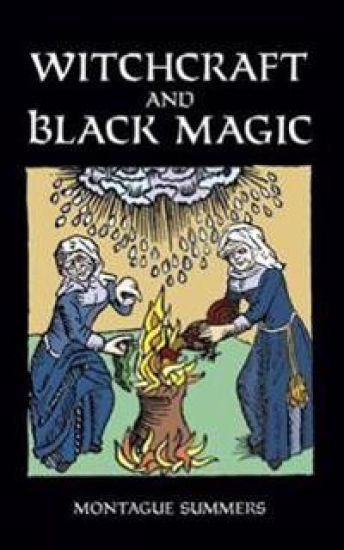
Intriguing, thoroughly researched volume provides expert historical view of demonology and the occult, drawing information from the Bible, literary classics, personal memoirs, correspondence, and court records. Scholarly, yet highly readable study defines witchcraft, then examines ceremonial practices, the casting of spells and conjuring, celebration of the Black Mass, and much more. "Learned, honest, and amusing." -- H. L. Mencken.

Originally published between 1920-70,The History of Civilization was a landmark in early twentieth century publishing. It was published at a formative time within the social sciences, and during a period of decisive historical discovery. The aim of the general editor, C. K. Ogden, was to summarize the most up-to-date findings and theories of historians, anthropologists, archaeologists and sociologists. This reprinted material is available as a set or in the following groupings or as individual volumes: * Prehistory and Historical Ethnography Set of 12: 0-415-15611-4: £800.00 * Greek Civilization Set of 7: 0-415-15612-2: £450.00 * Roman Civilization Set of 6: 0-415-15613-0: £400.00 * Eastern Civilizations Set of 10: 0-415-15614-9: £650.00 * Judaeo-Christian Civilization Set of 4: 0-415-15615-7: £250.00 * European Civilization Set of 11: 0-415-15616-5: £700.00

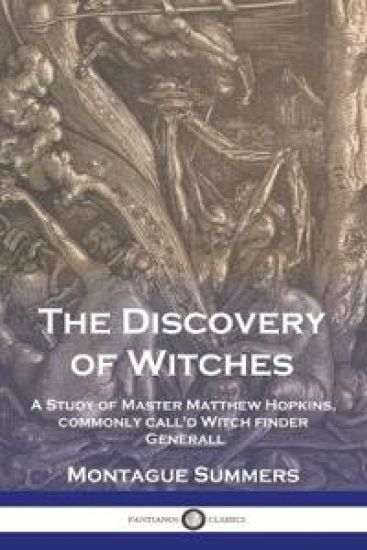
Occult historian and scholar Montague Summers offers his narration of The Discovery of Witches, an essay written by the notorious witch hunter Matthew Hopkins. Working in the 1640s, Hopkins was the driving force behind the execution of more than a hundred alleged witches. The Discovery of Witches was designed as a guide to finding, interrogating and executing suspected witches. Various marks upon the body are mentioned as devilish, while tests of witchcraft such as swimming - whereby a woman was forcibly immersed in water - were devised as a means of determining a person's affinity to illicit magic. Summers offers an extensive introductive commentary, describing characteristics of various cases found in historic court records from Medieval times onward. Both male and female individuals were accused of possessing magical powers, and were hauled before local magistrates or barons to face punishment. On some occasions, maladies suffered by locals or livestock were attributed to destructive curses placed by the purported magic user. Such cases were frequent until the early 18th century, when laws involving illicit wizardry and witching were removed from England's statutes.