![Oeuvres de M. de Montesquieu. [Tome 1] (Éd.1767)](/covers/9782012596641.jpg)
Kirjailija
Montesquieu
Kirjat ja teokset yhdessä paikassa: 133 kirjaa, julkaisuja vuosilta 1049–2026, suosituimpiin kuuluu Persian Letters. Vertaile teosten hintoja ja tarkista saatavuus suomalaisista kirjakaupoista.
133 kirjaa
Kirjojen julkaisuvuodet: 1049–2026.
![Oeuvres de M. de Montesquieu. [Tome 2] (Éd.1767)](/covers/9782012758902.jpg)





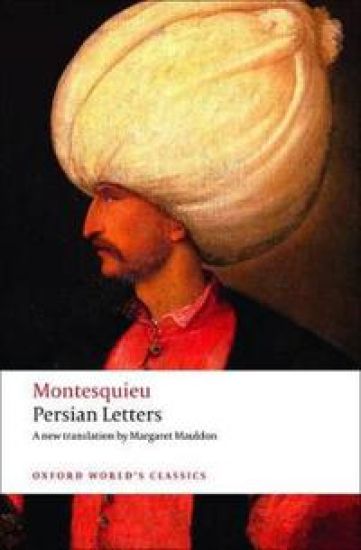
'Oh! Monsieur is Persian? That's most extraordinary! How can someone be Persian?' Two Persian travellers, Usbek and Rica, arrive in Paris just before the death of Louis XIV and in time to witness the hedonism and financial crash of the Regency. In their letters home they report on visits to the theatre and scientific societies, and observe the manners and flirtations of polite society, the structures of power and the hypocrisy of religion. Irony and bitter satire mark their comparison of East and West and their quest for understanding. Unsettling news from Persia concerning the female world of the harem intrudes on their new identities and provides a suspenseful plot of erotic jealousy and passion. This pioneering epistolary novel and work of travel-writing opened the world of the West to its oriental visitors and the Orient to its Western readers. This is the first English translation based on the original text, revealing this lively work as Montesquieu first intended. ABOUT THE SERIES: For over 100 years Oxford World's Classics has made available the widest range of literature from around the globe. Each affordable volume reflects Oxford's commitment to scholarship, providing the most accurate text plus a wealth of other valuable features, including expert introductions by leading authorities, helpful notes to clarify the text, up-to-date bibliographies for further study, and much more.
Based on the 1758 edition, this translation strives for fidelity and retains Montesquieu's paragraphing. George R. Healy's Introduction discusses The Persian Letters as a kind of overture to the Enlightenment, a work of remarkable diversity designed more to explore a problem of great urgency for eighteenth century thought than to resolve it: that of discovering universals, or at least the pragmatic constants, amid the diversity of human culture and society, and of confronting the proposition that there are no values in human relationships except those imposed by force or agreed upon in self-interested conventions.
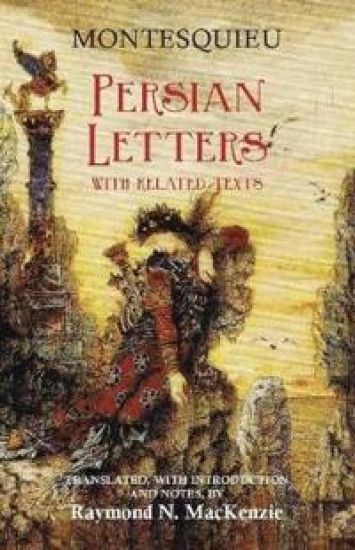
Based on the 1758 edition, this translation strives for fidelity and retains Montesquieu's paragraphing. George R. Healy's Introduction discusses The Persian Letters as a kind of overture to the Enlightenment, a work of remarkable diversity designed more to explore a problem of great urgency for eighteenth century thought than to resolve it: that of discovering universals, or at least the pragmatic constants, amid the diversity of human culture and society, and of confronting the proposition that there are no values in human relationships except those imposed by force or agreed upon in self-interested conventions.
Considerations on the Causes of the Greatness of the Romans and their Decline
Montesquieu
Hackett Publishing Co, Inc
1999
pokkari
"Republication of David Lowenthal's elegant translation of Montesquieu's neglected study of the Romans--an indispensable source for understanding the philosopher's treatment of Rome in The Spirit of the Laws--makes the book available to a new generation of English-language readers. Lowenthal's perceptive introduction and useful notes also deserve the attention of those who can read Montesquieu in the original French." --James W. Muller, University of Alaska, Anchorage
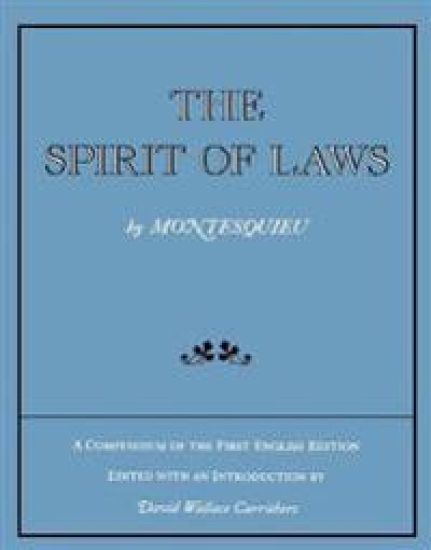
Montesquieu's "The Spirit of Laws" is an enduring classic of social and political theory deserving a fresh reading every generation. The modern reader, however, is likely to find a work that ran to over a thousand pages in its two-volume first edition a bit overwhelming. Presented here, therefore, is the first English-language compendium of "The Spirit of Laws", together with the first English translation of the posthumously published treatise containing the physiological theory underlying Montesquieu's theory of climate.