
Kirjojen hintavertailu – 12 859 818 kirjaa ja 27 kauppaa

Kirjailija

Montserrat Miller

Kirjat ja teokset yhdessä paikassa: 3 kirjaa, julkaisuja vuosilta 2015–2024, suosituimpiin kuuluu Digestible Governance. Vertaile teosten hintoja ja tarkista saatavuus suomalaisista kirjakaupoista.

3 kirjaa

Kirjojen julkaisuvuodet: 2015–2024.

Digestible Governance

Digestible Governance

Jessica Boll; Robert Davidson; Suzanne Dunai; Luis Benito Garcia Alvarez; Silvina Schammah Gesser; Susy Gruss; Aitana Guia; F. Xavier Medina; Montserrat Miller; Alex Gomez del Moral; H. Rosi Song

VANDERBILT UNIVERSITY PRESS
2024
sidottu
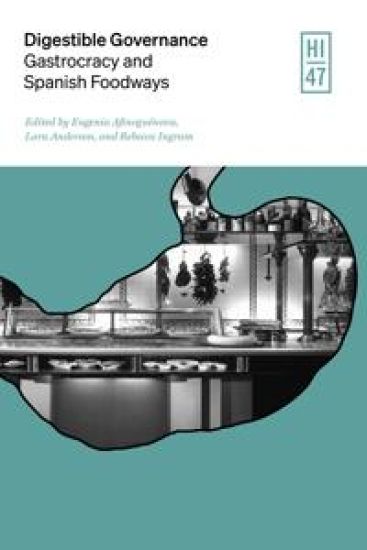
The term “gastrocracy” refers to the appropriation of discourses and practices related to the sourcing, preparation, distribution, and consumption of food for political purposes. The intersections of gastronomy and governance, dating in Spain to the last quarter of the nineteenth century, have become highly visible over the past decade, when political debates around nationalism in its different forms have taken the guise of discussions about regional and local cuisines. Concomitant with the rise of the “slow food” movement and following UNESCO’s addition in 2011 of “Gastronomic Meal of the French” to its list of Intangible Cultural Heritage of Humanity, public and private associations all around Spain have been established with the goal of achieving recognition by UNESCO for Spanish, Catalan, and other national cuisines. In 2016, Gastro Marca EspaÑa—an association and a web portal—was launched to raise the profile of food in Spain’s national brand. Eliciting wide public participation, coopted for political purposes, regarded as a factor of economic development on any scale, and integrated into every so-called banal nationalism, the production, distribution, and consumption of food are highly relevant for historical analysis. Seeking to encourage a broader discussion about Peninsular gastrocracies, this book brings together an interdisciplinary group of scholars from different sides of the Atlantic and the Pacific who have spearheaded research on gastronomy and governance in Spain.
Digestible Governance

Digestible Governance

Jessica Boll; Robert Davidson; Suzanne Dunai; Luis Benito Garcia Alvarez; Silvina Schammah Gesser; Susy Gruss; Aitana Guia; F. Xavier Medina; Montserrat Miller; Alex Gomez del Moral; H. Rosi Song

VANDERBILT UNIVERSITY PRESS
2024
nidottu
The term “gastrocracy” refers to the appropriation of discourses and practices related to the sourcing, preparation, distribution, and consumption of food for political purposes. The intersections of gastronomy and governance, dating in Spain to the last quarter of the nineteenth century, have become highly visible over the past decade, when political debates around nationalism in its different forms have taken the guise of discussions about regional and local cuisines. Concomitant with the rise of the “slow food” movement and following UNESCO’s addition in 2011 of “Gastronomic Meal of the French” to its list of Intangible Cultural Heritage of Humanity, public and private associations all around Spain have been established with the goal of achieving recognition by UNESCO for Spanish, Catalan, and other national cuisines. In 2016, Gastro Marca EspaÑa—an association and a web portal—was launched to raise the profile of food in Spain’s national brand. Eliciting wide public participation, coopted for political purposes, regarded as a factor of economic development on any scale, and integrated into every so-called banal nationalism, the production, distribution, and consumption of food are highly relevant for historical analysis. Seeking to encourage a broader discussion about Peninsular gastrocracies, this book brings together an interdisciplinary group of scholars from different sides of the Atlantic and the Pacific who have spearheaded research on gastronomy and governance in Spain.
Feeding Barcelona, 1714-1975

Feeding Barcelona, 1714-1975

Montserrat Miller

Louisiana State University Press
2015
nidottu
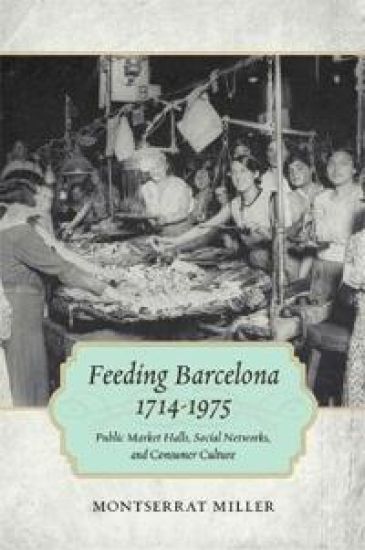
The food markets of Barcelona host thousands of customers daily, from tourists eager to sample fresh fruits and grilled seafood to neighborhood cooks in search of high-quality ingredients. While other countries experienced major shifts away from the public-market model in the twentieth century, Barcelona's food markets remained fundamental to the city's identity, economy, and culture. Montserrat Miller's Feeding Barcelona, 1714-1975 examines the causes behind the extraordinary vibrancy and tenacity of the Barcelonan market system. Miller argues that recurrent revolutionary uprisings in Barcelona, beginning in the mid-eighteenth century, forced ongoing collaboration between the public and private sectors to ensure adequate and effective food distribution. Municipal support permitted small-scale food sellers in Barcelona to survive in a period more commonly characterized by increasing capitalization in food retail, while the importance of food markets to Barcelona's social networks enhanced vendors' ability to recognize and adapt to changing customer demands. In addition, a high number of stalls owned by women contributed both to the financial well-being of vendor families and to the sociability patterns that placed neighborhood food markets at the center of daily life in the city. The shared commitment of vendors, shoppers, and government officials to a market model of food sales created the lasting and unique market system that persists in Barcelona to this day. Drawing from extensive archival research and numerous interviews with individuals at all levels of the market system, Feeding Barcelona, 1714-1975 is the first detailed history of the historical and social influences that create urban food markets.