Kirjojen hintavertailu – 12 859 824 kirjaa ja 27 kauppaa
Kirjailija
Mookgo Solomon Kgatle
Kirjat ja teokset yhdessä paikassa: 12 kirjaa, julkaisuja vuosilta 2017–2026, suosituimpiin kuuluu Integration in Pentecostal Theological Education in South Africa. Vertaile teosten hintoja ja tarkista saatavuus suomalaisista kirjakaupoista.
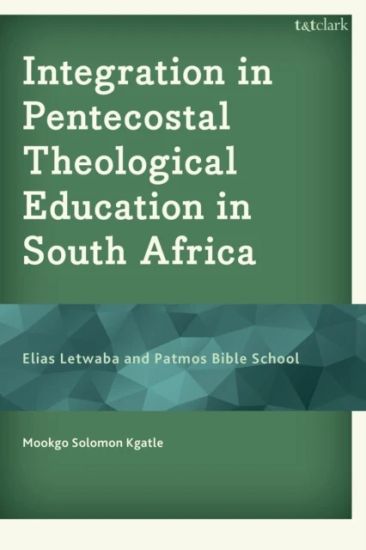
Using Elias Letwaba's Patmos Bible School as a model, Mookgo Solomon Kgatle theorizes Pentecostal theological education and integration in a South African context. In this book, Kgatle discusses the life and impact of one of the first African gospel ministers in the Apostolic Faith Mission of South Africa and founder of the Patmos Bible School, Elias Letwaba (1870–1959). Letwaba's theological approach towards integration and religious education provides rich inspiration for contemporary Pentecostal ministers and educators. Working from this model, Kgatle formulates his own approach to integrated Pentecostal theological education. This form of integration and theological education is particularly important within a South African context, where the Pentecostalist movement has largely been overlooked and underexplored.
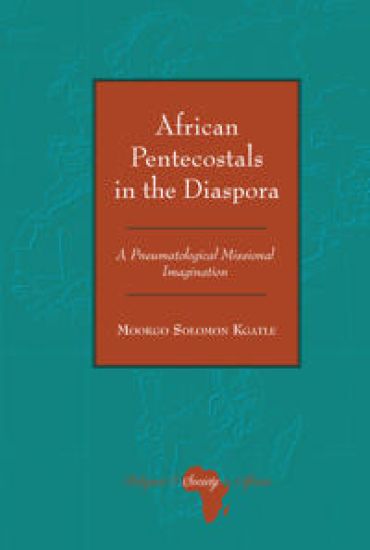
African Pentecostals in the Diaspora explores the theology of mission in the context of African Pentecostals in the diaspora, using the Apostolic Faith Mission in the United Kingdom as a case study. Author Solomon Kgatle develops a Pentecostal theology of diaspora mission using a pneumatological missional imagination as a theoretical framework. This framework is developed using the theories of pneumatological imagination, missiological spirit and missional imagination. The pneumatological missional approach is proposed for missionpraxis such as praise and worship to accommodate believers beyond African migrants. The book makes a conceptual contribution to the theology of mission through analysis of the African Pentecostal diaspora mission. The book also makes a theoretical contribution by bringing pneumatological missional imagination to existing theories of pneumatological imagination, missiological spirit and missional imagination. The book will be vital reading for both practitioners of mission in African Pentecostal churches and missiologists in Africa and the diaspora. “The pneumatological imagination concept inspired by the Day of Pentecost narrative and growing in prominence among Pentecostal theologians is here developed in a missiological direction. If the Lukan horizons extended from Jerusalem to the ends of the Earth, the trajectory in these pages is from the farthermost regions of the southern hemisphere to the highest extents of the global north. Solomon Kgatle’s latest in a series of wide-ranging books hereby not only enriches the global Pentecostal theological conversation but expands his multidisciplinary repertoire as a missiologist. “ — Amos Yong, Professor of Theology and Mission, Fuller Seminary. “Solomon Kgatle has done the world church a huge favour by placing Pentecostal pneumatological theology in dialogue with the missional church movement and contextual theology. His approach, which includes an important fieldwork case study, is fresh and illuminating. Overall the book has serious implications for Pentecostals and others undertaking missions in the diaspora.” —Dr. Nigel Rooms, Co-Editor of Ecclesial Futures Journal “An enlightening exploration of African Pentecostals in the diaspora, with the Apostolic Faith Mission in the UK serving as a case study, this book masterfully intertwines contextual, conceptual, and theoretical frameworks. By integrating the pneumatological imagination, missiological spirit and missional imagination, it offers a ground-breaking pneumatological Pentecostal theology of diaspora mission. Essential reading for anyone interested in contemporary theological studies, missiology, and church growth.” — Josh Chigorimbo, Vice President of the Apostolic Faith Mission International Ministries, United Kingdom.
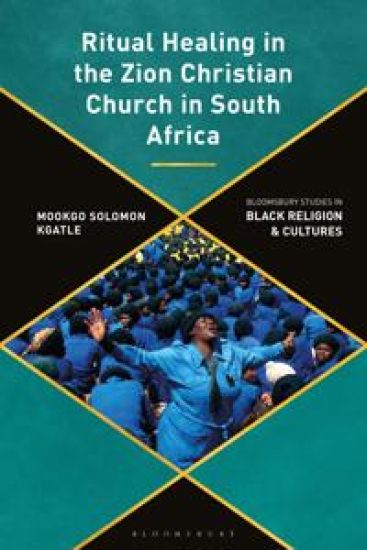
Exploring Indigenous African medicine and faith healing within the Zion Christian Church, this book demonstrates the role of these healing practices from music and prophecy to implemented social restrictions. The Zion Christian Church is one of the largest churches in the African continent with footprints in other parts of the world. The author argues that these theories are important for understanding the healing practices within the broader context of the African Independent Churches. The theories of ritual healing, symbol healing, and holistic healing are brought together in exploring the healing practices in the Zion Christian Church. This book demonstrates that the ritual healing process does not end with healing but extends to the practices of spiritual protection and shielding of patients within African cosmology. Exploring these theories, Mookgo Solomon Kgatle brings us to an understanding of worship beyond liturgical practices toward therapeutic implications. Similarly, practices of prophecies such as diagnostic prophecy, oracular prophecy, and prescriptive prophecy are explored to expound their implications on healing. In addition, the practices of social restrictions and taboos in the Zion Christian Church are discussed to demonstrate their implications on the healing and well-being of adherents. The book also uses decolonial theory to argue that the intersections of Indigenous African medicine and faith healing are relevant for the decolonisation of the knowledge system on faith healing. This connection is important in the development of the theology of indigenous faith healing in the African Independent Churches by using the Zion Christian Church as a case study. Such a theology should be able to make distinctions between African traditional healing and the Indigenous African medicine.
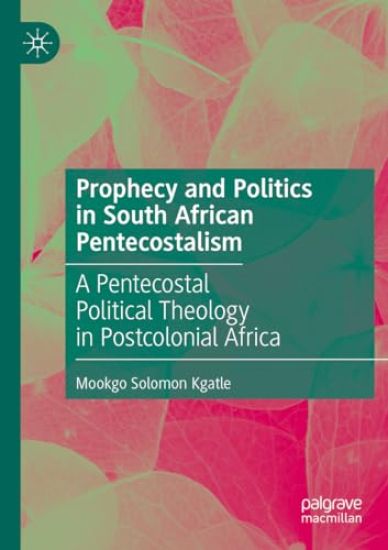
This book is an interdisciplinary study of the relationship between prophecy and politics in South African Pentecostalism. The role and the power of prophecy in enhancing the presence of politicians in the church square are unpacked through historical examples, as well as case studies of contemporary prophets. Solomon Kgatle argues that the influence of prophecy in politics has the potential to weaken the prophetic voice of the church in general and the Pentecostal movement in particular. He proposes a Pentecostal political theology of prophecy. This theology is developed by taking into cognizance the theoretical and theological frameworks of prophetic imagination and pneumatological imagination. In addition, this theology seeks a balance between prophecy and power and prophecy and sovereignty.
This book is an interdisciplinary study of the relationship between prophecy and politics in South African Pentecostalism. The role and the power of prophecy in enhancing the presence of politicians in the church square are unpacked through historical examples, as well as case studies of contemporary prophets. Solomon Kgatle argues that the influence of prophecy in politics has the potential to weaken the prophetic voice of the church in general and the Pentecostal movement in particular. He proposes a Pentecostal political theology of prophecy. This theology is developed by taking into cognizance the theoretical and theological frameworks of prophetic imagination and pneumatological imagination. In addition, this theology seeks a balance between prophecy and power and prophecy and sovereignty.
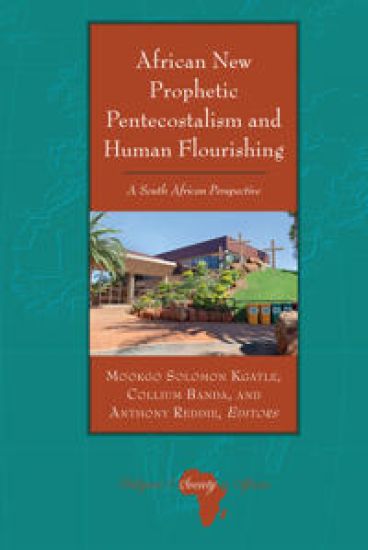
This book investigates the question of human flourishing in African New Pentecostalism in South Africa. In a context marked by deep economic inequality and high unemployment, many poor South Africans rely on African New Pentecostal prophets to bring spiritual meaning to their lives. Collectively, and using various theoretical frameworks and methods, the authors of this volume analyze and critique the concept of this pursuit, and ask what can be done to challenge African New Pentecostal prophets to respond effectively. The book will be of interest to academics, pastors, researchers and university students in Pentecostalism in Africa, Missiology and Science of Religion, Sociology and Psychology of Religion and the public role of religion in South Africa and beyond. "This volume provides a uniquely fresh perspective on African Pentecostalism by linking three important discursive fields: human flourishing, charismatic Pentecostalism, and decoloniality. The volume provides important insights into the normative notions brought forward by prophetic Pentecostalism on what constitutes a good life. It thereby substantially advances the debate on Pentecostalism and prosperity. Even though the book zooms in on South Africa, its chapters bear relevance far beyond. The volume is therefore a must-read for anyone wanting to engage with current trends in African Christianity." —Philipp Öhlmann, Associated Senior Researcher, Center for Rural Development, Humboldt University; Research Fellow, Department of Theology and Religious Studies, University of Botswana "This is an intellectually stimulating, original, and thought-provoking contribution to the field of African Pentecostal Studies. It has not failed to deliver and must be read to understand new creative interpretations of the movements by African Christian scholars." —Chammah Kaunda, Assistant Professor, Yonsei University, South Korea; Extraordinary Professor, University of the Western Cape, South Africa "This important book creatively explores human flourishing in the context of New Prophetic Pentecostalism in Africa. It should be read by all who are interested in the most recent developments of Southern African Pentecostalism and those concerned about genuine human flourishing in the church and wider society." —Dr. Simo Frestadius, Dean of Research, Regents Theological College; Executive Director, Institute for Pentecostal Theology; Chair, European Pentecostal Theological Association
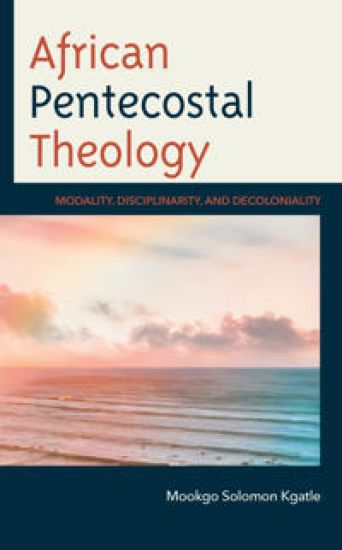
African Pentecostal Theology: Modality, Disciplinarity, and Decoloniality explores research methodology, theological disciplines, and contextualization as important aspects in the process of studying Pentecostal theology in an African context. Mookgo Solomon Kgatle outlines different data collection and data analysis methods, including the skills of interpreting and presenting research findings in a responsible manner. This book illustrates that Pentecostal theology, given its pneumatological approach, goes beyond conventional theological disciplines in transdisciplinary research. The development of knowledge in African Pentecostal Theology should recognize African Indigenous Knowledge Systems (AIKS), African oral and traditional cultures, and African indigenous languages to be relevant to Africans. Pentecostal theologians from different theological disciplines in Africa and globally will find this book a worthwhile read.
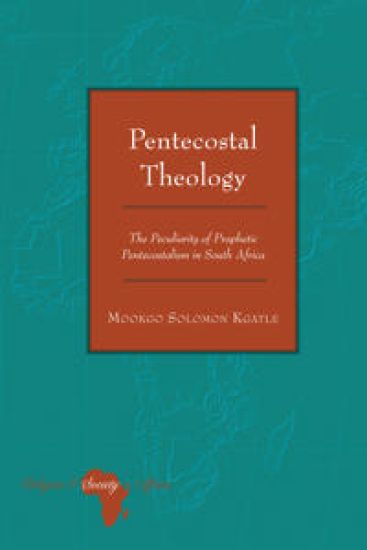
This book highlights the key features of Pentecostal theology in a South African context. In analyzing each feature, it seeks to demonstrate the peculiarity of Pentecostal theology among New Prophetic Churches in South Africa. The book will be useful for both scholars and students as they explore new trends in Global Pentecostalism.
Pentecostalism is a growing movement in world Christianity. However, the growth of Pentecostalism in South Africa has faced some challenges, including the abuse of religion by some prophets. This book first names these prophets and the churches they lead in South Africa, and then makes use of literary and media analysis to analyse the religious practices by the prophets in relation to cultism. Additionally, the book analyses the “celebrity cult” and how it helps promote the prophets in South Africa. The purpose of this book is threefold: First, to draw parallels between the abuse of religion and cultism. Second, to illustrate that it is cultic tendencies, including the celebrity cult, that has given rise to many prophets in South Africa. Last, to showcase that the challenge for many of these prophets is that the Pentecostal tradition is actually anti-cultism, and thus there is a need for them to rethink their cultic tendencies in order for them to be truly relevant in a South African context.
Pentecostalism is a growing movement in world Christianity. However, the growth of Pentecostalism in South Africa has faced some challenges, including the abuse of religion by some prophets. This book first names these prophets and the churches they lead in South Africa, and then makes use of literary and media analysis to analyse the religious practices by the prophets in relation to cultism. Additionally, the book analyses the “celebrity cult” and how it helps promote the prophets in South Africa. The purpose of this book is threefold: First, to draw parallels between the abuse of religion and cultism. Second, to illustrate that it is cultic tendencies, including the celebrity cult, that has given rise to many prophets in South Africa. Last, to showcase that the challenge for many of these prophets is that the Pentecostal tradition is actually anti-cultism, and thus there is a need for them to rethink their cultic tendencies in order for them to be truly relevant in a South African context.