
Kirjojen hintavertailu – 12 903 725 kirjaa ja 27 kauppaa

Kirjailija

Morris B. Hoffman

Kirjat ja teokset yhdessä paikassa: 3 kirjaa, julkaisuja vuosilta 2014–2024, suosituimpiin kuuluu The Punisher's Brain. Vertaile teosten hintoja ja tarkista saatavuus suomalaisista kirjakaupoista.

3 kirjaa

Kirjojen julkaisuvuodet: 2014–2024.

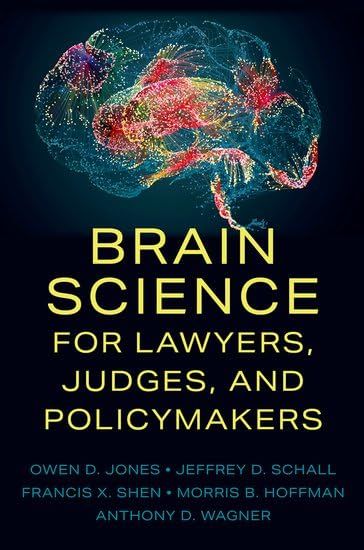
Brain Science for Lawyers, Judges, and Policymakers

Brain Science for Lawyers, Judges, and Policymakers

Owen D. Jones; Jeffrey D. Schall; Francis X. Shen; Morris B. Hoffman; Anthony D. Wagner

OXFORD UNIVERSITY PRESS INC
2024
sidottu
Brain science in the form of neuroscientific evidence now appears frequently in courtrooms and policy discussions alike. Many legal issues are at stake, such as how to separate the best uses of brain science information from those that are potentially biasing or misleading. It is crucial to evaluate brain science evidence in light of relevant legal standards (such as the Daubert and Frye Rules). Brain Science for Lawyers, Judges, and Policymakers responds to this rapidly changing legal landscape, providing a user-friendly introduction to the fundamentals of neuroscience for lawyers, advocates, judges, legal academics, and policymakers. It features detailed but clear illustrations, as well as a comprehensive and accessible overview of developments in legally relevant neuroscience. Readers will learn brain science terms, how to understand and discuss brain structure and function in legally relevant contexts, and how to avoid over- or under-interpreting neuroscientific evidence. The book begins with a survey of the kinds of litigation, legislation, and regulation where neuroscience is currently being used. It provides accessible descriptions of basic brain anatomy and brain function as well as an overview of how modern technologies can reveal the brain structures and brain functions of individuals. It finishes with cautions and limitations, including timely and thought-provoking observations about where the future of neurolaw might lead. Throughout, the authors offer clear and concise guidance on understanding both the promise and the limitations of using brain science in law and policymaking.
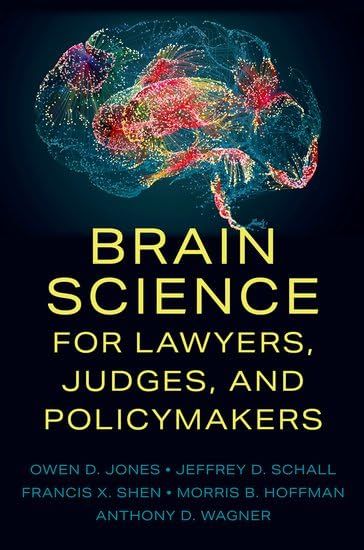
Brain Science for Lawyers, Judges, and Policymakers

Brain Science for Lawyers, Judges, and Policymakers

Owen D. Jones; Jeffrey D. Schall; Francis X. Shen; Morris B. Hoffman; Anthony D. Wagner

OXFORD UNIVERSITY PRESS INC
2024
nidottu
Brain science in the form of neuroscientific evidence now appears frequently in courtrooms and policy discussions alike. Many legal issues are at stake, such as how to separate the best uses of brain science information from those that are potentially biasing or misleading. It is crucial to evaluate brain science evidence in light of relevant legal standards (such as the Daubert and Frye Rules). Brain Science for Lawyers, Judges, and Policymakers responds to this rapidly changing legal landscape, providing a user-friendly introduction to the fundamentals of neuroscience for lawyers, advocates, judges, legal academics, and policymakers. It features detailed but clear illustrations, as well as a comprehensive and accessible overview of developments in legally relevant neuroscience. Readers will learn brain science terms, how to understand and discuss brain structure and function in legally relevant contexts, and how to avoid over- or under-interpreting neuroscientific evidence. The book begins with a survey of the kinds of litigation, legislation, and regulation where neuroscience is currently being used. It provides accessible descriptions of basic brain anatomy and brain function as well as an overview of how modern technologies can reveal the brain structures and brain functions of individuals. It finishes with cautions and limitations, including timely and thought-provoking observations about where the future of neurolaw might lead. Throughout, the authors offer clear and concise guidance on understanding both the promise and the limitations of using brain science in law and policymaking.
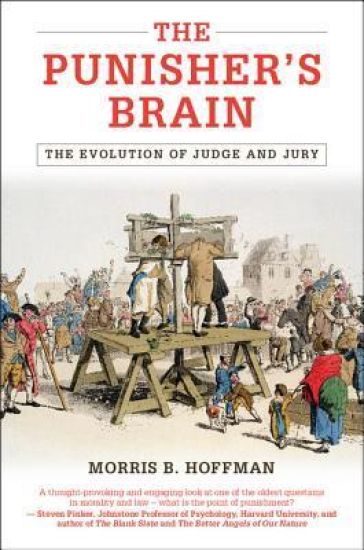
The Punisher's Brain

The Punisher's Brain

Morris B. Hoffman

Cambridge University Press
2014
sidottu
Why do we punish, and why do we forgive? Are these learned behaviors, or is there something deeper going on? This book argues that there is indeed something deeper going on, and that our essential response to the killers, rapists, and other wrongdoers among us has been programmed into our brains by evolution. Using evidence and arguments from neuroscience and evolutionary psychology, Morris B. Hoffman traces the development of our innate drives to punish - and to forgive - throughout human history. He describes how, over time, these innate drives became codified into our present legal systems and how the responsibility and authority to punish and forgive was delegated to one person - the judge - or a subset of the group - the jury. Hoffman shows how these urges inform our most deeply held legal principles and how they might animate some legal reforms.