Kirjojen hintavertailu – 12 859 824 kirjaa ja 27 kauppaa

Kirjailija

Morris Morley

Kirjat ja teokset yhdessä paikassa: 9 kirjaa, julkaisuja vuosilta 1990–2026, suosituimpiin kuuluu Latin America in the Time of Cholera. Vertaile teosten hintoja ja tarkista saatavuus suomalaisista kirjakaupoista.

9 kirjaa

Kirjojen julkaisuvuodet: 1990–2026.

Latin America in the Time of Cholera

Latin America in the Time of Cholera

James Petras; Morris Morley

TAYLOR FRANCIS LTD
2026
nidottu
First published in 1992, Latin America in the Time of Cholera questions many ideas regarding the advent of a new era of democracy, peace, and north-south cooperation for development in the post-Cold War period by challenging several myths that shape United States policy toward Latin America. James Petras and Morris Morley trenchantly argue that electoral regimes and free markets in the hemisphere have not improved people’s lives, that Washington’s neo-conservative allies do not have a viable future, and that the end of the Cold War has not lessened U. S. interventionist behavior in Latin America. This book utilizes empirical and historical analyses and provides a unique interpretive framework that focuses on U. S. involvement in the so-called democraticization of Latin America. It also presents a lively combination of both case studies and critiques of contemporary power relations. This compelling account of Latin America will be an invaluable resource for academics, policymakers, journalists, and anyone who wishes to make sense of tumultuous events in this region.

Latin America in the Time of Cholera

Latin America in the Time of Cholera

James Petras; Morris Morley

TAYLOR FRANCIS LTD
2024
sidottu
First published in 1992, Latin America in the Time of Cholera questions many ideas regarding the advent of a new era of democracy, peace, and north-south cooperation for development in the post-Cold War period by challenging several myths that shape United States policy toward Latin America. James Petras and Morris Morley trenchantly argue that electoral regimes and free markets in the hemisphere have not improved people’s lives, that Washington’s neo-conservative allies do not have a viable future, and that the end of the Cold War has not lessened U. S. interventionist behavior in Latin America. This book utilizes empirical and historical analyses and provides a unique interpretive framework that focuses on U. S. involvement in the so-called democraticization of Latin America. It also presents a lively combination of both case studies and critiques of contemporary power relations. This compelling account of Latin America will be an invaluable resource for academics, policymakers, journalists, and anyone who wishes to make sense of tumultuous events in this region.
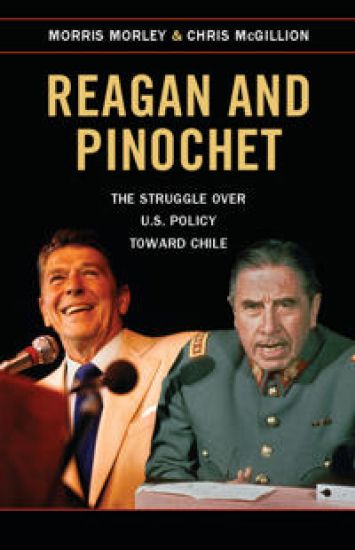
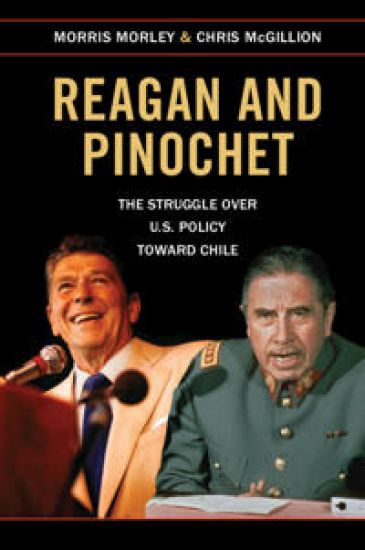
Reagan and Pinochet

Reagan and Pinochet

Morris Morley; Chris McGillion

Cambridge University Press
2015
sidottu
This book is the first comprehensive study of the Reagan administration's policy toward the military dictatorship of General Augusto Pinochet in Chile. Based on new primary and archival materials, as well as on original interviews with former US and Chilean officials, it traces the evolution of Reagan policy from an initial 'close embrace' of the junta to a re-evaluation of whether Pinochet was a risk to long-term US interests in Chile and, finally, to an acceptance in Washington of the need to push for a return to democracy. It provides fresh insights into the bureaucratic conflicts that were a key part of the Reagan decision-making process and reveals not only the successes but also the limits of US influence on Pinochet's regime. Finally, it contributes to the ongoing debate about the US approach toward democracy promotion in the Third World over the past half century.
Reagan and Pinochet

Reagan and Pinochet

Morris Morley; Chris McGillion

Cambridge University Press
2015
pokkari
This book is the first comprehensive study of the Reagan administration's policy toward the military dictatorship of General Augusto Pinochet in Chile. Based on new primary and archival materials, as well as on original interviews with former US and Chilean officials, it traces the evolution of Reagan policy from an initial 'close embrace' of the junta to a re-evaluation of whether Pinochet was a risk to long-term US interests in Chile and, finally, to an acceptance in Washington of the need to push for a return to democracy. It provides fresh insights into the bureaucratic conflicts that were a key part of the Reagan decision-making process and reveals not only the successes but also the limits of US influence on Pinochet's regime. Finally, it contributes to the ongoing debate about the US approach toward democracy promotion in the Third World over the past half century.
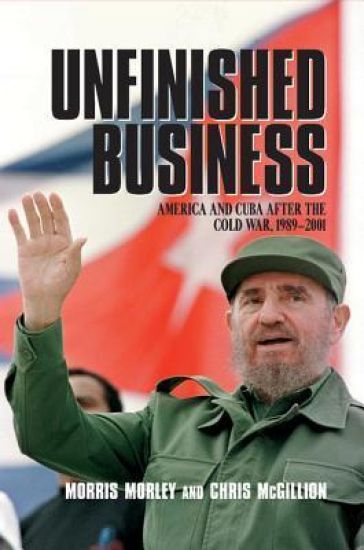
Unfinished Business

Unfinished Business

Morris Morley; Chris McGillion

Cambridge University Press
2002
pokkari
The first comprehensive study of US policy towards Cuba in the post-Cold War era. Drawing on interviews with Bush and Clinton policymakers, congressional participants in the policy debate, and leaders of the anti-sanctions business community, it makes an important original contribution to our knowledge of the evolution of American policy during this period. This study argues that Bush and Clinton operated within the same Cold War framework that shaped the Cuba policy of their predecessors. But it also demonstrates that US policy after 1989 was driven principally by the imperatives of domestic politics. The authors show how Bush and Clinton corrupted the policymaking process by subordinating rational decisionmaking in the national interest to narrow political calculations. The result was the pursuit of a policy that had nothing to do with its stated objectives of promoting reforms in Cuba and everything to do with getting rid of Fidel Castro’s regime.
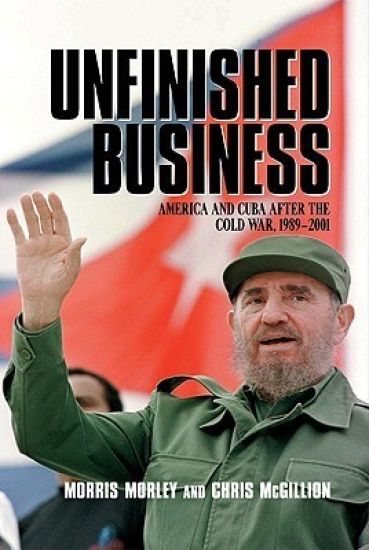
Unfinished Business

Unfinished Business

Morris Morley; Chris McGillion

Cambridge University Press
2002
sidottu
The first comprehensive study of US policy towards Cuba in the post-Cold War era. Drawing on interviews with Bush and Clinton policymakers, congressional participants in the policy debate, and leaders of the anti-sanctions business community, it makes an important original contribution to our knowledge of the evolution of American policy during this period. This study argues that Bush and Clinton operated within the same Cold War framework that shaped the Cuba policy of their predecessors. But it also demonstrates that US policy after 1989 was driven principally by the imperatives of domestic politics. The authors show how Bush and Clinton corrupted the policymaking process by subordinating rational decisionmaking in the national interest to narrow political calculations. The result was the pursuit of a policy that had nothing to do with its stated objectives of promoting reforms in Cuba and everything to do with getting rid of Fidel Castro’s regime.
Empire or Republic?

Empire or Republic?

James Petras; Morris Morley

Routledge
1994
sidottu
Empire or Republic? makes the necessary, but much overlooked, link between our nation's international policies and the domestic situation. The authors contend that the Reagan, Bush and Clinton administrations have all focused on global leadership to the detriment of pressing social, economic and political problems at home.
Empire or Republic?

Empire or Republic?

James Petras; Morris Morley

Routledge
1994
nidottu
Empire or Republic? makes the necessary, but much overlooked, link between our nation's international policies and the domestic situation. The authors contend that the Reagan, Bush and Clinton administrations have all focused on global leadership to the detriment of pressing social, economic and political problems at home.
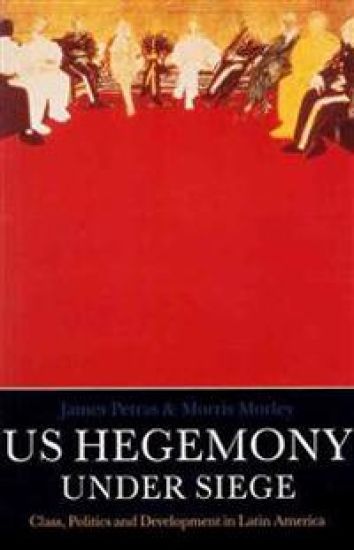
U.S. Hegemony Under Siege

U.S. Hegemony Under Siege

James Petras; Morris Morley

Verso Books
1990
nidottu
From Menem's new Thatcherite experiment in Argentina, through Fujimori's unexpected victory in Peru, to Collor's near defeat at the hands of the rapidly growing Workers' Party of Brazil, Latin American politics is once again in turmoil. Whilst military dictators have been dumped from office, their liberal and populist replacements have found television exposure and playboy reputations insufficient to hold together societies still remorselessly squeezed by United States foreign policy. But US influence in the subcontinent is not only under siege from the impoverished masses of increasingly unstable states; it is also threatened by intensifying superpower competition as Japan and a unifying Europe mount their challenges for world dominance. In this wide-ranging and original polemic, Petras and Morley examine the social structures which emerged from neo-liberal economic policy during the 1970s and 1980s. They show how Latin American society is increasingly organized around a continental bourgeoisie maintaining high levels of foreign investment, a national bourgeoisie operating on the margins of legality and committed to both economic deregulation and public-sector activity, and a growing class of low-paid and poorly employed workers subject to the demands of export-oriented capital into international financial circuits is matched by technical and intellectual integration, with a collapse into conformity of formerly critical groupings. For students and the interested general reader, this balanced and rigorous analysis of state power and social form provides a substantial new framework in which to consider the exigent questions of US-Latin American relations.