Kirjojen hintavertailu – 12 903 725 kirjaa ja 27 kauppaa

Kirjailija

Morten H. Christiansen

Kirjat ja teokset yhdessä paikassa: 5 kirjaa, julkaisuja vuosilta 2009–2026, suosituimpiin kuuluu Creating Language. Vertaile teosten hintoja ja tarkista saatavuus suomalaisista kirjakaupoista.

5 kirjaa

Kirjojen julkaisuvuodet: 2009–2026.

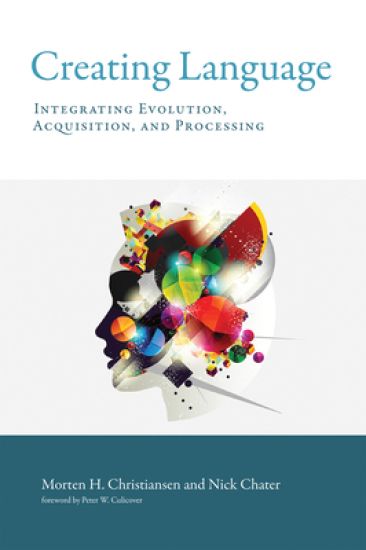
Creating Language

Creating Language

Morten H. Christiansen; Nick Chater; Peter W. Culicover

MIT Press
2018
pokkari
A work that reveals the profound links between the evolution, acquisition, and processing of language, and proposes a new integrative framework for the language sciences. Language is a hallmark of the human species; the flexibility and unbounded expressivity of our linguistic abilities is unique in the biological world. In this book, Morten Christiansen and Nick Chater argue that to understand this astonishing phenomenon, we must consider how language is created: moment by moment, in the generation and understanding of individual utterances; year by year, as new language learners acquire language skills; and generation by generation, as languages change, split, and fuse through the processes of cultural evolution. Christiansen and Chater propose a revolutionary new framework for understanding the evolution, acquisition, and processing of language, offering an integrated theory of how language creation is intertwined across these multiple timescales. Christiansen and Chater argue that mainstream generative approaches to language do not provide compelling accounts of language evolution, acquisition, and processing. Their own account draws on important developments from across the language sciences, including statistical natural language processing, learnability theory, computational modeling, and psycholinguistic experiments with children and adults. Christiansen and Chater also consider some of the major implications of their theoretical approach for our understanding of how language works, offering alternative accounts of specific aspects of language, including the structure of the vocabulary, the importance of experience in language processing, and the nature of recursive linguistic structure.

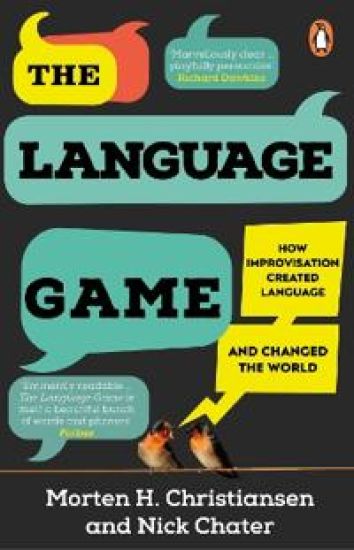
The Language Game

The Language Game

Morten H. Christiansen; Nick Chater

TRANSWORLD PUBLISHERS LTD
2023
pokkari

Halvin toimitettuna 17,00 €

'Marvellously clear... playfully persuasive' Richard Dawkins'Full of Fascinating details. A delight to read.' Tim Harford'Highly original and convincing ... a delight to read!' - Daniel EverettWhat is language? Why do we have it? Why does that matter? Language is perhaps humanity's most astonishing accomplishment and one that remains poorly understood. Upending centuries of scholarship (including, most recently, Chomsky and Pinker) The Language Game shows how people learn to talk not by acquiring fixed meanings and rules, but by picking up, reusing, and recombining countless linguistic fragments in novel ways. Drawing on entertaining and persuasive examples from across the world the book explains:· How our short-lived memory copes with the on-rushing deluge of sound that is everyday speech.· Why it is that language is such a challenge for language scientists but learnt effortlessly by toddlers.· Why the languages of the world are so spectacularly varied---and why no two people speak quite the same language.· Why humans have language, but chimps don't.· How language gave us a big brain and changed the course of evolution.· How language doesn't limit, but does shape, how we think.·And ultimately, why all we know about language should give us hope. Christiansen and Chater's The Language Game draws on a fascinating range of examples to show the way language works, has shaped our evolution and is critical to our future.
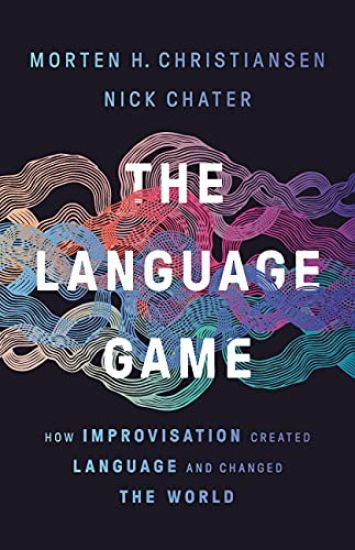
The Language Game: How Improvisation Created Language and Changed the World
Forget the language instinct--this is the story of how we make up language as we go Language is perhaps humanity's most astonishing capacity--and one that remains poorly understood. In The Language Game, cognitive scientists Morten H. Christiansen and Nick Chater show us where generations of scientists seeking the rules of language got it wrong. Language isn't about hardwired grammars but about near-total freedom, something like a game of charades, with the only requirement being a desire to understand and be understood. From this new vantage point, Christiansen and Chater find compelling solutions to major mysteries like the origins of languages and how language learning is possible, and to long-running debates such as whether having two words for "blue" changes what we see. In the end, they show that the only real constraint on communication is our imagination.
Language Universals

Language Universals

Morten H. Christiansen; Christopher Collins; Shimon Edelman

Oxford University Press Inc
2009
sidottu
Languages differ from one another in bewildering and seemingly arbitrary ways. For example, in English, the verb precedes the direct object ('understand the proof'), but in Japanese, the direct object comes first. In some languages, such as Mohawk, it is not even possible to establish a basic word order. Nonetheless, languages do share certain regularities in how they are structured and used. The exact nature and extent of these "language universals" has been the focus of much research and is one of the central explanatory goals in the language sciences. During the past 50 years, there has been tremendous progress, a few major conceptual revolutions, and even the emergence of entirely new fields. The wealth of findings and theories offered by the various language-science disciplines has made it more important than ever to work toward an integrated understanding of the nature of human language universals. This book is the first to examine language universals from a cross-disciplinary perspective. It provides new insights into long standing questions such as: What exactly defines the human capacity for language? Are there universal properties of human languages and, if so, what are they? Can all language universals be explained in the same way, or do some universals require different kinds of explanations from others? Language Universals is unique in starting with the assumption that the best way to approach these and related questions is through a dialogue between a wide range of disciplines, including linguistics, cognitive neuroscience, philosophy, computer science and biology.