Kirjojen hintavertailu – 12 903 725 kirjaa ja 27 kauppaa

Kirjailija

Moses Grandy

Kirjat ja teokset yhdessä paikassa: 9 kirjaa, julkaisuja vuosilta 2010–2025, suosituimpiin kuuluu Narrative of the Life of Moses Grandy. Vertaile teosten hintoja ja tarkista saatavuus suomalaisista kirjakaupoista.

9 kirjaa

Kirjojen julkaisuvuodet: 2010–2025.

Narrative of the Life of Moses Grandy, Late a Slave in the United States of America
"Narrative of the Life of Moses Grandy, Late a Slave in the United States of America" is a powerful first-person account of slavery and the fight for freedom. Grandy's narrative offers a vital perspective on the institution of slavery in North Carolina and the broader struggle for abolition in 19th-century America. This meticulously prepared edition presents Grandy's compelling story in his own words, detailing his experiences under enslavement. As a significant contribution to African-American history and the slave narrative tradition, this book provides invaluable insights into the lives of those who endured the horrors of slavery and their courageous pursuit of liberation. Grandy's testament stands as a lasting document of resilience, hope, and the unyielding human spirit. His story continues to resonate as a critical piece of American history. This work has been selected by scholars as being culturally important, and is part of the knowledge base of civilization as we know it. This work is in the public domain in the United States of America, and possibly other nations. Within the United States, you may freely copy and distribute this work, as no entity (individual or corporate) has a copyright on the body of the work. Scholars believe, and we concur, that this work is important enough to be preserved, reproduced, and made generally available to the public. We appreciate your support of the preservation process, and thank you for being an important part of keeping this knowledge alive and relevant.
Narrative of the Life of Moses Grandy, Late a Slave in the United States of America (Edition2024)
"Narrative of the Life of Moses Grandy" by Moses Grandy is a poignant autobiography that provides a powerful firsthand account of the brutal realities of slavery in the United States. Grandy, a former slave, recounts his harrowing experiences with vivid detail and emotional resonance, shedding light on the inhumane treatment endured by enslaved individuals. This autobiographical work transcends genres, serving as both a historical document and a compelling narrative of resilience and survival. Through Grandy's perspective, readers are transported to the antebellum South, where they witness the daily struggles and injustices faced by enslaved people. Grandy's narrative explores themes of oppression, resistance, and the quest for freedom, offering valuable insights into the complex dynamics of race and power in American society. His story serves as a testament to the strength and resilience of the human spirit in the face of adversity. As a firsthand account of slavery, "Narrative of the Life of Moses Grandy" holds significant historical and literary importance. It stands as a compelling testimony to the enduring legacy of slavery and the ongoing struggle for equality and justice.
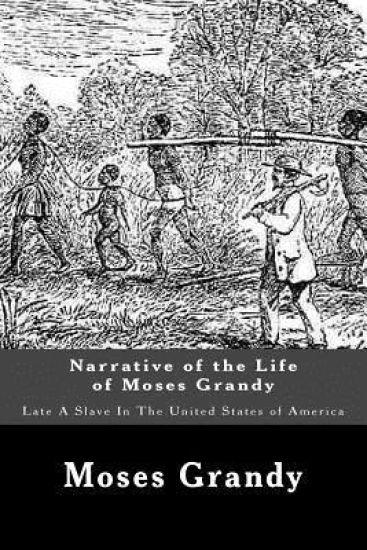
Narrative of the Life of Moses Grandy: Late A Slave In The United States of America

Narrative of the Life of Moses Grandy: Late A Slave In The United States of America

Moses Grandy

Createspace Independent Publishing Platform
2016
nidottu
Excerpt from Narrative of the Life of Moses Grandy: Formerly a Slave in the United States of America Another of my brothers was sold to Mr. Tyler, Dewan' s Neck, Pasquotank county. This man very much ill treated many colored boys. One very cold day, he sent my brother out, naked and hun gry, to find a yoke of steers; the boy returned Without finding them, when his master flogged him, and sent him out again. A white lady, who 'lived near, gave him food', and advised him to try again, he did so, but, it seems, again without success. He piled up a heap of leaves, and laid himself down in them, and died there He was found through a flock of turkey buzzards hovering over him; these birds had pulled his eyes out. About the Publisher Forgotten Books publishes hundreds of thousands of rare and classic books. Find more at www.forgottenbooks.com This book is a reproduction of an important historical work. Forgotten Books uses state-of-the-art technology to digitally reconstruct the work, preserving the original format whilst repairing imperfections present in the aged copy. In rare cases, an imperfection in the original, such as a blemish or missing page, may be replicated in our edition. We do, however, repair the vast majority of imperfections successfully; any imperfections that remain are intentionally left to preserve the state of such historical works.
Narrative of the Life of Moses Grandy

Narrative of the Life of Moses Grandy

Moses Grandy

Createspace Independent Publishing Platform
2016
nidottu
Narrative of the Life of Moses Grandy is a classic American slave autobiography by Moses Grandy. About a fortnight ago, the subject of the following brief Memoir came to me, bearing with him a letter from a dear friend and distinguished abolitionist in the United States, from which the following is an extract: 'I seize my pen in haste to gratify a most worthy colored friend of mine, by giving him a letter of introduction to you, as he intends sailing this week (August 8th, 1842) for Liverpool and London, via New Orleans. His name is Moses Grandy. Moses Grandy was an African-American author, abolitionist, and, for more than the first four decades of his life, an enslaved person. At eight years of age he became the property of his playmate, James Grandy and two years later he was hired out for work. The monies Moses earned were collected and held until James Grandy turned 21. Grandy helped build the Great Dismal Swamp Canal and learned how to navigate boats. It was that skill that led him to be made commander of several boats that traveled the canal and Pasquotank River, transporting merchandise from Elizabeth City, North Carolina to Norfolk, Virginia. The position allowed him to be better fed, shod and dressed. Able to keep a portion of his earnings, Grandy arranged to buy his freedom twice and twice his owners kept the money and held him in slavery. An arrangement was made for an honorable man to buy him and Grandy earned the money to buy his freedom a third time, this time successfully. In the course of his life he had witnessed beatings and sales of family members, including his first bride when they were married but eight months. Once he obtained his freedom, he worked to make the money to free his wife and children. He was able to secure the release of his wife and 15-year-old son. He dictated a narrative of his life, Narrative of the Life of Moses Grandy, Late a Slave in the United States of America, with the intention of buying the freedom of additional family members. His slave narrative, and others, read in the United States and overseas, helped to bring awareness of slavery and fuel the abolitionist movement. Moses Grandy was hired out by James Grandy when he was 10. The second man he worked for, Jeremy Coate, beat him so severely for not hilling corn as he wanted it that the sapling broke off in his side. Enoch Sawyer, an owner of large tracts of land in Pasquotank and Camden Counties, fed him so little that Grandy ground cornhusks into flour for food. By 15 he was managing ferry crossings of a swampy river in Camden, North Carolina at Sawyer's Ferry 6] (later Lamb's Ferry); 7] He was "in charge of poling and sculling and cabling the ferry." He lived on Sawyer's plantation, placed his bare feet in heated mud from the hog's nighttime slumber for warmth, and visited his mother who lived in a cabin in a remote area, non-arable land outside of Camden after she became "too infirm to work." The money that was made through Moses Grandy's work was received and held for James Grandy until he turned 21 years of age. Moses Grandy worked jobs transporting goods to Portsmouth and Norfolk, Virginia and running boats and cutting timber for the Great Dismal Swamp Canal. Although well-skilled at managing craft on the river, he also worked for a time as field hand and a look-out for his gambling boss. Several bosses after Sawyer, Grandy worked for a man named Richard Furley who allowed Grandy to take on extra work, working nights and Sundays, taking a share of the receipts. James Grandy called in all the slaves he had rented out to others and allowed Grandy to continue doing extra work, but took twice as much as Furley's percentage of the receipts.