
Kirjojen hintavertailu – 12 859 819 kirjaa ja 27 kauppaa

Kirjailija

Mosoetsa Sarah

Kirjat ja teokset yhdessä paikassa: 2 kirjaa, julkaisuja vuosilta 2011–2014, suosituimpiin kuuluu New South African Review 4. Vertaile teosten hintoja ja tarkista saatavuus suomalaisista kirjakaupoista.

2 kirjaa

Kirjojen julkaisuvuodet: 2011–2014.

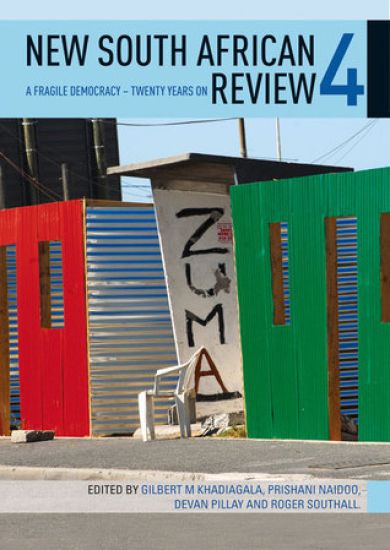
New South African Review 4

New South African Review 4

Clare Ballard; Ahmed Bawa; Claassens Aninka; John G.I. Clarke; Cornelissen Scarlett; Miriam Di Paola; Gottschalk Keith; Greenstein Ran; Kenny Bridget; Khadiagala Gilbert M.; Ian Macun; Mangcu Xolela; Zethu Matebeni; Boitumelo Matlala; Dale T McKinley; Mopeli L. Moshoeshoe; Mosoetsa Sarah; Naidoo Prishani; Pillay Devan; Pons-Vignon Nicolas; Prew Martin; Southall Roger; Justin van der Merwe; Wakeford Jeremy

Wits University Press
2014
nidottu
The death of Nelson Mandela on 5 December 2013 was in a sense a wake-up call for South Africans, and a time to reflect on what has been achieved since `those magnificent days in late April 1994’ (as the editors of this volume put it) `when South Africans of all colours voted for the first time in a democratic election’. In a time of recall and reflection it is important to take account, not only of the dramatic events that grip the headlines, but also of other signposts that indicate the shape and characteristics of a society. The New South African Review looks, every year, at some of these signposts, and the essays in this fourth volume of the series again examine and analyse a broad spectrum of issues affecting the country. They tackle topics as diverse as the state of organised labour; food retailing; electricity generation; access to information; civil courage; the school system; and – looking outside the country to its place in the world – South Africa’s relationships with north-east Asia, with Israel and with its neighbours in the southern African region. Taken together, these essays give a multidimensional perspective on South Africa’s democracy as it turns twenty, and will be of interest to general readers while being particularly useful to students and researchers.
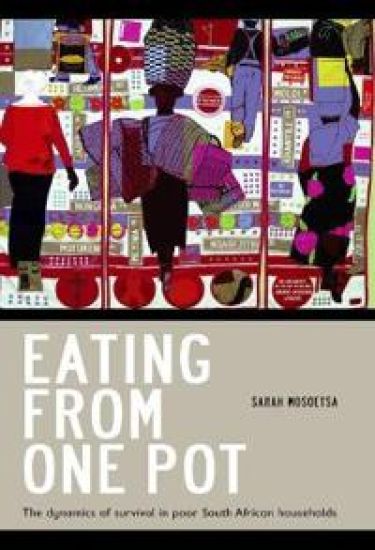
Eating from One Pot

Eating from One Pot

Mosoetsa Sarah

Wits University Press
2011
nidottu
As poverty and unemployment deepen in contemporary South Africa, the burning question becomes, how do the poor survive? This title provides a compelling answer. Based on intensive fieldwork, it shows how many African households are on the brink of collapse. That they keep going at all can largely be attributed to the struggles of older women against poverty. They are the fulcrum on which household survival turns. The title describes how households in two different areas in KwaZulu-Natal are sites of both stability and conflict. As one of the interviewees put it: 'We eat from one pot and should always help each other.' Yet the stability of family networks is becoming fragile because of the enormous burden placed on them by unemployment and unequal power relations. Many of the households are extremely poor, relying on a total monthly income of less than R800. People live on little more than maize meal, tea and sugar. However, the title also demonstrates that they are not passive victims of poverty. Women, in particular, show impressive qualities of energy and resourcefulness. They engage in a number of informal sector activities, and many are active in a range of faith, and community and home-based care associations. Eating from One Pot draws on Amartya Sen's notion of co-operative conflict to argue that in times of crisis there is more conflict than cooperation in the poorest households. Poverty seriously undermines the collective character of households and creates divisions along generational and gendered lines. The title documents the humiliation many feel at the loss of their role as provider, and the resulting escalation of domestic violence and alcohol abuse. Sarah Mosoetsa conducted more than 100 intensive interviews. In the first three chapters she provides a vivid account of individual lives, perceptions and experiences. The case studies are then discussed in relation to the restructuring of the country's welfare and social policies, and the extension of social grants. Mosoetsa argues that these policies shape the livelihoods that people pursue in order to survive under desperate conditions, but fail to address the root causes of poverty and inequality.