Kirjojen hintavertailu – 12 903 725 kirjaa ja 27 kauppaa

Kirjailija

Muhammad Awais

Kirjat ja teokset yhdessä paikassa: 20 kirjaa, julkaisuja vuosilta 2010–2026, suosituimpiin kuuluu The Islamic Economic System. Vertaile teosten hintoja ja tarkista saatavuus suomalaisista kirjakaupoista.

20 kirjaa

Kirjojen julkaisuvuodet: 2010–2026.

The Islamic Economic System

The Islamic Economic System

Muhammad Awais; Ali Osman Öztürk; Omar Khalid Bhatti; Nazima Ellahi

TAYLOR FRANCIS LTD
2026
nidottu
Islamic Economics refers to financial aspects or monetary activities and processes, which adhere to Islamic standards and teachings. The Islamic Economic System relates to the hypothetical development of an economy whose individuals follow the Islamic faith. This book presents an interesting and timely narrative of the concepts of Islamic economics in the context of Islamic culture. Its purpose is to guide individuals and organizations towards a Shariah-based Islamic Economic System. It begins by introducing the Islamic Economic System; its historical origins are explained in the framework of the verses of the Holy Quran, and in light of the Shariah scholars and the philosophical thinkers of the mid-20th century. It discusses concepts such as the evolution of Islamic Fintech and Artificial Intelligence (AI); the relationship between Islamic corporate governance and Islamic Economics; the distribution of wealth in Islam; Islamic Social Finance; Islamic Economic practices in the banking industry, behavioural norms and moral foundations; and Islamic Economics in Organisation of Islamic Cooperation (OIC) and non-OIC countries. The author emphasizes the principles that set Islamic economics apart from traditional systems, grounded in Shariah evidence and highlights the role of Islamic principles in promoting overall business success and ethical practices in the banking industry, offering comparative analysis between Islamic and conventional models, as well as economic systems. Drawing on a rich array of sources, including the Quran and interviews with renowned religious scholars, the book provides a well-rounded and thoroughly researched argument. This book will serve as a valuable resource for academics, scholars, researchers, and organizations seeking to navigate the complexities of an interest-free economic system guided by Islamic principles.
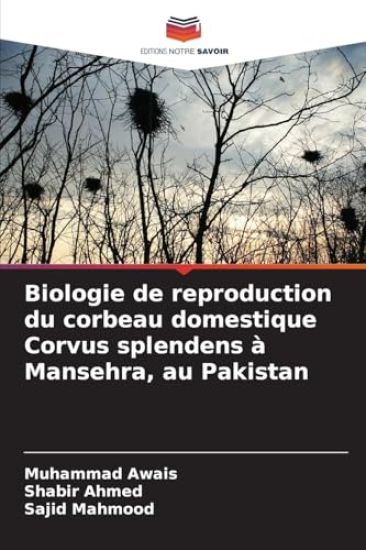
Biologie de reproduction du corbeau domestique Corvus splendens à Mansehra, au Pakistan

Biologie de reproduction du corbeau domestique Corvus splendens à Mansehra, au Pakistan

Muhammad Awais; Shabir Ahmed; Sajid Mahmood

Editions Notre Savoir
2025
pokkari
Le corbeau domestique est un oiseau passereau qui vient du sous-continent indien. Il est de taille moyenne petite. La saison de reproduction dure de d but juin septembre. La densit moyenne des nids de corbeaux domestiques tudi s tait de 2,4 nids/acre. Ils nichaient sur 4 esp ces d'arbres diff rentes: Melia azedarach, Pinus roxburgii, Platanus orientalis et Populus euphratica. La hauteur moyenne des arbres tait de 14,8 m, et la hauteur moyenne des nids tait de 11,8 m. Le diam tre moyen maximum des nids tait de 42,3 cm, le diam tre minimum tait de 39,0 cm, et la profondeur moyenne des nids tait de 19,3 cm. Le diam tre maximum de la coupe des nids tait de 15,6 cm, et le diam tre minimum tait de 13,3 cm. La profondeur moyenne de la coupe tait de 8,3 cm. Le poids moyen des nids tait de 1,4 kg. La taille de la couv e tait de 4,0 avec une fourchette de 1 6 oeufs. Le poids moyen des oeufs tait de 12,30 g. La longueur moyenne des oeufs tait de 38,6 mm, leur largeur de 26,0 mm, leur volume calcul de 13,34 cm3 et leur indice de forme de 1,42. Le taux de r ussite des oeufs tait de 0,551 (64/116), celui des nids tait de 0,690 (29/42) et le nombre moyen de poussins ayant pris leur envol par nid tait de 1,44. On peut conclure que le corbeau domestique niche dans les arbres et pr f re les arbres la canop e dense et de grande taille pour construire ses nids.
Fortpflanzungsbiologie der Hauskrähe (Corvus splendens) in Mansehra, Pakistan

Fortpflanzungsbiologie der Hauskrähe (Corvus splendens) in Mansehra, Pakistan

Muhammad Awais; Shabir Ahmed; Sajid Mahmood

Verlag Unser Wissen
2025
pokkari
Die Hauskr he ist ein Sperlingsvogel, der auf dem Subkontinent lebt und von gro bis mittelgro ist. Die Brutzeit geht von Anfang Juni bis September. Die durchschnittliche Nestdichte der Hauskr he lag in der Studie bei 2,4 Nester pro Hektar. Sie nisteten auf vier verschiedenen Baumarten, n mlich Melia azedarach, Pinus roxburgii, Platanus orientalis und Populus euphratica. Die durchschnittliche Baumh he betrug 14,8 m, die durchschnittliche Nistkorth he 11,8 m. Der durchschnittliche maximale Durchmesser der Nester betrug 42,3 cm, der minimale Durchmesser 39,0 cm, die durchschnittliche Tiefe der Nester 19,3 cm. Der maximale Durchmesser der Nistschalen betrug 15,6 cm, der minimale Durchmesser 13,3 cm. Die durchschnittliche Tiefe der Nestmulde betrug 8,3 cm. Das durchschnittliche Gewicht der Nester lag bei 1,4 kg. Die Gelegegr e betrug 4,0 mit einer Spanne von 1 bis 6 Eiern. Das durchschnittliche Gewicht der Eier lag bei 12,30 g. Die durchschnittliche L nge der Eier betrug 38,6 mm, die Breite 26,0 mm, das berechnete Volumen 13,34 cm3 und der Eierformindex 1,42. Der Bruterfolg lag bei 0,551 (64/116), der Nesterfolg bei 0,690 (29/42) und die Anzahl der erfolgreichen Jungv gel pro Nest bei 1,44. Daraus l sst sich schlie en, dass die Hauskr he ein Baumnester baut und B ume mit dichtem Bl tterdach und gr erer H he f r den Nestbau bevorzugt.
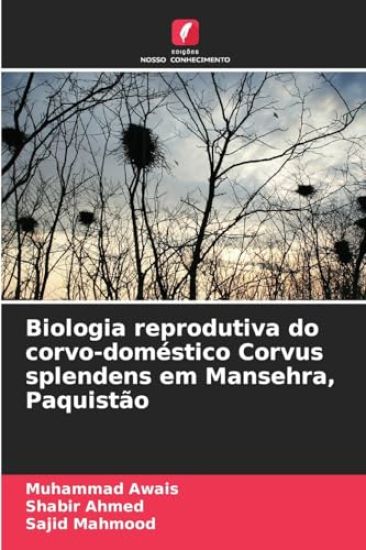
Biologia reprodutiva do corvo-doméstico Corvus splendens em Mansehra, Paquistão

Biologia reprodutiva do corvo-doméstico Corvus splendens em Mansehra, Paquistão

Muhammad Awais; Shabir Ahmed; Sajid Mahmood

Edicoes Nosso Conhecimento
2025
pokkari
O corvo-dom stico uma ave passeriforme origin ria do subcontinente, com tamanho que varia de grande a m dio-pequeno. A poca de reprodu o vai do in cio de junho a setembro. A densidade m dia de ninhos do corvo-dom stico na pesquisa foi de 2,4 ninhos/acre. Eles fizeram ninhos em quatro esp cies diferentes de rvores, a saber: Melia azedarach, Pinus roxburgii, Platanus orientalis e Populus euphratica. A altura m dia das rvores era de 14,8 m, e a altura m dia dos ninhos era de 11,8 m. O di metro m ximo m dio dos ninhos era de 42,3 cm, o di metro m nimo era de 39,0 cm, e a profundidade m dia dos ninhos era de 19,3 cm. O di metro m ximo da cavidade dos ninhos era de 15,6 cm, e o di metro m nimo era de 13,3 cm. A profundidade m dia da cavidade foi de 8,3 cm. O peso m dio dos ninhos foi de 1,4 kg. O tamanho da ninhada foi de 4,0, com varia o (1-6 ovos). O peso m dio dos ovos registrado foi de 12,30 g. O comprimento m dio dos ovos medido foi de 38,6 mm, largura 26,0 mm, volume calculado 13,34 cm3 e ndice de forma do ovo 1,42. O sucesso dos ovos foi de 0,551 (64/116), o sucesso dos ninhos foi de 0,690 (29/42) e o n mero de filhotes bem-sucedidos produzidos por ninho foi de 1,44. Conclui-se que o corvo-dom stico um nidificador de rvores e prefere rvores com copas densas e mais altas para construir ninhos.
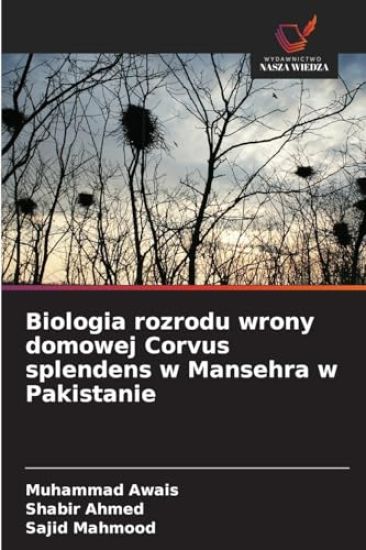
Biologia rozrodu wrony domowej Corvus splendens w Mansehra w Pakistanie

Biologia rozrodu wrony domowej Corvus splendens w Mansehra w Pakistanie

Muhammad Awais; Shabir Ahmed; Sajid Mahmood

Wydawnictwo Nasza Wiedza
2025
pokkari
Wrona domowa to ptak z rzędu wr blowych, pochodzący z subkontynentu, o wielkości od dużej do średniej. Sezon lęgowy trwa od początku czerwca do września. Średnia gęstośc gniazd wron domowych w badaniu wynosila 2,4 gniazda/akr. Gniazdowaly one na 4 r żnych gatunkach drzew, a mianowicie Melia azedarach, Pinus roxburgii, Platanus orientalis i Populus euphratica. Średnia wysokośc drzew wynosila 14,8 m, a średnia wysokośc gniazd 11,8 m. Średnia maksymalna średnica gniazd wynosila 42,3 cm, minimalna średnica gniazd 39,0 cm, a średnia glębokośc gniazd 19,3 cm. Maksymalna średnica miseczki gniazda wynosila 15,6 cm, a minimalna średnica miseczki gniazda 13,3 cm. Średnia glębokośc miseczki wynosila 8,3 cm. Średnia waga gniazd wynosila 1,4 kg. Wielkośc lęgu wynosila 4,0, z zakresem (1-6 jaj). Średnia zarejestrowana waga jaj wynosila 12,30 g. Średnia dlugośc jaj wynosila 38,6 mm, szerokośc 26,0 mm, obliczona objętośc 13,34 cm3, a wskaźnik ksztaltu jaj 1,42. Sukces lęgowy wyni sl 0,551 (64/116), sukces gniazdowy wyni sl 0,690 (29/42), a liczba piskląt, kt re opuścily gniazdo, wyniosla 1,44 na gniazdo. Stwierdzono, że wrona domowa gniazduje na drzewach i preferuje drzewa o gęstym koronie i większej wysokości do budowy gniazd.
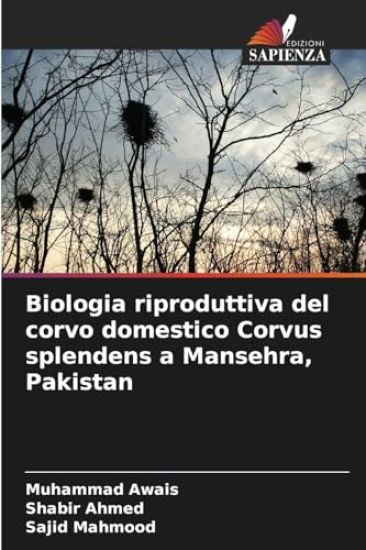
Biologia riproduttiva del corvo domestico Corvus splendens a Mansehra, Pakistan

Biologia riproduttiva del corvo domestico Corvus splendens a Mansehra, Pakistan

Muhammad Awais; Shabir Ahmed; Sajid Mahmood

Edizioni Sapienza
2025
pokkari
Il corvo domestico un uccello passeriforme che viene dal subcontinente, di dimensioni che vanno da grandi a medio-piccole. La stagione riproduttiva va da inizio giugno a settembre. La densit media dei nidi di corvo domestico nella ricerca era di 2,4 nidi per acro. Hanno nidificato su 4 diverse specie di alberi, cio Melia azedarach, Pinus roxburgii, Platanus orientalis e Populus euphratica. L'altezza media degli alberi era di 14,8 m, mentre l'altezza media dei nidi era di 11,8 m. Il diametro massimo medio dei nidi era di 42,3 cm, quello minimo di 39,0 cm, mentre la profondit media era di 19,3 cm. Il diametro massimo della coppa dei nidi era di 15,6 cm, quello minimo di 13,3 cm. La profondit media della coppa era di 8,3 cm. Il peso medio dei nidi era di 1,4 kg. La dimensione della covata era di 4,0 con un intervallo compreso tra 1 e 6 uova. Il peso medio delle uova registrato era di 12,30 g. La lunghezza media delle uova era di 38,6 mm, la larghezza di 26,0 mm, il volume calcolato di 13,34 cm3 e l'indice di forma delle uova di 1,42. Il successo delle uova era 0,551 (64/116), il successo dei nidi era 0,690 (29/42), il numero di nidiacei nati per nido era 1,44. Si conclude che il corvo domestico nidifica sugli alberi e preferisce quelli con chiome fitte e pi alti per costruire i nidi.
The Islamic Economic System

The Islamic Economic System

Muhammad Awais; Ali Osman Öztürk; Omar Khalid Bhatti; Nazima Ellahi

TAYLOR FRANCIS LTD
2024
sidottu
Islamic Economics refers to financial aspects or monetary activities and processes, which adhere to Islamic standards and teachings. The Islamic Economic System relates to the hypothetical development of an economy whose individuals follow the Islamic faith. This book presents an interesting and timely narrative of the concepts of Islamic economics in the context of Islamic culture. Its purpose is to guide individuals and organizations towards a Shariah-based Islamic Economic System. It begins by introducing the Islamic Economic System; its historical origins are explained in the framework of the verses of the Holy Quran, and in light of the Shariah scholars and the philosophical thinkers of the mid-20th century. It discusses concepts such as the evolution of Islamic Fintech and Artificial Intelligence (AI); the relationship between Islamic corporate governance and Islamic Economics; the distribution of wealth in Islam; Islamic Social Finance; Islamic Economic practices in the banking industry, behavioural norms and moral foundations; and Islamic Economics in Organisation of Islamic Cooperation (OIC) and non-OIC countries. The author emphasizes the principles that set Islamic economics apart from traditional systems, grounded in Shariah evidence and highlights the role of Islamic principles in promoting overall business success and ethical practices in the banking industry, offering comparative analysis between Islamic and conventional models, as well as economic systems. Drawing on a rich array of sources, including the Quran and interviews with renowned religious scholars, the book provides a well-rounded and thoroughly researched argument. This book will serve as a valuable resource for academics, scholars, researchers, and organizations seeking to navigate the complexities of an interest-free economic system guided by Islamic principles.
Herbes thérapeutiques - Les seigneurs de la guérison

Herbes thérapeutiques - Les seigneurs de la guérison

Alim Nisa; Muhammad Awais

Editions Notre Savoir
2022
pokkari
Les m dicaments base de plantes constituent un moyen efficace de traiter toute une s rie d'affections. Contrairement aux m dicaments chimiques, les rem des base de plantes sont consid r s comme s rs et ont peu ou pas d'effets secondaires. Ils fonctionnent galement en harmonie avec la nature. C'est pourquoi la phytoth rapie est utilis e depuis des milliers d'ann es par les populations du monde entier. Elles sont utilis es pour traiter une vari t de maladies et font partie int grante de nombreux syst mes de m decine traditionnelle. Les plantes m dicinales sont chimiquement complexes et contiennent des centaines ou des milliers de compos s phytochimiques. Ces compos s comprennent des micro et macro-nutriments, des enzymes, des vitamines et des min raux. Certaines plantes contiennent galement des m tabolites secondaires, qui sont utilis s par les plantes pour la signalisation et la r gulation de la croissance. Parmi ces compos s, les flavono des, les isoflavones et les saponines sont responsables de leurs effets th rapeutiques.
Heilkräuter - Die Herren der Heilung

Heilkräuter - Die Herren der Heilung

Alim Nisa; Muhammad Awais

Verlag Unser Wissen
2022
pokkari
Pflanzliche Arzneimittel sind ein wirksames Mittel zur Behandlung einer Vielzahl von Beschwerden. Im Gegensatz zu chemischen Arzneimitteln gelten pflanzliche Heilmittel als sicher und haben wenig bis keine Nebenwirkungen. Au erdem arbeiten sie im Einklang mit der Natur. Aus diesem Grund wird die pflanzliche Medizin seit Tausenden von Jahren von Menschen auf der ganzen Welt genutzt. Sie werden zur Behandlung einer Vielzahl von Krankheiten eingesetzt und sind ein fester Bestandteil vieler traditioneller Medizinsysteme. Pflanzliche Arzneimittel sind chemisch komplex und enthalten Hunderte oder Tausende von Phytochemikalien. Zu diesen Verbindungen geh ren Mikro- und Makron hrstoffe, Enzyme, Vitamine und Mineralien. Einige Kr uter enthalten auch sekund re Metaboliten, die von Pflanzen zur Signalgebung und Wachstumsregulierung verwendet werden. Unter diesen Verbindungen sind Flavonoide, Isoflavone und Saponine f r ihre therapeutische Wirkung verantwortlich.
Erbe terapeutiche - I signori della guarigione

Erbe terapeutiche - I signori della guarigione

Alim Nisa; Muhammad Awais

Edizioni Sapienza
2022
pokkari
I farmaci a base di erbe sono un modo potente per trattare una variet di disturbi. A differenza dei farmaci chimici, i rimedi erboristici sono considerati sicuri e hanno pochi o nessun effetto collaterale. Inoltre, lavorano in armonia con la natura. Per questo motivo la fitoterapia stata utilizzata per migliaia di anni dalle popolazioni di tutto il mondo. Vengono utilizzati per trattare una variet di malattie e sono parte integrante di molti sistemi di medicina tradizionale. I farmaci vegetali sono chimicamente complessi e contengono centinaia o migliaia di sostanze fitochimiche. Questi composti includono micro e macronutrienti, enzimi, vitamine e minerali. Alcune erbe contengono anche metaboliti secondari, utilizzati dalle piante per la segnalazione e la regolazione della crescita. Tra questi composti, i flavonoidi, gli isoflavoni e le saponine sono responsabili dei loro effetti terapeutici.
Therapeutic Herbs- The Healing Lords

Therapeutic Herbs- The Healing Lords

Alim Nisa; Muhammad Awais

International Book Market Service Ltd
2022
pokkari
Herbal medicines are a powerful way to treat a variety of ailments. Unlike chemical medicines, herbal remedies are considered safe and have little to no side effects. They also work in harmony with nature. This is why herbal medicine has been used for thousands of years by people around the world. They are used to treat a variety of diseases and are an integral part of many traditional medicine systems. Herbal medicines are chemically complex, containing hundreds or thousands of phytochemicals. These compounds include micro and macro-nutrients, enzymes, vitamins, and minerals. Some herbs also contain secondary metabolites, which are used by plants for signaling and growth regulation. Among these compounds, flavonoids, isoflavones, and saponins are responsible for their therapeutic effects.
Underpinnings of Islamic Economics Banking and Finance

Underpinnings of Islamic Economics Banking and Finance

Omar Khalid Bhatti; Ibrahim Guran Yumusak; Muhammad Awais

Amazon Digital Services LLC - Kdp Print Us
2018
pokkari
Do you find yourself unable to understand the basics of Islamic Banking and Finance? Do you need help overcoming the issues regarding Economic System of Islam? Clueless about how modes of Islamic Finance works? This book will give the basic idea regarding the concepts of Islamic Economics, Banking and Finance System. This book "Underpinning of Islamic Economics, Banking and Finance" tells you about the working of Islamic Modes of Financing. On the basis of this book, you will learn that: what The Holy Quran says about the Economic Cycle, how to run the Banking and Finance System according to Shariah, and how to practice Shariah Compliant. We wrote this book to give awareness to the people who really want to know about the working of Shariah Based and Compliant Systems. This book contains: so many Ayaats from the Holy Quran, so many Ahadiths from various well-known books of Hadiths and so many quotations of various Religious scholars to enhance the concepts incorporated in this book. This book have ten sections, involving: Islamic Economic System, Islamic Financing and Banking, Islamic Contracts, Profit and Loss Sharing, Riba, Islamic Investment, Asset-Backed Financing, Islamic Modes of Financing, Special Topics in Islamic Finance and the last one is Differentiate between Islamic and Conventional Banking System. Islamic Economic SystemIslamic Financing and BankingIslamic ContractsProfit and Loss SharingRibaIslamic InvestmentAsset-Backed FinancingIslamic Modes of FinancingSpecial Topics in Islamic FinanceDifferentiate between Islamic and Conventional Banking System. Written by three Ph. D. holder Authors from Pakistan and Turkey who have been serving in the field for a long time. A unique book from Auraq Publications.