Kirjojen hintavertailu – 12 903 725 kirjaa ja 27 kauppaa

Kirjailija

Muhammad Yunus

Kirjat ja teokset yhdessä paikassa: 11 kirjaa, julkaisuja vuosilta 2003–2019, suosituimpiin kuuluu World of Three Zeroes. Vertaile teosten hintoja ja tarkista saatavuus suomalaisista kirjakaupoista.

11 kirjaa

Kirjojen julkaisuvuodet: 2003–2019.

A Realistic Theory of Social Entrepreneurship

A Realistic Theory of Social Entrepreneurship

Arvind Ashta; Muhammad Yunus

Springer Nature Switzerland AG
2019
sidottu
Using evidence from the microfinance sector, which is considered a leading sector of social entrepreneurship, this book attempts to push the boundaries of research in this field. While recent studies consider that commercial enterprises, not-for-profits and social enterprises are formed by entrepreneurs with different personal identities, they do not explain why these personalities may change before they convert their social enterprises, and change further at the stage of transitioning into commercial enterprises. Presenting a theory of development and evolution for social enterprises which examines the dynamics associated with change, impact and growth and an in-depth critical view of motivation, funding and profit, this book examines how that impacts the social mission and enterprise structure in the wake of hybrid and for-profit models and corporate philanthropy. The author highlights the ‘cracks’ in social entrepreneurship and asks how they are being filled, institutionally.
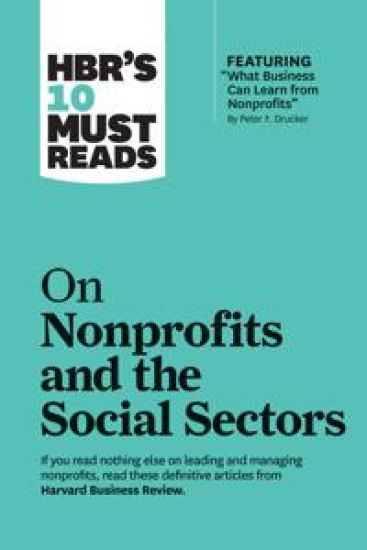
HBR's 10 Must Reads on Nonprofits and the Social Sectors (featuring "What Business Can Learn from Nonprofits" by Peter F. Drucker)

HBR's 10 Must Reads on Nonprofits and the Social Sectors (featuring "What Business Can Learn from Nonprofits" by Peter F. Drucker)

Harvard Business Review; Peter F. Drucker; Sheryl K. Sandberg; Muhammad Yunus; Arthur C. Brooks

Harvard Business Review Press
2019
pokkari
Nonprofits and the social sectors are taking on an increasing share of the world's most vital work. Make sure your organization is ready for the challenge. If you read nothing else on nonprofits and the social sectors, read these 10 articles. We've combed through hundreds of Harvard Business Review articles and selected the most important ones to help you align your organization's mission and strategy, deliver immediate impact, and create lasting change. This book will inspire you to:Choose the right problem to solveUnderstand when the best practices of for-profits don't applyAssemble an engaged and goal-driven board of directorsMake the most of for-profit initiatives and corporate partnershipsDrive demand, scale up, and be ready to change courseLearn from the success stories of the world's most respected nonprofit leadersThis collection of articles includes "Lofty Missions, Down-to-Earth Plans," by V. Kasturi Rangan; "What Business Can Learn from Nonprofits," by Peter F. Drucker; "Life's Work: An Interview with Desmond Tutu"; "Are You Solving the Right Problem?" by Dwayne Spradlin; "Life's Work: An Interview with George Mitchell"; "Enterprising Nonprofits," by J. Gregory Dees; "Life's Work: An Interview with Wynton Marsalis"; "State Street's CEO on Creating Employment for At-Risk Youths," by Joseph Hooley; "Life's Work: An Interview with Salman Khan"; "Do Better at Doing Good," by V. Kasturi Rangan, Sohel Karim, and Sheryl K. Sandberg; "AEI's President on Measuring the Impact of Ideas," by Arthur C. Brooks; "Life's Work: An Interview with Michelle Bachelet"; "The New Work of the Nonprofit Board," by Barbara E. Taylor, Richard P. Chait, and Thomas P. Holland; "Life's Work: An Interview with Bill T. Jones"; "Reaching the World's Poorest Consumers," by Muhammad Yunus, Frederic Dalsace, David Menasce, and Benedicte Faivre-Tavignot; "Life's Work: An Interview with Muhammad Yunus"; and "Audacious Philanthropy: Lessons from 15 World-Changing Initiatives," by Susan Wolf Ditkoff and Abe Grindle.
HBR's 10 Must Reads on Nonprofits and the Social Sectors (featuring "What Business Can Learn from Nonprofits" by Peter F. Drucker)

HBR's 10 Must Reads on Nonprofits and the Social Sectors (featuring "What Business Can Learn from Nonprofits" by Peter F. Drucker)

Harvard Business Review; Peter F. Drucker; Sheryl K. Sandberg; Muhammad Yunus; Arthur C. Brooks

Harvard Business Review Press
2019
sidottu
Nonprofits and the social sectors are taking on an increasing share of the world's most vital work. Make sure your organization is ready for the challenge. If you read nothing else on nonprofits and the social sectors, read these 10 articles. We've combed through hundreds of Harvard Business Review articles and selected the most important ones to help you align your organization's mission and strategy, deliver immediate impact, and create lasting change. This book will inspire you to:Choose the right problem to solveUnderstand when the best practices of for-profits don't applyAssemble an engaged and goal-driven board of directorsMake the most of for-profit initiatives and corporate partnershipsDrive demand, scale up, and be ready to change courseLearn from the success stories of the world's most respected nonprofit leadersThis collection of articles includes "Lofty Missions, Down-to-Earth Plans," by V. Kasturi Rangan; "What Business Can Learn from Nonprofits," by Peter F. Drucker; "Life's Work: An Interview with Desmond Tutu"; "Are You Solving the Right Problem?" by Dwayne Spradlin; "Life's Work: An Interview with George Mitchell"; "Enterprising Nonprofits," by J. Gregory Dees; "Life's Work: An Interview with Wynton Marsalis"; "State Street's CEO on Creating Employment for At-Risk Youths," by Joseph Hooley; "Life's Work: An Interview with Salman Khan"; "Do Better at Doing Good," by V. Kasturi Rangan, Sohel Karim, and Sheryl K. Sandberg; "AEI's President on Measuring the Impact of Ideas," by Arthur C. Brooks; "Life's Work: An Interview with Michelle Bachelet"; "The New Work of the Nonprofit Board," by Barbara E. Taylor, Richard P. Chait, and Thomas P. Holland; "Life's Work: An Interview with Bill T. Jones"; "Reaching the World's Poorest Consumers," by Muhammad Yunus, Frederic Dalsace, David Menasce, and Benedicte Faivre-Tavignot; "Life's Work: An Interview with Muhammad Yunus"; and "Audacious Philanthropy: Lessons from 15 World-Changing Initiatives," by Susan Wolf Ditkoff and Abe Grindle.
World of Three Zeroes

World of Three Zeroes

Muhammad Yunus

Tiptree Book Service
2018
pokkari

Halvin toimitettuna 18,80 €

A Nobel Peace Prize-winner outlines his radical economic vision for tackling inequality, joblessness and environmental degredation, and describes the worldwide movement already working to make it a reality.
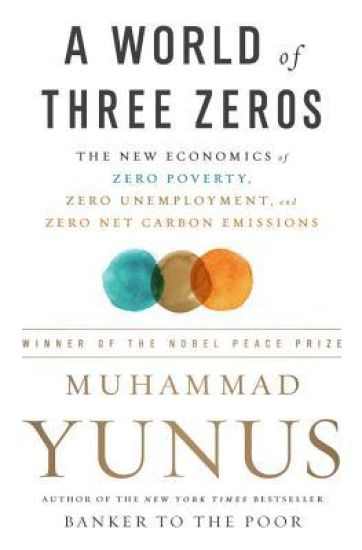
A World of Three Zeros: The New Economics of Zero Poverty, Zero Unemployment, and Zero Net Carbon Emissions
From Nobel Prize winner and bestselling author of Banker to the Poor, a vision of an emerging new economic system that can save humankind and the planet Muhammad Yunus is one of the modern world's most trenchant social critics. In A World of Three Zeros, he declare it's time to admit that the capitalist engine has failed most people - that in its current form it inevitably leads to rampant inequality, widespread unemployment, and environmental destruction. Instead, we need a new economic system that unleashes altruism as a creative force just as powerful as self-interest. Here, Yunus describes the ingenious new financial tools now funding social businesses and sketches the legal and regulatory changes needed to jump-start the next wave of socially driven innovations.
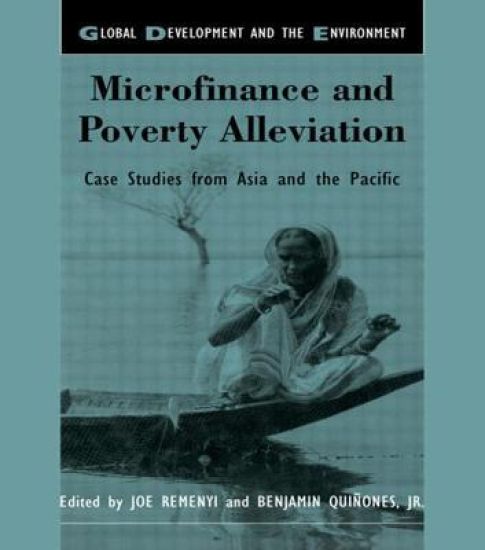
Microfinance and Poverty Alleviation
Despite the considerable economic growth of the Asia-Pacific, poverty continues to be a major problem. One key way to create sustainable livelihoods and to provide poor households an escape route from poverty is microfinance. Since the early 1980s, microfinance practitioners have proven that the poor are creditworthy, capable of utilizing scarce capital efficiently in viable incom-generating projects and able to pay back their loans. This book collects the experience of microfinance practitioners in 11 countries in the Asia-Pacific region to describe the present state of the art. It is designed to provide an overview of the subject: why it is so essential to poverty reduction; what is the best practice; what kind of policy framework and regulatory environment is required. It offers both an extensive survey of the academic literature and a selection of case studies, all from authors who have been active practitioners in microfinance for many years. The case studies cover four key countries in South Asia and three countries in East Asia in which microfinance had become particularly important. There is also a regional chapter covering the Pacific islands.
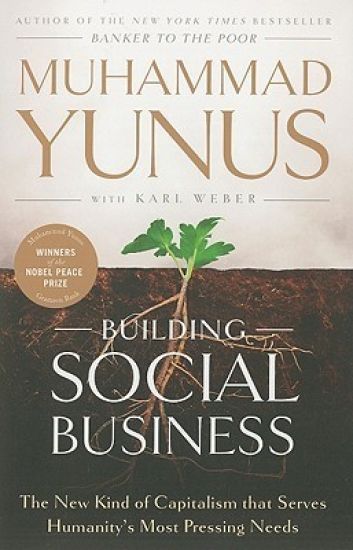
Building Social Business

Building Social Business

Muhammad Yunus

PublicAffairs,U.S.
2011
pokkari

Halvin toimitettuna 20,10 €

Muhammad Yunus, the practical visionary who pioneered microcredit and, with his Grameen Bank, won the 2006 Nobel Peace Prize, has developed a new dimension for capitalism which he calls "social business." The social business model has been adopted by corporations, entrepreneurs, and social activists across the globe. Its goal is to create self-supporting, viable commercial enterprises that generate economic growth as they produce goods and services to fulfill human needs. In Building Social Business , Yunus shows how social business can be put into practice and explains why it holds the potential to redeem the failed promise of free-market enterprise.
Creating a World Without Poverty

Creating a World Without Poverty

Muhammad Yunus

PublicAffairs,U.S.
2009
pokkari

Halvin toimitettuna 20,10 €

In the last two decades, free markets have swept the globe. But traditional capitalism has been unable to solve problems like inequality and poverty. In Muhammad Yunus' groundbreaking sequel to Banker to the Poor, he outlines the concept of social business -- business where the creative vision of the entrepreneur is applied to today's most serious problems: feeding the poor, housing the homeless, healing the sick, and protecting the planet. Creating a World Without Poverty reveals the next phase in a hopeful economic and social revolution that is already underway.
Banker To The Poor

Banker To The Poor

Muhammad Yunus

PublicAffairs,U.S.
2003
pokkari

Halvin toimitettuna 22,40 €

Muhammad Yunus is that rare thing: a bona fide visionary. His dream is the total eradication of poverty from the world. In 1983, against the advice of banking and government officials, Yunus established Grameen, a bank devoted to providing the poorest of Bangladesh with minuscule loans. Grameen Bank, based on the belief that credit is a basic human right, not the privilege of a fortunate few, now provides over 2.5 billion dollars of micro-loans to more than two million families in rural Bangladesh. Ninety-four percent of Yunus's clients are women, and repayment rates are near 100 percent. Around the world, micro-lending programs inspired by Grameen are blossoming, with more than three hundred programs established in the United States alone. Banker to the Poor is Muhammad Yunus's memoir of how he decided to change his life in order to help the world's poor. In it he traces the intellectual and spiritual journey that led him to fundamentally rethink the economic relationship between rich and poor, and the challenges he and his colleagues faced in founding Grameen. He also provides wise, hopeful guidance for anyone who would like to join him in "putting homelessness and destitution in a museum so that one day our children will visit it and ask how we could have allowed such a terrible thing to go on for so long." The definitive history of micro-credit direct from the man that conceived of it, Banker to the Poor is necessary and inspirational reading for anyone interested in economics, public policy, philanthropy, social history, and business. Muhammad Yunus was born in Bangladesh and earned his Ph. D. in economics in the United States at Vanderbilt University, where he was deeply influenced by the civil rights movement. He still lives in Bangladesh, and travels widely around the world on behalf of Grameen Bank and the concept of micro-credit.