Kirjojen hintavertailu – 12 903 727 kirjaa ja 27 kauppaa

Kirjailija

Muhammad Zaman

Kirjat ja teokset yhdessä paikassa: 5 kirjaa, julkaisuja vuosilta 2019–2021, suosituimpiin kuuluu The Codes of the Street in Risky Neighborhoods. Vertaile teosten hintoja ja tarkista saatavuus suomalaisista kirjakaupoista.

5 kirjaa

Kirjojen julkaisuvuodet: 2019–2021.

Biografija soprotivlenija. Epicheskaja bitva mezhdu ljudmi i patogenami
Tysjacheletijami idet vojna mezhdu ljudmi i boleznetvornymi bakterijami. Vmeste s antibiotikami pojavilas nadezhda, chto chelovechestvo oderzhalo pobedu, no eto okazalos illjuziej. Na stsenu voennykh dejstvij vykhodjat superbakterii - ustojchivye ko vsem vidam protivomikrobnykh preparatov, i oni mogut privesti k krizisu zdravookhranenija nevoobrazimykh masshtabov." Eto budet pokhozhe na velichajshuju chumu Srednevekovja, pandemiju grippa 1918 goda, krizis SPIDa 1990-kh godov i epidemiju likhoradki Ebola 2014 goda, obedinennye v odnu ugrozu", - preduprezhdaet Mukhammad Zaman. Podobnye utverzhdenija zvuchali i ranshe. Tem ne menee, blagodarja genialnym otkrytijam i daru predvidenija, uchenym udavalos otsrochit totalnyj apokalipsis. No, mozhet byt, vremena izmenilis? Ne ischerpali li my svoju udachu v borbe s patogenami? Skolko vremeni u nas ostalos? Otvety na eti i mnogie drugie voprosy pytaetsja najti avtor knigi "Biografija soprotivlenija". Eto zakhvatyvajuschij rasskaz o tom, pochemu i kak mikroby stanovjatsja superbakterijami, i o ljudjakh, kotorye delajut vse vozmozhnoe, chtoby zaschitit zdorove chelovechestva. Mukhammad Khamid Zaman - otmechennyj nagradami professor biomeditsinskoj inzhenerii i mezhdunarodnogo zdravookhranenija Bostonskogo universiteta v Meditsinskom institute Govarda Khjuza. Perevodchik: Frejman Nina
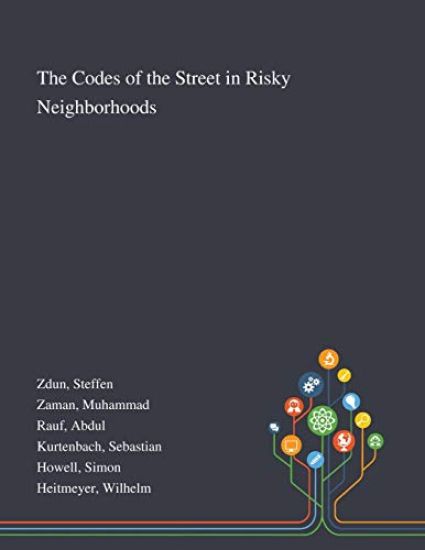
The Codes of the Street in Risky Neighborhoods

The Codes of the Street in Risky Neighborhoods

Steffen Zdun; Muhammad Zaman; Abdul Rauf

Saint Philip Street Press
2020
sidottu
This book presents a comparative look at the norms and attitudes related to youth violence. It aims to present a perspective outside of the typical Western context, through case studies comparing a developed / Western democracy (Germany), a country with a history of institutionalized violence (South Africa), and an emerging democracy that has experienced heavy terrorism (Pakistan). Building on earlier works, the research presented in this innovative volume provides new insights into the sociocultural context for shaping both young people's tolerance of and involvement in violence, depending on their environment. This volume covers: Research on interpersonal violence. Thorough review of the contribution of research on gangs, violence, neighborhoods and community. Analyses on violence-related norms of male juveniles (ages 16-21 years old) living in high-risk urban neighborhoods. Intense discussion of the concept of street code and its use. Application of street code concept to contexts outside the US. An integrating chapter focused on where the street code exists, and how it is modified or interpreted by young men. With a foreword by Jeffrey Ian Ross, this book aims to provide a broader context for research. It does so via a rigorous comparative methodology, presenting a framework that may be applied to future studies. This open access book will be of interest to researchers in criminology and criminal justice, as well as related fields such as sociology, demography, psychology, and public health. This work was published by Saint Philip Street Press pursuant to a Creative Commons license permitting commercial use. All rights not granted by the work's license are retained by the author or authors.
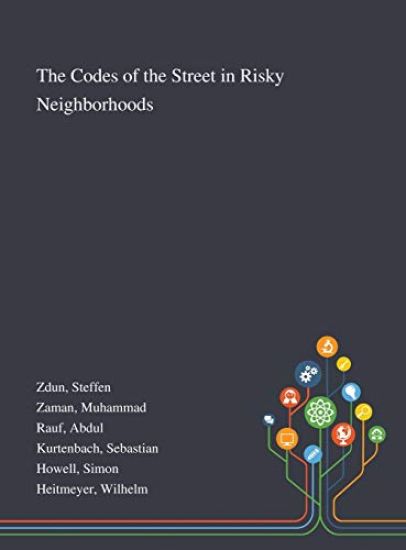
The Codes of the Street in Risky Neighborhoods

The Codes of the Street in Risky Neighborhoods

Steffen Zdun; Muhammad Zaman; Abdul Rauf

Saint Philip Street Press
2020
pokkari
This book presents a comparative look at the norms and attitudes related to youth violence. It aims to present a perspective outside of the typical Western context, through case studies comparing a developed / Western democracy (Germany), a country with a history of institutionalized violence (South Africa), and an emerging democracy that has experienced heavy terrorism (Pakistan). Building on earlier works, the research presented in this innovative volume provides new insights into the sociocultural context for shaping both young people's tolerance of and involvement in violence, depending on their environment. This volume covers: Research on interpersonal violence. Thorough review of the contribution of research on gangs, violence, neighborhoods and community. Analyses on violence-related norms of male juveniles (ages 16-21 years old) living in high-risk urban neighborhoods. Intense discussion of the concept of street code and its use. Application of street code concept to contexts outside the US. An integrating chapter focused on where the street code exists, and how it is modified or interpreted by young men. With a foreword by Jeffrey Ian Ross, this book aims to provide a broader context for research. It does so via a rigorous comparative methodology, presenting a framework that may be applied to future studies. This open access book will be of interest to researchers in criminology and criminal justice, as well as related fields such as sociology, demography, psychology, and public health. This work was published by Saint Philip Street Press pursuant to a Creative Commons license permitting commercial use. All rights not granted by the work's license are retained by the author or authors.
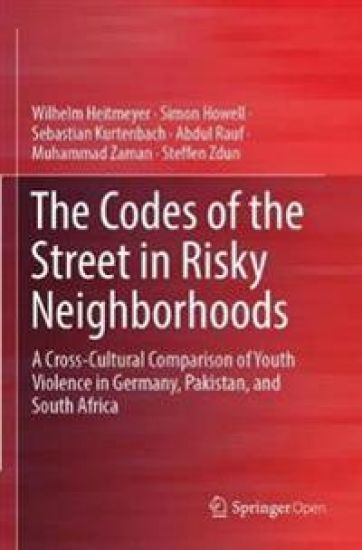
The Codes of the Street in Risky Neighborhoods

The Codes of the Street in Risky Neighborhoods

Wilhelm Heitmeyer; Simon Howell; Sebastian Kurtenbach; Abdul Rauf; Muhammad Zaman; Steffen Zdun

Springer Nature Switzerland AG
2020
nidottu
This book presents a comparative look at the norms and attitudes related to youth violence. It aims to present a perspective outside of the typical Western context, through case studies comparing a developed / Western democracy (Germany), a country with a history of institutionalized violence (South Africa), and an emerging democracy that has experienced heavy terrorism (Pakistan). Building on earlier works, the research presented in this innovative volume provides new insights into the sociocultural context for shaping both young people's tolerance of and involvement in violence, depending on their environment. This volume covers: Research on interpersonal violence. Thorough review of the contribution of research on gangs, violence, neighborhoods and community. Analyses on violence-related norms of male juveniles (ages 16-21 years old) living in high-risk urban neighborhoods. Intense discussion of the concept of street code and its use. Application of street code concept to contexts outside the US. An integrating chapter focused on where the street code exists, and how it is modified or interpreted by young men. With a foreword by Jeffrey Ian Ross, this book aims to provide a broader context for research. It does so via a rigorous comparative methodology, presenting a framework that may be applied to future studies. This open access book will be of interest to researchers in criminology and criminal justice, as well as related fields such as sociology, demography, psychology, and public health.
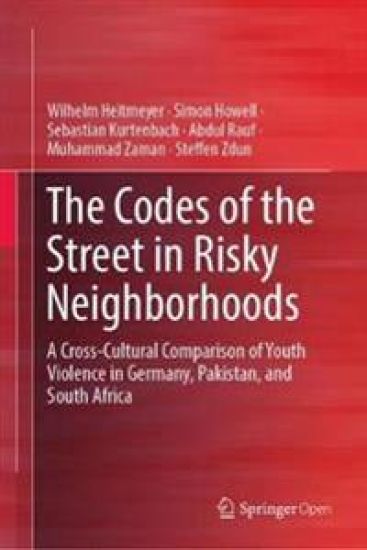
The Codes of the Street in Risky Neighborhoods

The Codes of the Street in Risky Neighborhoods

Wilhelm Heitmeyer; Simon Howell; Sebastian Kurtenbach; Abdul Rauf; Muhammad Zaman; Steffen Zdun

Springer Nature Switzerland AG
2019
sidottu
This book presents a comparative look at the norms and attitudes related to youth violence. It aims to present a perspective outside of the typical Western context, through case studies comparing a developed / Western democracy (Germany), a country with a history of institutionalized violence (South Africa), and an emerging democracy that has experienced heavy terrorism (Pakistan). Building on earlier works, the research presented in this innovative volume provides new insights into the sociocultural context for shaping both young people's tolerance of and involvement in violence, depending on their environment. This volume covers: Research on interpersonal violence. Thorough review of the contribution of research on gangs, violence, neighborhoods and community. Analyses on violence-related norms of male juveniles (ages 16-21 years old) living in high-risk urban neighborhoods. Intense discussion of the concept of street code and its use. Application of street code concept to contexts outside the US. An integrating chapter focused on where the street code exists, and how it is modified or interpreted by young men. With a foreword by Jeffrey Ian Ross, this book aims to provide a broader context for research. It does so via a rigorous comparative methodology, presenting a framework that may be applied to future studies. This open access book will be of interest to researchers in criminology and criminal justice, as well as related fields such as sociology, demography, psychology, and public health.