Kirjailija
Mumia Abu-Jamal
Kirjat ja teokset yhdessä paikassa: 14 kirjaa, julkaisuja vuosilta 1993–2020, suosituimpiin kuuluu Jailhouse Lawyers. Vertaile teosten hintoja ja tarkista saatavuus suomalaisista kirjakaupoista.
Nimi esiintyy myös muodoissa: Mumia Abu Jamal
14 kirjaa
Kirjojen julkaisuvuodet: 1993–2020.
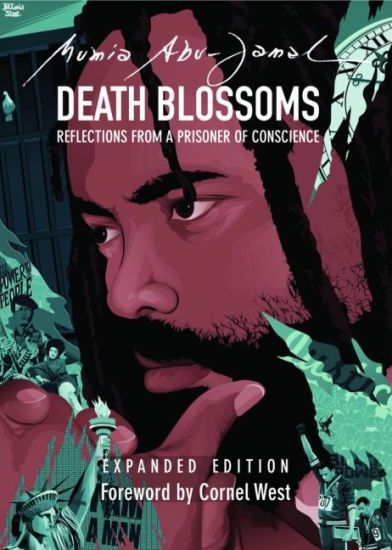
Profound meditations on life, death, freedom, family, and faith, written by radical Black journalist, Mumia Abu-Jamal, while he was awaiting his execution." Uncompromising, disturbing . . . Abu-Jamal's voice has the clarity and candor of a man whose impending death emboldens him to say what is on his mind without fear of consequence."—The Boston Globe"A brilliant, lucid meditation on the moral obligation of political commitment by a deeply ethical—and deeply wronged—human being. Mumia should be freed, now."—Henry Louis Gates, Jr., Alphonse Fletcher, Jr. University Professor & Director of the Hutchins Center for African & African American Research at Harvard University"A brilliant, powerful book by a prophetic writer . . . his language glows with an affirming flame."—Jonathan Kozol, author of Death at an Early Age and Rachel and Her ChildrenJournalist and activist Mumia Abu-Jamal has been imprisoned since 1982 for the killing of a police officer, a crime he steadfastly maintained he did not commit. In 1996, after serving more than a decade on death row, and with the likelihood of execution looming, he began receiving regular visits from members of the Bruderhof spiritual community, a group of refugees from Hitler's Germany. Inspired by these encounters, Mumia began to write a series of personal essays reflecting on his search for spiritual meaning within a society plagued by materialism, hypocrisy, and violence. "Many people say it is insane to resist the system," writes Mumia, "but actually it is insane not to." This expanded edition of Death Blossoms brings a classic, influential work back into print with a new introduction by Mumia, and includes the entire text of a groundbreaking report by Amnesty International detailing the legal improprieties and chronic injustices that marred his trial. Praise for Death Blossoms, Expanded Edition:"For years in my classrooms I have watched Death Blossoms do its luminous work. It has awakened the conscience of so many of my student readers. Once awakened, they begin to shoulder the disciplines of its revolutionary knowing, moral passion, historical precision and clarity of reason. No wonder repressive powers seek death for this prisoner of conscience. Alas for them, Mumia still lives. From streets to classrooms and back, Death Blossoms keeps opening up consciences, hearts, and minds for our revolutionary work."—Mark Lewis Taylor, Professor of Theology and Culture at Princeton Theological Seminary, and author of The Theological and the Political: On the Weight of the World"Targeted by the FBI's COINTELPRO for his revolutionary politics, imprisoned, and sentenced to death, Mumia found freedom in resistance. His reflections here—on race, spirituality, on struggle, and life—illuminate this path to freedom for us all."—Joshua Bloom, co-author with Waldo E. Martin Jr. of Black Against Empire: The History and Politics of the Black Panther Party"In this revised edition of his groundbreaking work, Death Blossoms, convicted death row prisoner Mumia Abu-Jamal tackles hard and existential questions, searching for God and a greater meaning in a caged life that may be cut short if the state has its way and takes his life. As readers follow Mumia's journey through his poems, short essays, and longer musings, they will learn not only about this singular individual who has retained his humanity despite the ever present threat of execution, but also about themselves and our society: what we are willing to tolerate and who we are willing to cast aside. If there is any justice, Mumia will prevail in his battle for his life and for his freedom."—Lara Bazelon, author of Rectify: The Power of Restorative Justice After Wrongful Conviction"Mumia Abu-Jamal has challenged us to see the prison at the center of a long history of US oppression, and he has inspired us to keep faith with ordinary struggles against injustice under the most terrible odds and circumstances. Written more than two decades ago, Death Blossoms helps us to see beyond prison walls; it is as timely and as necessary as the day it was published."—Nikhil Pal Singh, founding faculty director of the NYU Prison Education Program, author of Race and America's Long War"For over three decades, the words of Mumia Abu-Jamal have been tools many young activists have used to connect the dots of empire, racism, and resistance. The welcome reissue of Death Blossoms is a chance to reconnect with Abu-Jamal's prophetic voice, one that needs to be heard now more than ever."—Hilary Moore and James Tracy, co-authors of No Fascist USA!, The John Brown Anti-Klan Committee and Lessons for Today's Movements
Murder Incorporated - Dreaming of Empire: Book One
Mumia Abu-Jamal; Stephen Vittoria
Prison Radio
2018
nidottu
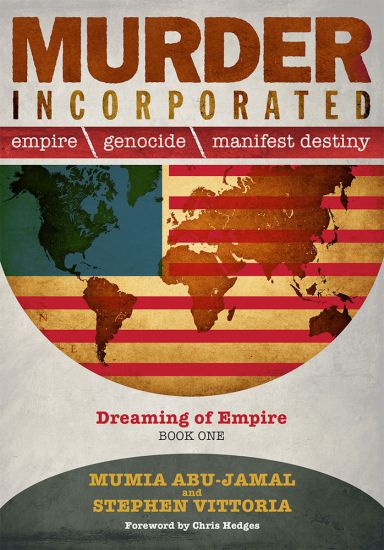
The prevailing myth is that America's prized possessions and greatest exports are democracy and the dream of freedom. The naked truth, according to Abu-Jamal and Vittoria, is that the American dream is illusory and America's greatest export is in fact murder - and that along the way to the kill, America thieves, suppresses, and tyrannizes. This book strives to set the record straight, to educate, to enlighten and to enliven the people against the corruptions of empire--corruptions that stretch from Columbus's first steps on Hispaniola through yesterday's murderous drone attack. More than a history book, this is a lively, irreverent, and spirited alternative to the orthodoxy of American exceptionalism.
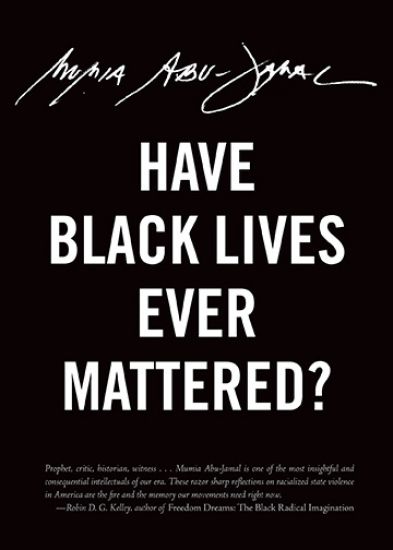
"A must-read for anyone interested in social justice and inequalities, social movements, the criminal justice system, and African American history. An excellent companion to Michelle Alexander's The New Jim Crow and Ava DuVernay's documentary 13th."—Library Journal, Starred review "I was fortunate to grow up in a community in which it was apparent that our lives mattered. This memory is the antidote to the despair that seizes one of my generation when we hear the words 'Black Lives Matter.' We want to shout: Of course they do! To you, especially. In this brilliant, painful, factual and useful book, we see to whom our lives have not mattered: the profit driven Euro-Americans who enslaved and worked our ancestors to death within a few years, then murdered them and bought replacements. Many of these ancestors are buried beneath Wall Street. Mumia Abu-Jamal's painstaking courage, truth-telling, and disinterest in avoiding the reality of American racial life is, as always, honorable."—Alice Walker "Prophet, critic, historian, witness . . . Mumia Abu-Jamal is one of the most insightful and consequential intellectuals of our era. These razor sharp reflections on racialized state violence in America are the fire and the memory our movements need right now."—Robin D. G. Kelley, author of Freedom Dreams: The Black Radical Imagination "Mumia Abu Jamal's clarion call for justice and defiance of state oppression has never dimmed, despite his decades of being shackled and caged. He is one of our nation's most valiant revolutionaries and courageous intellectuals."—Chris Hedges, Pulitzer-prize winning journalist and author of Wages of Rebellion: The Moral Imperative of Revolt "This collection of short meditations, written from a prison cell, captures the past two decades of police violence that gave rise to Black Lives Matter while digging deeply into the history of the United States. This is the book we need right now to find our bearings in the chaos." —Roxanne Dunbar-Ortiz, author of An Indigenous Peoples' History of the United States In December 1981, Mumia Abu-Jamal was shot and beaten into unconsciousness by Philadelphia police. He awoke to find himself shackled to a hospital bed, accused of killing a cop. He was convicted and sentenced to death in a trial that Amnesty International has denounced as failing to meet the minimum standards of judicial fairness. In Have Black Lives Ever Mattered?, Mumia gives voice to the many people of color who have fallen to police bullets or racist abuse, and offers the post-Ferguson generation advice on how to address police abuse in the United States. This collection of his radio commentaries on the topic features an in-depth essay written especially for this book to examine the history of policing in America, with its origins in the white slave patrols of the antebellum South and an explicit mission to terrorize the country's black population. Applying a personal, historical, and political lens, Mumia provides a righteously angry and calmly principled radical black perspective on how racist violence is tearing our country apart and what must be done to turn things around. Mumia Abu-Jamal is author of many books, including Death Blossoms, Live from Death Row, All Things Censored, Writing on the Wall, and Jailhouse Lawyers. "[Mumia's] writings are a wake-up call. He is a voice from our prophetic tradition, speaking to us here, now, lovingly, urgently."—Cornel West "He allows us to reflect upon the fact that transformational possibilities often emerge where we least expect them."—Angela Y. Davis "These writings date from the late 1990s and often show prescience on the part of the author, who was writing well before the Black Lives Matter movement that 'when the system kills Blacks, there is no outrage, for it has been normalized by centuries of white enslavement, terrorism, and injustice. Such violence is simply the accepted way of how things are.' Also included is a series of articles on the killing of Trayvon Martin, accurately anticipating the acquittal of the white man who shot him, and another series on Ferguson and its aftermath—how 'Ferguson may prove a wake-up call that Black lives matter. A call for youth to build social, radical, revolutionary movements for change.' The last piece is the longest, a pamphlet on how to build such a movement with a historical perspective on why this is necessary."—Kirkus Reviews "While the author does reflect on the widely reported cases of police violence against African Americans, as well as on the role of the media in determining what gets attention, the strength of the book rests in the essays that draw attention to lesser-known victims of police violence, particularly women of color whose stories never reached the mainstream media. Over the course of nearly four decades in prison, Abu-Jamal . . . has become an astute student of the justice system as well as a particularly cogent opponent of the death penalty.”—Publishers Weekly
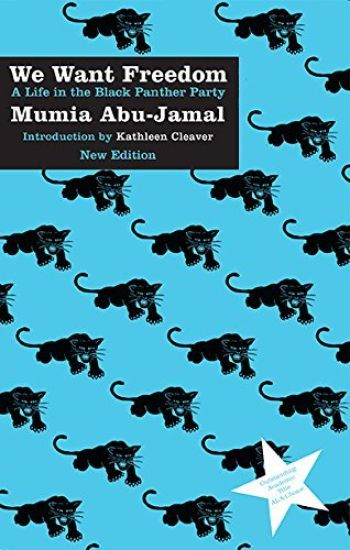
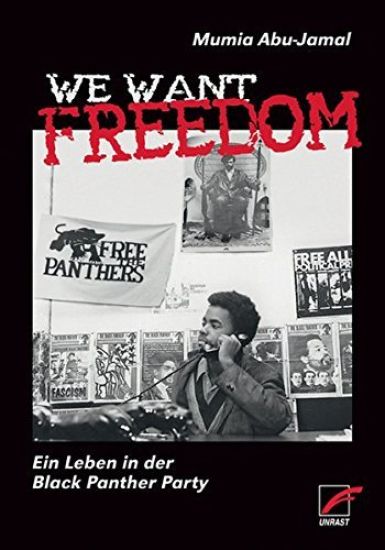
"Writing from the barren confines of his death row cell, Mumia Abu-Jamal provides a remarkable testament about the Black Panther Party. . . .an amazing book that illuminates the truth of what his membership in the Party was about, and reveals the extreme price extracted from him for having learned, and for now telling the truth."—Kathleen Cleaver, from the Introduction Mumia Abu Jamal, America’s most famous political prisoner, is internationally known for his radio broadcasts and books emerging “Live from Death Row.” In his youth Mumia Abu-Jamal helped found the Philadelphia branch of the Black Panther Party, wrote for the national newspaper, and began his life-long work of exposing the violence of the state as it manifests in entrenched poverty, endemic racism, and unending police brutality. In We Want Freedom, Mumia combines his memories of day-to-day life in the Party with analysis of the history of Black liberation struggles. The result is a vivid and compelling picture of the Black Panther Party and its legacy. Applying his poetic voice and unsparing critical gaze, Mumia examines one of the most revolutionary and most misrepresented groups in the US. As the calls that Black Lives Matter continue to grow louder, Mumia connects the historic dots in this revised/updated edition, observing that the Panthers had legal observers to monitor the police and demanded the “immediate end to police brutality and the murder of Black people.” By focusing on the men and women who were the Party, as much as on the leadership; by locating the Black Panthers in a struggle centuries old—and in the personal memories of a young man—Mumia Abu-Jamal helps us to understand freedom.
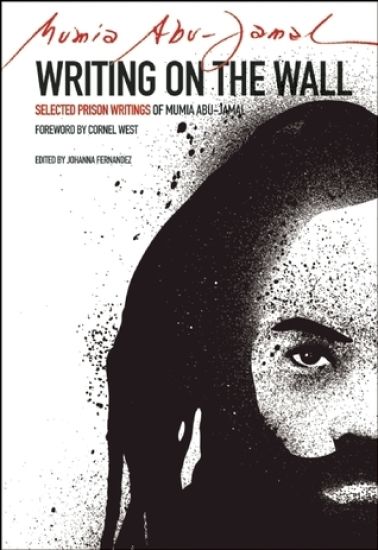
"Revolutionary love, revolutionary memory and revolutionary analysis are at work in every page written by Mumia Abu-Jamal ... His writings are a wake-up call. He is a voice from our prophetic tradition, speaking to us here, now, lovingly, urgently. Black man, old-school jazz man, freedom fighter, revolutionary--his presence, his voice, his words are the writing on the wall."--Cornel West, from the foreword From the first slave writings to contemporary hip hop, the canon of African American literature offers a powerful counter-narrative to dominant notions of American culture, history and politics. Resonant with voices of prophecy and resistance, the African American literary tradition runs deep with emancipatory currents that have had an indelible impact on the United States and the world. Mumia Abu-Jamal has been one of our most important contributors to this canon for decades, writing from the confines of the U. S. prison system to give voice to those most silenced by chronic racism, impoverishment and injustice. Writing on the Wall is a selection of more than 100 previously unpublished essays that deliver Mumia Abu-Jamal's essential perspectives on community, politics, power, and the possibilities of social change in the United States. From Rosa Parks to Edward Snowden, from the Trail of Tears to Ferguson, Missouri, Abu-Jamal addresses a sweeping range of contemporary and historical issues. Written mostly during his years of solitary confinement on Death Row, these essays are a testament to Abu-Jamal's often prescient insight, and his revolutionary perspective brims with hope, encouragement and profound faith in the possibility of redemption. "Greatness meets us in this book, and not just in Mumia's personal courage and character. It's in the writing. This is art with political power, challenging institutional injustice in the U. S. while catalyzing our understanding, memory and solidarities for liberation and love. Writing on the Wall can set the nation aflame--yes, for creating new possible worlds." --Mark Lewis Taylor, Professor of Theology and Culture, Princeton Theological Seminary Mumia Abu-Jamal is an award-winning journalist and author of two best-selling books, Live From Death Row and Death Blossoms. Johanna Fernandez is a Fulbright Scholar and Professor of History at Baruch College in New York City. Cornel West is a scholar, philosopher, activist and author of over a dozen books including his bestseller, Race Matters. He appears frequently in the media, and has appeared on Real Time with Bill Maher, The Colbert Report, CNN and C-Span as well as Tavis Smiley.
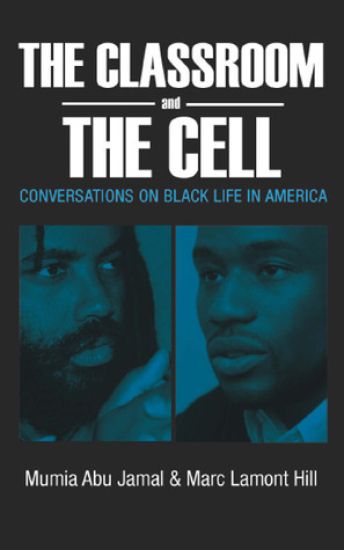
This collection of conversations between celebrity intellectual Marc Lamont Hill and famed political prisoner Mumia Abu-Jamal is a shining example of African American men speaking for themselves about the many forces impacting their lives. Covering topics such as race, politics, hip-hop culture, education, mass incarceration, and love, their discussions shine a spotlight on some of the most pressing issues in 21st century African American life.
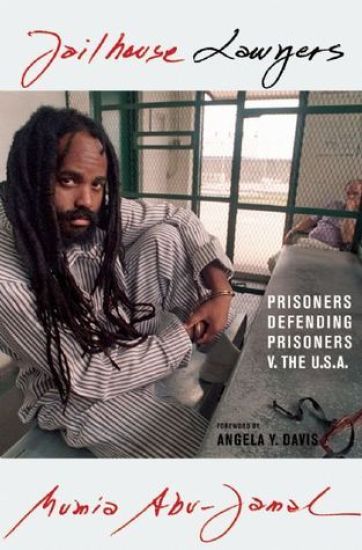
“Expert and well-reasoned commentary on the justice system . . . His writings are dangerous.”—The Village Voice In Jailhouse Lawyers, award-winning journalist and death-row inmate Mumia Abu-Jamal presents the stories and reflections of fellow prisoners-turned-advocates who have learned to use the court system to represent other prisoners—many uneducated or illiterate—and, in some cases, to win their freedom. In Abu-Jamal’s words, “This is the story of law learned, not in the ivory towers of multi-billion-dollar endowed universities [but] in the bowels of the slave-ship, in the dank dungeons of America.” Includes an introduction by Angela Y. Davis. Mumia Abu-Jamal’s books include Live From Death Row and Death Blossoms.
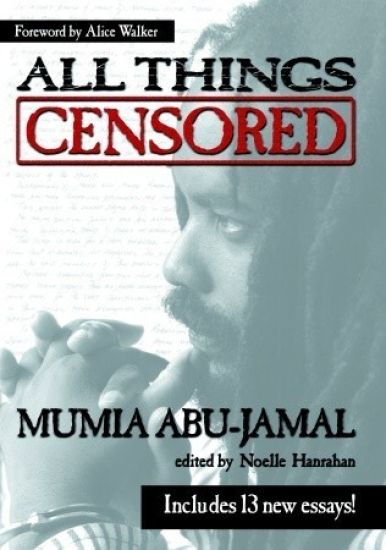
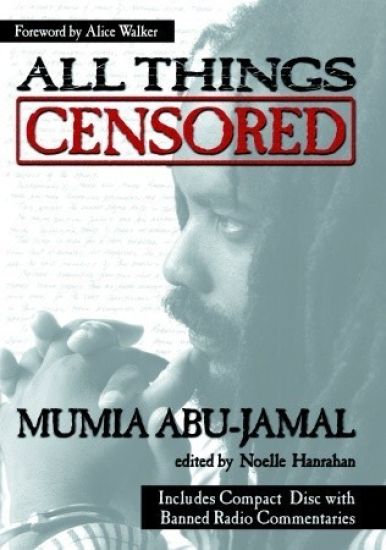
The title of this book is grim wordplay, referring to the author’s censorship by National Public Radio’s All Things Considered, which bowed to pressure from then-Senator Bob Dole to ban Mumia Abu-Jamal’s radio commentaries. A death-row inmate for nearly 20 years, Abu-Jamal here offers more than six dozen essays on such topics as censorship and the failures of the court system. The author’s composure, humor, and connection to the living world shine through these writings and represent a kind of victory over the “corrections” system. This edition includes 12 new essays not in the hardcover edition and a compact disc with banned radio commentaries.
All Things Censored is Mumia Abu-Jamal's major new release with 79 writings, many freshly composed by Mumia with the cartridge of a ball-point pen--the only implement he is allowed in his death-row cell. Abu-Jamal writes on a host of topics, including the ironies that abound within the U. S. prison system, the consequences of those ironies for us all, and his own case. Mumia's composure, humor, and connection to the living world around him represent an irrefutable victory over the "corrections" system that has for two decades sought to isolate and silence him. His conviction for the 1981 murder of a Philadelphia police officer has been contested on various constitutional, legal, and moral grounds. As of this writing, he lives and writes with an execution date hanging over his head, and is still banned from the airwaves and television (as all Pennsylvania prisoners now are). The title, All Things Censored, alludes to Mumia's hiring as an on-air columnist by National Public Radio's "All Things Considered," and subsequent banning from that venue under pressure from law and order groups. To this day, these unique and rare recordings by Mumia (produced by Prison Radio) remain under lock and key in the vaults of NPR.
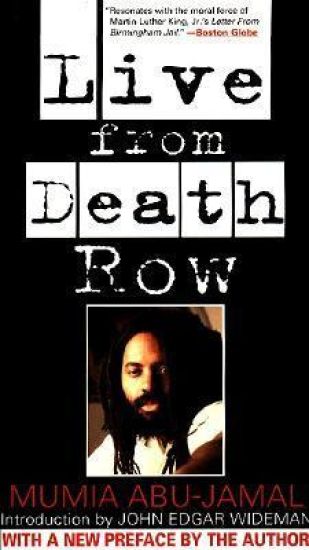
Once a prominent radio reporter, Mumia Abu-Jamal is now in a Pennsylvania prison awaiting his state-sactioned execution. In 1982 he was convicted and sentenced to death for the murder of Philadelphia police officer Daniel Faulkner after a trial many have criticized as profoundly biased. Live From Death Row is a collection of his prison writings--an impassioned yet unflinching account of the brutalities and humiliations of prison life. It is also a scathing indictment of racism and political bias in the American judicial system that is certain to fuel the controversy surrounding the death penalty and freedom of speech.
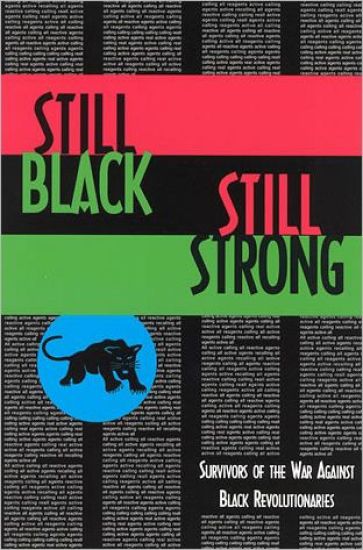
An essential document of the Black Panther Party written by three leading thinkers and party activists who were jailed following the FBI'S 1969 mandate to destroy the organization "by any means possible." Still Black, Still Strong is partly based upon the 1989 videotape Framing The Panthers by producers Chris Bratton and Annie Goldson. It recounts the stories of Dhoruba Bin Wahad, Mumia Abu-Jamal and Assata Shakur, all of whom were arrested and jailed during the COINTELPRO probe of the Black Panther Party. Dhoruba Bin Wahad, who organized chapters of the Black Panther Party in New York and along the Estern Seaboard and worked with tenants in Harlem and on drug rehabilitation in the Bronx, was accused of murdering two officers while still in his teens and imprisoned for 19 years. He always maintained his innocence and won his freedom by forcing the FBI to release thousands of classified documents proving that he had been framed. The justice department eventually rescinded Bin Wahad?s conviction and he was released in 1990, seven months after the documentary premiered. Mumia Abu-Jamal, a journalist who headed the Black Panther free breakfast program for inner-city school children in Philadelphia, was also accused of the murder of an officer and sent on death-row, where he still is today. Assata Shakur was a college educated social worker in her twenties when she was accused of shooting a cop, then arrested and tortured and denied medical treatment. Her interview was conducted in Cuba where she has been exiled since her escape from a New Jersey women's prison in 1975. Bin Wahad, Shakur and Abu-Jamal offer a little-known history and an incisive analysis of the Black Panthers' original goals, which the U. S. Government has tried to distort and suppress. As one confidential, 1969, memo to J. Edgar Hoover put it, "The Negro youth and moderates must be made to understand that if they succumb to revolutionary teaching, they will be dead revolutionaries."