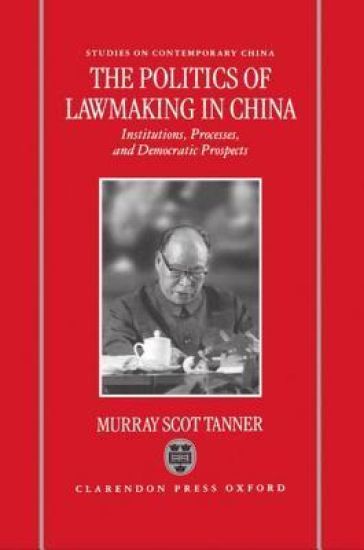
China's struggle to develop it's legal system is helping to drive an `inadvertant transition' towards democratization in the future. Since Mao Zedong's death, the China Communist Party's (CCP) leaders have increasingly shifted to drafting most of their key policies as laws rather than Party edicts. The result has been a quiet but dramatic change in Chinese politics, recasting the relationship between the key lawmaking institutions: the Communist Party bureaucracy, the Cabinet (State Council), and China's legislaturethe National People's Congress (NPC). No longer a rubber stamp, NPC leaders and deputies, though still overwhelmingly members of the Communist Party, have become far more assertive and less disciplined in their dealings with other top Party and government leaders. Deputies now commonly stall, amend, block, and increasingly vote `no' on proposals approved by the Party Politburo and the Cabinet. China's NPC, like successful legislatures elsewhere, has also used its growing bureaucracy and subcommittees as institutional weapons to expand its influence over policy. The Politics of Lawmaking in China is the first book to examine all of the changing political institutions involved in lawmaking, and show how their evolution is reshaping Chinese politics. Drawing on internal documentation and interviews, it includes new information about how the CCP leadership attempts to guide the increasingly important process of lawmaking, and how this power has eroded greatly since 1978. Through detailed case studies, the book demonstrates how and why the top leadership is often forced to settle for far less than it wants in hammering out laws. Rather than encouraging the sort of anti-communist mass uprising from below that occurred in Eastern Europe in 1989, this book argues that China's changes in lawmaking are contributing to a more quiet transition from within the Communist system.