Kirjojen hintavertailu – 12 903 725 kirjaa ja 27 kauppaa

Kirjailija

Murray Smith

Kirjat ja teokset yhdessä paikassa: 7 kirjaa, julkaisuja vuosilta 2009–2025, suosituimpiin kuuluu Jesus' Speech on the Mount of Olives. Vertaile teosten hintoja ja tarkista saatavuus suomalaisista kirjakaupoista.

7 kirjaa

Kirjojen julkaisuvuodet: 2009–2025.

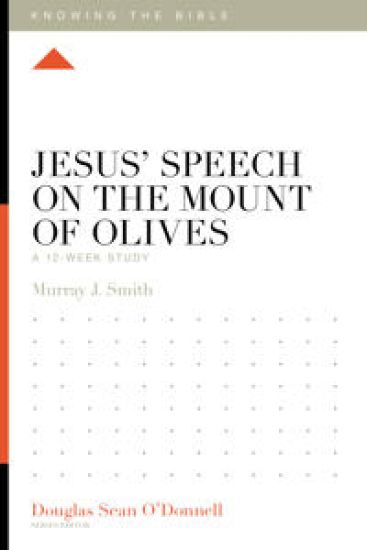
Jesus' Speech on the Mount of Olives

Jesus' Speech on the Mount of Olives

Murray Smith

Crossway Books
2025
pokkari
Engaging 12-Week Study from Jesus’ Speech on the Mount of Olives Offers Practical Teaching on Christian Living in Light of Jesus’ Return The Knowing the Bible series is a resource designed to help Bible readers better understand and apply God’s Word. These 12-week studies lead participants through parts of the Bible and are made up of four basic components: (1) reflection questions help readers engage the text at a deeper level; (2) “Gospel Glimpses” highlight the gospel of grace throughout the Bible; (3) “Whole-Bible Connections” show how any given passage connects to the Bible’s overarching story of redemption, culminating in Christ; and (4) “Theological Soundings” identify how historic orthodox doctrines are taught or reinforced throughout Scripture. In Jesus’ Speech on the Mount of Olives, Murray J. Smith guides readers through Matthew 24–25, Mark 13, and Luke 21 to study Jesus’ pivotal speech from the Mount of Olives. Examining themes of gospel witness, judgment, and salvation, this study teaches believers how they are to live as they await Christ’s return. Helpful Bible Study Resource: Features date and historical background, theological context for the Bible passage, “Whole-Bible Connections,” compelling reflection questions, and more In-Depth: Ties the biblical text in with the whole story of Scripture, shows how each passage unveils the gospel, and illuminates the doctrines taught in each passage Part of the Knowing the Bible Series: With contributions from an array of influential pastors and church leaders, these gospel-centered studies help Christians see and cherish the message of God’s grace on every page of the Bible

The 90 Day Business Goal Tracker Business Accountability Just Got Serious!
If you want to run a better business or perform better in your role, you have made the crucial first step by sourcing 'The 90 Day Business Goal Tracker'. Created by MIT Graduate and Leading Business Growth Strategist Murray Smith and Best-Selling Author R. T Nelson, The 90 Day Business Goal Tracker provides the resource and blueprint to achieve all your essential 90 day business goals. The 90 Day Business Goal Tracker provides the framework, steps and tools to accelerate your performance by organizing your thoughts and intentions into a prioritized action list and transferring these into meaningful outcomes. Designed to suit businesses of all sizes, The 90 Day Business Goal Tracker is perfect for developing accountability for both individuals and teams with its unique structure and format. Used as both a daily tracker and reflective journal, The 90 Day Business Goal Tracker will provide the perfect resource for teams and their managers to monitor progress, overcome obstacles and challenges, and review performance over 90 days. Product Description: - 8.5 x 11 inch - Perfect journal size for daily entries- 200+ pages - Includes all key details, steps and daily tracking templates- Gloss Cover - For added durability If you want to make a permanent positive change, then use this book to deliver on everything that is important to you and the business you work in.
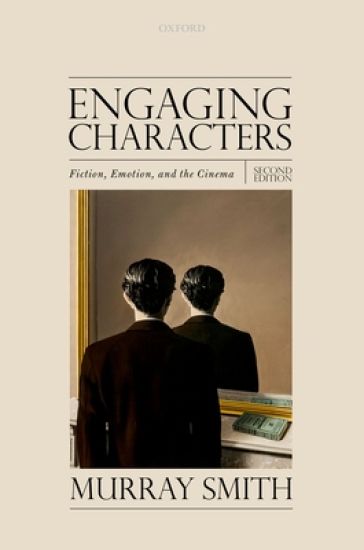
Engaging Characters

Engaging Characters

Murray Smith

Oxford University Press
2022
nidottu

Halvin toimitettuna 55,80 €

Characters - those fictional agents populating the fictional worlds we spend so much time absorbed in - are ubiquitous in our lives. We track their fortunes, judge their actions, and respond to them with anger, amusement, and affection - indeed the whole palette of human emotions. Powerfully drawn characters transcend their stories, entering into our imaginations and deliberations about the actual world, acting as analogies and points of reference. And yet there has been remarkably little sustained and systematic reflection on these creatures that absorb so much of our attention and emotional lives. In Engaging Characters, Murray Smith sets out a comprehensive analysis of character, exploring the role of characters in our experience of narrative and fiction. Smith's analysis focuses on film, and also illuminates character in literature, opera, song, cartoons, new and social media. At the heart of this account is an explanation of the capacity of characters to move us. Teasing out the various dimensions of character, Smith explores the means by which films draw us close to characters, or hold us at a distance from them, and how our beliefs and attitudes are formed and sometimes reformed by these encounters. Integrating these arguments with research on emotion in philosophy, psychology, evolutionary theory, and anthropology, Engaging Characters advances an account of the nature of fictional characters and their functions in fiction, imagination, and human experience. In this revised, twenty-fifth anniversary edition of Engaging Characters, Smith refines and extends the arguments of the first edition, with a substantial new introduction reviewing the debates on emotion, empathy, and film spectatorship that the book has inspired.
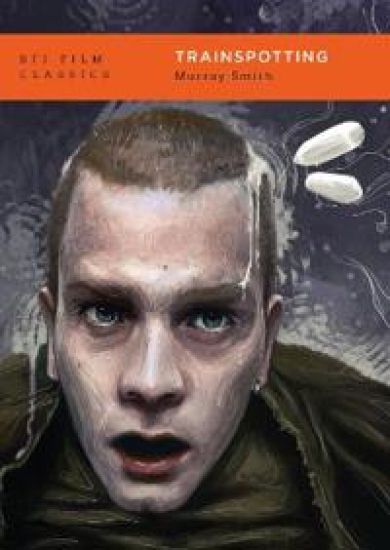
Trainspotting

Trainspotting

Murray Smith

Bloomsbury Publishing PLC
2021
nidottu
In 1996 Trainspotting was the biggest thing in British culture. Brilliantly and aggressively marketed, it crossed into the mainstream despite being a black comedy set against the backdrop of heroin addiction in Edinburgh. Produced by Andrew Macdonald, scripted by John Hodge and directed by Danny Boyle, the team behind Shallow Grave (1994), Trainspotting was an adaptation of Irvine Welsh’s barbed novel of the same title. The film is crucial for understanding British culture in the context of devolution and the rise of ‘Cool Britannia’. Murray Smith unpicks the processes that led to Trainspotting’s enormous success. He isolates various factors – the film’s eclectic soundtrack, its depiction of Scottish identity, its attitude to deprivation, drugs and violence, its traffic with American cultural forms, its synthesis of realist and fantastic elements, and its complicated relationship to ‘heritage’ – that make Trainspotting such a vivid document of its time. Although it heralded a false dawn for British film-making,Trainspotting is, Smith concludes, both authentically vernacular and yet transnational in its influences and ambitions. In his afterword to this new edition, Murray Smith reflects on the original film 25 years after its release, and its 2017 sequel T2: Trainspotting also directed by Boyle. Smith also considers Danny Boyle's subsequent directorial career, with highlights including Slumdog Millionaire (2008) and the 2012 London Olympics opening ceremony.
Film, Art, and the Third Culture

Film, Art, and the Third Culture

Murray Smith

Oxford University Press
2020
nidottu
In the mid-1950s C. P. Snow began his campaign against the 'two cultures' - the debilitating divide, as he saw it, between traditional 'literary intellectual' culture, and the culture of the sciences, urging in its place a 'third culture' which would draw upon and integrate the resources of disciplines spanning the natural and social sciences, the arts and the humanities. Murray Smith argues that, with the ever-increasing influence of evolutionary theory and neuroscience, and the pervasive presence of digital technologies, Snow's challenge is more relevant than ever. Working out how the 'scientific' and everyday images of the world 'hang' together is no simple matter. In Film, Art, and the Third Culture, Smith explores this question in relation to the art, technology, and science of film in particular, and to the world of the arts and aesthetic activity more generally. In the first part of his book, Smith explores the general strategies and principles necessary to build a 'third cultural' or naturalized approach to film and art - one that roots itself in an appreciation of scientific knowledge and method. Smith then goes on to focus on the role of emotion in film and the other arts, as an extended experiment in the 'third cultural' integration of ideas on emotion spanning the arts, humanities and sciences. While acknowledging that not all of the questions we ask are scientific in nature, Smith contends that we cannot disregard the insights wrought by taking a naturalized approach to the aesthetics of film and the other arts.
Film, Art, and the Third Culture

Film, Art, and the Third Culture

Murray Smith

Oxford University Press
2017
sidottu
In the mid-1950s C. P. Snow began his campaign against the 'two cultures' - the debilitating divide, as he saw it, between traditional 'literary intellectual' culture, and the culture of the sciences, urging in its place a 'third culture' which would draw upon and integrate the resources of disciplines spanning the natural and social sciences, the arts and the humanities. Murray Smith argues that, with the ever-increasing influence of evolutionary theory and neuroscience, and the pervasive presence of digital technologies, Snow's challenge is more relevant than ever. Working out how the 'scientific' and everyday images of the world 'hang' together is no simple matter. In Film, Art, and the Third Culture, Smith explores this question in relation to the art, technology, and science of film in particular, and to the world of the arts and aesthetic activity more generally. In the first part of his book, Smith explores the general strategies and principles necessary to build a 'third cultural' or naturalized approach to film and art - one that roots itself in an appreciation of scientific knowledge and method. Smith then goes on to focus on the role of emotion in film and the other arts, as an extended experiment in the 'third cultural' integration of ideas on emotion spanning the arts, humanities and sciences. While acknowledging that not all of the questions we ask are scientific in nature, Smith contends that we cannot disregard the insights wrought by taking a naturalized approach to the aesthetics of film and the other arts.
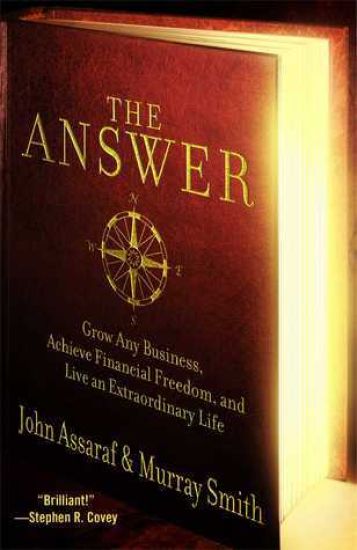
The Answer: Grow Any Business, Achieve Financial Freedom, and Live an Extraordinary Life
A key team member behind The Secret and his business partner offer the specific tools and mental strategies to help readers leap ahead in any career or business venture and achieve major financial success. In this visionary work, New York Times bestselling author John Assaraf and business guru Murray Smith reinvent the business book for the twenty-first century. Two of the most successful entrepreneurs in the world, they combine forces to bring their special insights and techniques together in a revolutionary guide for success in the modern business environment. Assaraf and Smith know how to minimize risk and maximize success, and The Answer provides a framework for sharing their wisdom, experience, and skills with the millions of people who want to accomplish their own dreams in life. Using cutting-edge research into brain science and quantum physics, they show how readers can actually rewire their brains for success and create the kind of extraordinary lives they want. By teaching readers how to attract and use newly discovered "uncommon" senses to achieve business success, the authors demonstrate the beliefs, habits, thoughts, and actions that they have used to build eighteen multimillion-dollar companies. Any reader who follows this step-by-step process to build his or her career will experience an enormous life transformation and reach an exceptional level of living.