Kirjojen hintavertailu – 12 859 824 kirjaa ja 27 kauppaa

Kirjailija

Mustafa Demir

Kirjat ja teokset yhdessä paikassa: 5 kirjaa, julkaisuja vuosilta 2019–2025, suosituimpiin kuuluu Islamist Populism in Turkey and Indonesia: A Comparative Analysis. Vertaile teosten hintoja ja tarkista saatavuus suomalaisista kirjakaupoista.

5 kirjaa

Kirjojen julkaisuvuodet: 2019–2025.

Islamist Populism in Turkey and Indonesia: A Comparative Analysis

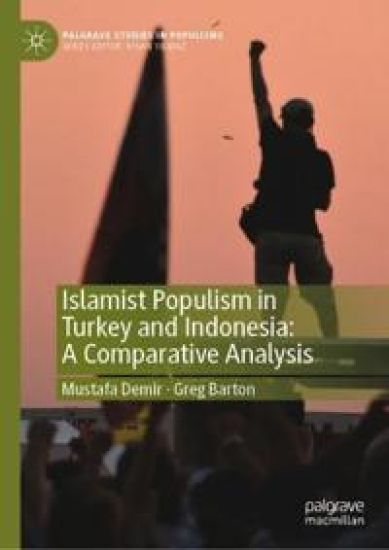
Islamist Populism in Turkey and Indonesia: A Comparative Analysis

Mustafa Demir; Greg Barton

SPRINGER VERLAG, SINGAPORE
2025
nidottu
This book focuses on the dynamics of democracy and populism in Muslim-majority countries, such as Turkey and Indonesia. It does so by examining the complexities of democratic development in these areas, ranging from 'flawed' to 'hybrid' regimes. Despite the aspirations for democratic progress, recent democracy indices reveal a concerning trend of backsliding, particularly in the last decade. This regression can be attributed, in part, to the ascendancy of populist politics. Populist movements have adeptly exploited both real and perceived cultural insecurities to acquire, consolidate, and maintain political power. This phenomenon is especially pronounced in flawed democracies and hybrid regimes within Muslim-majority countries, such as Turkey and Indonesia. Notably, religion, specifically Islam, has emerged as a central tool within the populist playbook. Populist actors have constructed a religious-civilizational framework that leverages political binaries, manipulates insecurities, and fosters traditional anti-elite and anti-'other' sentiments. In this book, the authors advance the notion that populism is a multifaceted phenomenon that relies on various pre-existing fractures within societies and cultures. Once in power, populism intensifies these differences to further consolidate its position, utilizing various state apparatuses such as state-controlled religious institutions. This comprehensive analysis offers insights into the growing trend of populism in the Muslim world and its impact on contemporary politics.
Securitization and Authoritarianism

Securitization and Authoritarianism

Ihsan Yilmaz; Erdoan Shipoli; Mustafa Demir

SPRINGER VERLAG, SINGAPORE
2024
nidottu
This book focuses on securitization and authoritarianism in Turkey with research on the country’s Islamist populist ruling party’s (AKP) oppression of different socio-political, ethnic and religious groups. In doing so, it analyzes how the AKP has securitized to oppress different socio-political groups and identities, according to the time and need for the party's political survival. Research in the book sheds light on the use of traumas, conspiracy theories, and fear as tools in the securitization and repression processes.
Islamist Populism in Turkey and Indonesia: A Comparative Analysis

Islamist Populism in Turkey and Indonesia: A Comparative Analysis

Mustafa Demir; Greg Barton

SPRINGER VERLAG, SINGAPORE
2023
sidottu
This book focuses on the dynamics of democracy and populism in Muslim-majority countries, such as Turkey and Indonesia. It does so by examining the complexities of democratic development in these areas, ranging from 'flawed' to 'hybrid' regimes. Despite the aspirations for democratic progress, recent democracy indices reveal a concerning trend of backsliding, particularly in the last decade. This regression can be attributed, in part, to the ascendancy of populist politics. Populist movements have adeptly exploited both real and perceived cultural insecurities to acquire, consolidate, and maintain political power. This phenomenon is especially pronounced in flawed democracies and hybrid regimes within Muslim-majority countries, such as Turkey and Indonesia. Notably, religion, specifically Islam, has emerged as a central tool within the populist playbook. Populist actors have constructed a religious-civilizational framework that leverages political binaries, manipulates insecurities, and fosters traditional anti-elite and anti-'other' sentiments. In this book, the authors advance the notion that populism is a multifaceted phenomenon that relies on various pre-existing fractures within societies and cultures. Once in power, populism intensifies these differences to further consolidate its position, utilizing various state apparatuses such as state-controlled religious institutions. This comprehensive analysis offers insights into the growing trend of populism in the Muslim world and its impact on contemporary politics.
Securitization and Authoritarianism

Securitization and Authoritarianism

Ihsan Yilmaz; Erdoan Shipoli; Mustafa Demir

SPRINGER VERLAG, SINGAPORE
2023
sidottu
This book focuses on securitization and authoritarianism in Turkey with research on the country’s Islamist populist ruling party’s (AKP) oppression of different socio-political, ethnic and religious groups. In doing so, it analyzes how the AKP has securitized to oppress different socio-political groups and identities, according to the time and need for the party's political survival. Research in the book sheds light on the use of traumas, conspiracy theories, and fear as tools in the securitization and repression processes.
The Geopolitics of Turkey–Kurdistan Relations

The Geopolitics of Turkey–Kurdistan Relations

Mustafa Demir; Bulent Gokay

Lexington Books
2019
sidottu
The main objective of this book is to understand the extent and the motives behind the shift in Turkey’s foreign policy towards the Kurdistan Regional Government (hereafter the KRG) from an alternative globalist perspective, and to do so it examines a ten-year period of Turkey’s foreign policy on the KRG, from 2003 to 2013. Despite the shadows casting by its history, Turkey has developed relations with the Kurdish government to the level of a strategic partnership within the last decade, following the 2003 invasion of Iraq. The book identifies and analyses the factors that determine Turkey’s foreign policy towards the KRG by providing a historical account of Turkey’s approach towards a Kurdish polity, illuminating the extent of the shift in Turkey’s foreign policy by looking at some dislocatory moves, and identifying and analyzing regional and global motives behind the Turkey–KRG rapprochement that led Turkey to abandon its traditional policy temporally towards the Kurdish Region of Iraq within the period this work is focused on. The book brings the global dimension to the discussion and suggests that developments at the global level play a significant role in shaping the regional and internal contexts in which the partnership between Turkey and the KRG was established. And in conclusion it argues that Turkish foreign policy towards the KRG shifted between 2007 and 2013 due to the intersection of regional and global fault lines and competition between global power blocks, the United States, Russia and China over energy resources and strategic trade and transit energy routes.