Kirjojen hintavertailu – 12 859 818 kirjaa ja 27 kauppaa

Kirjailija

Mustapha K. Nabli

Kirjat ja teokset yhdessä paikassa: 5 kirjaa, julkaisuja vuosilta 1984–2024, suosituimpiin kuuluu Exchange Rates, Money and Output. Vertaile teosten hintoja ja tarkista saatavuus suomalaisista kirjakaupoista.

5 kirjaa

Kirjojen julkaisuvuodet: 1984–2024.

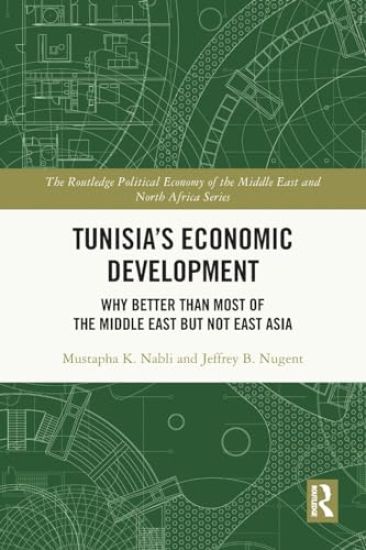
Tunisia's Economic Development

Tunisia's Economic Development

Mustapha K. Nabli; Jeffrey B. Nugent

TAYLOR FRANCIS LTD
2024
nidottu
This book identifies the differences in growth and development, and the various factors lying behind them, across both Middle East and North African (MENA) and East Asian countries over the 1960-2020 period. It considers a very wide range of factors, compares initial situations, institutions, and government policies, the dynamic responses to changing circumstances, and discusses the inability of the governments of the MENA region to achieve not only political reform, but also the kinds of economic reform that would allow their citizens to prosper in an increasingly globalized world. The book focuses on Tunisia. Since its independence in 1956 until 2010, Tunisia had considerable success relative to many other MENA countries, but was somewhat less successful relative to East Asian countries. Since 2010, however, while transitioning away from autocracy to democracy, it has been in rather serious economic decline. The book highlights how both the factors identified as enabling Tunisia’s initial success and those leading to its subsequent decline can provide many useful insights for improving the management of economic development across the whole MENA region and perhaps also to developing countries throughout the world.
Tunisia's Economic Development

Tunisia's Economic Development

Mustapha K. Nabli; Jeffrey B. Nugent

TAYLOR FRANCIS LTD
2022
sidottu
This book identifies the differences in growth and development, and the various factors lying behind them, across both Middle East and North African (MENA) and East Asian countries over the 1960-2020 period. It considers a very wide range of factors, compares initial situations, institutions, and government policies, the dynamic responses to changing circumstances, and discusses the inability of the governments of the MENA region to achieve not only political reform, but also the kinds of economic reform that would allow their citizens to prosper in an increasingly globalized world. The book focuses on Tunisia. Since its independence in 1956 until 2010, Tunisia had considerable success relative to many other MENA countries, but was somewhat less successful relative to East Asian countries. Since 2010, however, while transitioning away from autocracy to democracy, it has been in rather serious economic decline. The book highlights how both the factors identified as enabling Tunisia’s initial success and those leading to its subsequent decline can provide many useful insights for improving the management of economic development across the whole MENA region and perhaps also to developing countries throughout the world.
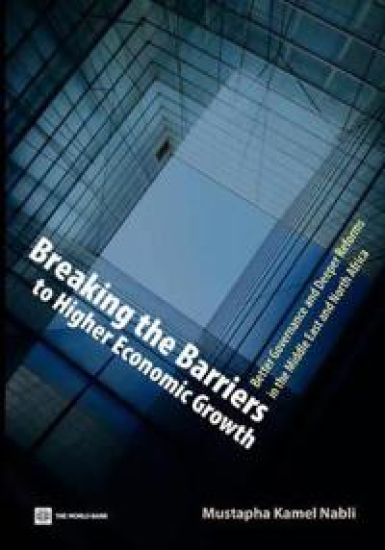
Breaking the Barriers to Higher Economic Growth

Breaking the Barriers to Higher Economic Growth

Mustapha K. Nabli

World Bank Publications
2008
nidottu
The world's attention to the countries of the Middle East and North Africa (MENA) region has often been dominated by headline issues: conflict, sanctions, political turmoil, and rising oil prices. Little of this international attention has considered the broad range of development challenges facing this diverse group of countries. Breaking the Barriers reflects the collected thinking of the World Bank's Office of the Chief Economist for the MENA Region on the long-term development challenges facing the region and the reform priorities and strategies for effectively meeting these challenges. It is a comprehensive reform agenda to "break the barriers" to higher economic growth, to ensure sufficient jobs can be created for the region's rapidly growing labor force. At its core, it requires the region's public sector-dominated economies to move to private sector-driven economies, from closed economies to more open economies, and from oil-dominated and volatile economies to more stable and diversified economies. This book examines some of these reforms and the complex issues surrounding their successful implementation. In order for the countries of the MENA region to successfully implement the reforms needed for higher growth and job creation, they will also need to address the fundamental weaknesses in governance throughout the region.