Kirjojen hintavertailu – 12 903 725 kirjaa ja 27 kauppaa

Kirjailija

N. Bukharin

Kirjat ja teokset yhdessä paikassa: 4 kirjaa, julkaisuja vuosilta 1972–2020, suosituimpiin kuuluu Economic Theory of the Leisure Class. Vertaile teosten hintoja ja tarkista saatavuus suomalaisista kirjakaupoista.

Nimi esiintyy myös muodoissa: N Bukharin

4 kirjaa

Kirjojen julkaisuvuodet: 1972–2020.

Programme of the world revolution

Programme of the world revolution

N Bukharin

Alpha Edition
2020
pokkari
This book has been considered by academicians and scholars of great significance and value to literature. This forms a part of the knowledge base for future generations. So that the book is never forgotten we have represented this book in a print format as the same form as it was originally first published. Hence any marks or annotations seen are left intentionally to preserve its true nature.
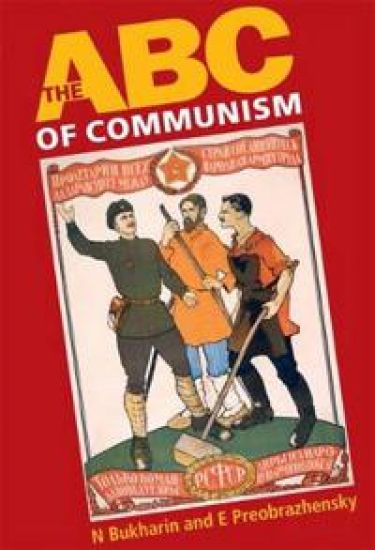
ABC of Communism

ABC of Communism

N. Bukharin

The Merlin Press Ltd
2007
nidottu
Two classic Russian Communist texts are presented together in this single volume. First published in 1919 and 1920 respectively, "Programme of the Russian Communist Party and "ABC of Communism were created as popular introductions, explanations, and commentary for the masses on the new party. Today they serve as historical documents and offer a non-Stalinist view of early Russian Communism. A new introduction and a glossary are included.
Economic Theory of the Leisure Class

Economic Theory of the Leisure Class

N. Bukharin

Monthly Review Press,U.S.
1972
pokkari
Bukharin completed this work in 1914; it represented an attempt to grapple with the Austrian School of political economy, as represented chiefly by Eugen von Bohm-Bawerk. Bukharin interprets the school as reflecting the social position of the rentier stratum of the capitalist class, which tends to view the economy from the point of view of consumption rather than production. But this is merely the introduction to a close consideration of the theory of marginal utility as contrasted with the labor theory of value which formed the starting point of both Marxism and classical economics. His discussion, therefore, while it does not deal with the many changes and refinements of neoclassical economics, does contrast, in polemical form, Marxism with the fundamental premises of modern academic economics. His discussion of "subjective" and "objective" value definitions, in particular, will help clarify for many the essential differences that distinguish Marxist political economy from other schools.