
Kirjojen hintavertailu – 12 859 828 kirjaa ja 27 kauppaa

Kirjailija

Nader Mokari

Kirjat ja teokset yhdessä paikassa: 2 kirjaa, julkaisuja vuosilta 2017–2018, suosituimpiin kuuluu Robust Resource Allocation in Future Wireless Networks. Vertaile teosten hintoja ja tarkista saatavuus suomalaisista kirjakaupoista.

2 kirjaa

Kirjojen julkaisuvuodet: 2017–2018.

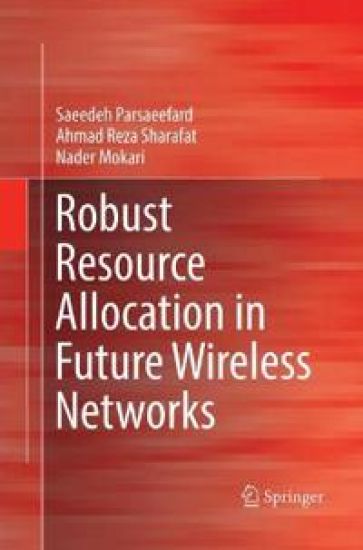
Robust Resource Allocation in Future Wireless Networks

Robust Resource Allocation in Future Wireless Networks

Saeedeh Parsaeefard; Ahmad Reza Sharafat; Nader Mokari

Springer International Publishing AG
2018
nidottu
This book presents state-of-the-art research on robust resource allocation in current and future wireless networks. The authors describe the nominal resource allocation problems in wireless networks and explain why introducing robustness in such networks is desirable. Then, depending on the objectives of the problem, namely maximizing the social utility or the per-user utility, cooperative or competitive approaches are explained and their corresponding robust problems are considered in detail. For each approach, the costs and benefits of robust schemes are discussed and the algorithms for reducing their costs and improving their benefits are presented. Considering the fact that such problems are inherently non-convex and intractable, a taxonomy of different relaxation techniques is presented, and applications of such techniques are shown via several examples throughout the book. Finally, theauthors argue that resource allocation continues to be an important issue in future wireless networks, and propose specific problems for future research.
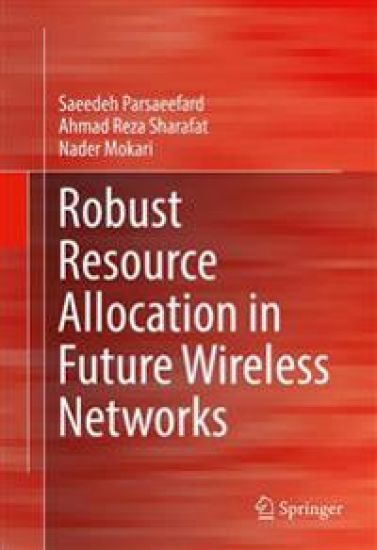
Robust Resource Allocation in Future Wireless Networks

Robust Resource Allocation in Future Wireless Networks

Saeedeh Parsaeefard; Ahmad Reza Sharafat; Nader Mokari

Springer International Publishing AG
2017
sidottu
This book presents state-of-the-art research on robust resource allocation in current and future wireless networks. The authors describe the nominal resource allocation problems in wireless networks and explain why introducing robustness in such networks is desirable. Then, depending on the objectives of the problem, namely maximizing the social utility or the per-user utility, cooperative or competitive approaches are explained and their corresponding robust problems are considered in detail. For each approach, the costs and benefits of robust schemes are discussed and the algorithms for reducing their costs and improving their benefits are presented. Considering the fact that such problems are inherently non-convex and intractable, a taxonomy of different relaxation techniques is presented, and applications of such techniques are shown via several examples throughout the book. Finally, theauthors argue that resource allocation continues to be an important issue in future wireless networks, and propose specific problems for future research.