Kirjojen hintavertailu – 12 903 725 kirjaa ja 27 kauppaa

Kirjailija

Nadine El-Enany

Kirjat ja teokset yhdessä paikassa: 5 kirjaa, julkaisuja vuosilta 2020–2026, suosituimpiin kuuluu Empire's Endgame. Vertaile teosten hintoja ja tarkista saatavuus suomalaisista kirjakaupoista.

5 kirjaa

Kirjojen julkaisuvuodet: 2020–2026.

Empire's Endgame

Empire's Endgame

Gargi Bhattacharyya; Adam Elliott-Cooper; Sita Balani; Kerem Nisancioglu; Kojo Koram; Dalia Gebrial; Nadine El-Enany; Luke de Noronha

Pluto Press
2021
pokkari
'Rigorous, impassioned and urgent' - Ash Sarkar We are in a moment of profound overlapping crises. The landscape of politics and entitlement is being rapidly remade. As movements against colonial legacies and state violence coincide with the rise of authoritarian regimes, it is the lens of racism, and the politics of race, that offers the sharpest focus. In Empire's Endgame, eight leading scholars make a powerful intervention in debates around racial capitalism and political crisis in Britain. While the 'hostile environment' policy and Brexit referendum have thrown the centrality of race into sharp relief, discussions of racism have too often focused on individual behaviours. Foregrounding instead the wider political and economic context, the authors trace the ways in which the legacies of empire have been reshaped by global capitalism, the digital environment and the instability of the nation-state. Engaging with movements such as Black Lives Matter and Rhodes Must Fall, Empire's Endgame offers both an original perspective on race, media, the state and criminalisation, and a political vision that includes rather than expels in the face of crisis.

Empire's Endgame

Empire's Endgame

Gargi Bhattacharyya; Adam Elliott-Cooper; Sita Balani; Kerem Nisancioglu; Kojo Koram; Dalia Gebrial; Nadine El-Enany; Luke de Noronha

Pluto Press
2021
sidottu
'Rigorous, impassioned and urgent' - Ash Sarkar We are in a moment of profound overlapping crises. The landscape of politics and entitlement is being rapidly remade. As movements against colonial legacies and state violence coincide with the rise of authoritarian regimes, it is the lens of racism, and the politics of race, that offers the sharpest focus. In Empire's Endgame, eight leading scholars make a powerful intervention in debates around racial capitalism and political crisis in Britain. While the 'hostile environment' policy and Brexit referendum have thrown the centrality of race into sharp relief, discussions of racism have too often focused on individual behaviours. Foregrounding instead the wider political and economic context, the authors trace the ways in which the legacies of empire have been reshaped by global capitalism, the digital environment and the instability of the nation-state. Engaging with movements such as Black Lives Matter and Rhodes Must Fall, Empire's Endgame offers both an original perspective on race, media, the state and criminalisation, and a political vision that includes rather than expels in the face of crisis.
Pelican Daughter

Pelican Daughter

Nadine El-Enany

Bloodaxe Books Ltd
2026
pokkari
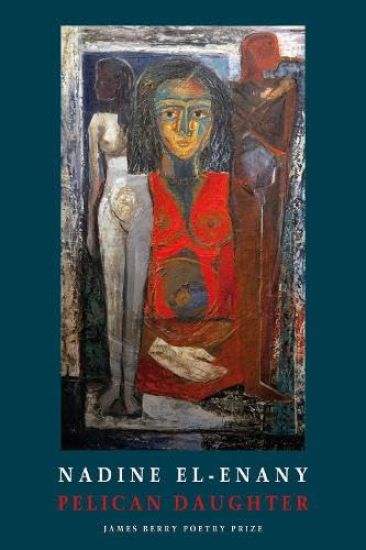
Winner of the James Berry Poetry Prize 2024. The poems of Nadine El-Enany’s debut collection Pelican Daughter are imbued with tenderness and fuelled by a hunger for justice, connection and a more empathic world. With stunning lyricism she fiercely probes the pain of being powerless in the face of global catastrophes – genocide, climate crisis – without tilting into despair. These poems do not divide the personal and political – indeed, boundaries are met with love and defiance, even when they appear immutable. The voice that permeates is as inviting as it is brave, through the book’s expansive terrain, from the “hopscotch puddles” of childhood to peace marches that do ‘something/to time and space, like we’re here together / but we’re also there’, to a militarised border where people pass ‘prickly pears / over razor wire, sacks of apples and bread’. El-Enany ushers our attention to the vulnerable and the small, the ‘wail of forgotten things’, waking us to what we cannot hear, the ‘woodlice walking / and spiders making silk’. Hers is a poetry of clarity, compassion and a ‘readying kind of love for the world’.
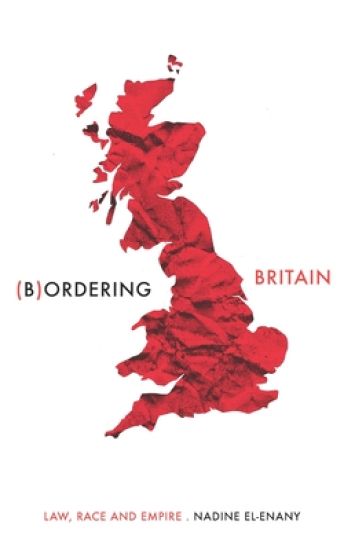
Bordering Britain

Bordering Britain

Nadine El-Enany

Manchester University Press
2021
nidottu
(B)ordering Britain argues that Britain is the spoils of empire, its immigration law is colonial violence and irregular immigration is anti-colonial resistance. In announcing itself as postcolonial through immigration and nationality laws passed in the 60s, 70s and 80s, Britain cut itself off symbolically and physically from its colonies and the Commonwealth, taking with it what it had plundered. This imperial vanishing act cast Britain’s colonial history into the shadows. The British Empire, about which Britons know little, can be remembered fondly as a moment of past glory, as a gift once given to the world. Meanwhile immigration laws are justified on the basis that they keep the undeserving hordes out. In fact, immigration laws are acts of colonial seizure and violence. They obstruct the vast majority of racialised people from accessing colonial wealth amassed in the course of colonial conquest. Regardless of what the law, media and political discourse dictate, people with personal, ancestral or geographical links to colonialism, or those existing under the weight of its legacy of race and racism, have every right to come to Britain and take back what is theirs.
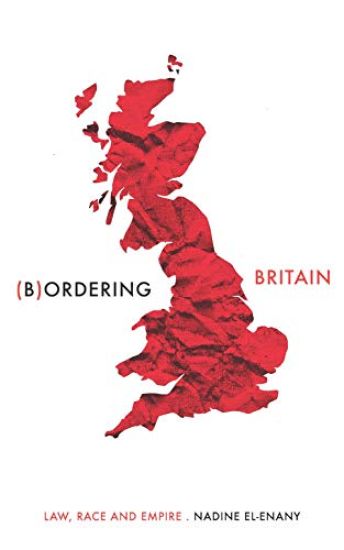
Bordering Britain

Bordering Britain

Nadine El-Enany

Manchester University Press
2020
sidottu
(B)ordering Britain argues that Britain is the spoils of empire, its immigration law is colonial violence and irregular immigration is anti-colonial resistance. In announcing itself as postcolonial through immigration and nationality laws passed in the 60s, 70s and 80s, Britain cut itself off symbolically and physically from its colonies and the Commonwealth, taking with it what it had plundered. This imperial vanishing act cast Britain’s colonial history into the shadows. The British Empire, about which Britons know little, can be remembered fondly as a moment of past glory, as a gift once given to the world. Meanwhile immigration laws are justified on the basis that they keep the undeserving hordes out. In fact, immigration laws are acts of colonial seizure and violence. They obstruct the vast majority of racialised people from accessing colonial wealth amassed in the course of colonial conquest. Regardless of what the law, media and political discourse dictate, people with personal, ancestral or geographical links to colonialism, or those existing under the weight of its legacy of race and racism, have every right to come to Britain and take back what is theirs.