Kirjojen hintavertailu – 12 859 824 kirjaa ja 27 kauppaa

Kirjailija

Nalini Rajan

Kirjat ja teokset yhdessä paikassa: 3 kirjaa, julkaisuja vuosilta 2011–2023, suosituimpiin kuuluu Religious Faith, Ideology, Citizenship. Vertaile teosten hintoja ja tarkista saatavuus suomalaisista kirjakaupoista.

3 kirjaa

Kirjojen julkaisuvuodet: 2011–2023.

Secularism (Edition1)

Secularism (Edition1)

Nalini Rajan

Speaking Tiger Publishing Private Limited
2023
muu
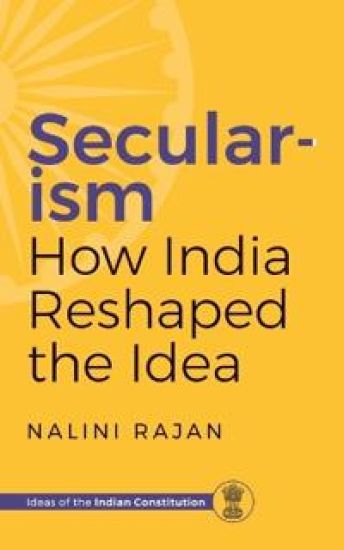
Secularism emerged in 17th-century Europe as an essential element of whatbecame the modern state. The separation of church and state that it entailedpaved the way for the democratic republics we take for granted today. Tolerance, as understood in the West, was sought to be introduced as statepolicy by the British in India too. But our nationalist leaders understood theircountry better than to adopt the concept without local adjustments. Political philosopher Nalini Rajan examines the tension between religiousfreedom and state intervention in India, a tension that comes with the ideaof 'principled' state intervention in matters of religion, as mandated by theConstitution. Demands for reservations and separate electorates by minoritiesin the early twentieth century had essentially ruled out absolute state neutralityin this respect. But it is only by analysing the fascinating debates on secularismin the Constituent Assembly (1946-49) that we see how and why the specificprovisions on minority rights-Articles 25 to 30-came to be adopted. Theseprovisions implicitly envisioned a key role for the judiciary. A full section ofthis book is thus devoted to understanding the role that the courts have playedin establishing, and just as importantly, defining Indian secularism-throughsuch judgements as in the Shirur Mutt case of 1954, the Durgah Committee case of1961, the Satsangi case of 1966, the Stanislaus case of 1977, the Shah Bano caseof 1985, the so-called 'Hindutva' cases of 1996, the Vaishno Devi case of 1997, and the Puttaswamy case of 2017. This exhaustive monograph should be read by all those interested inunderstanding how a distinctive secularism shaped modern India, and how thelatter shaped our secularism.
Religious Faith, Ideology, Citizenship

Religious Faith, Ideology, Citizenship

V. Geetha; Nalini Rajan

Routledge India
2015
nidottu
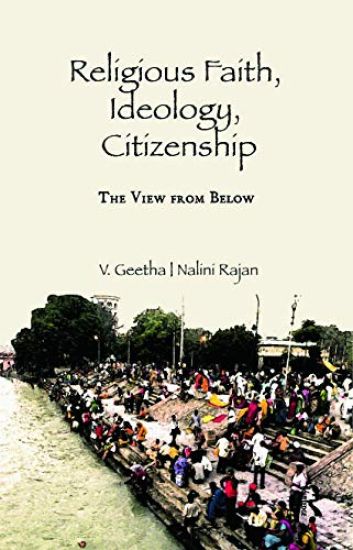
This book looks at the triadic relations between faith, the state and political actors, and the ideas that move them. It comprises a set of essays on diverse histories and ideas, ranging from Gandhian civic action to radical free thought in colonial India, from liberation theologies, that take their cue from specific and lived experiences of oppression and humiliation, to the universalism promised by an expansive Islam. Deploying gender and caste as the central analytical categories, these essays suggest that equality and justice rest on the strength and vitality of the exchanges between the worlds of the civic, the religious and the state, and not on their strict separation. Going beyond time-honoured dualities — between the secular and the communal (especially in the Indian context), or the secular and the pre-modern — the book joins the lively debates on secularism that have emerged in the 21st century in West, South and South-east Asia.
Religious Faith, Ideology, Citizenship

Religious Faith, Ideology, Citizenship

V. Geetha; Nalini Rajan

Routledge India
2011
sidottu
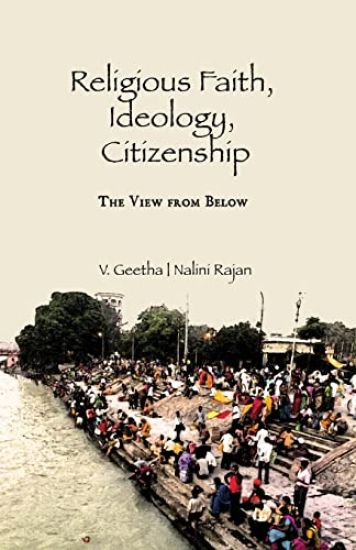
This book looks at the triadic relations between faith, the state and political actors, and the ideas that move them. It comprises a set of essays on diverse histories and ideas, ranging from Gandhian civic action to radical free thought in colonial India, from liberation theologies, that take their cue from specific and lived experiences of oppression and humiliation, to the universalism promised by an expansive Islam. Deploying gender and caste as the central analytical categories, these essays suggest that equality and justice rest on the strength and vitality of the exchanges between the worlds of the civic, the religious and the state, and not on their strict separation. Going beyond time-honoured dualities — between the secular and the communal (especially in the Indian context), or the secular and the pre-modern — the book joins the lively debates on secularism that have emerged in the 21st century in West, South and South-east Asia.