Kirjojen hintavertailu – 12 903 725 kirjaa ja 27 kauppaa
Kirjailija
Nancey Murphy
Kirjat ja teokset yhdessä paikassa: 16 kirjaa, julkaisuja vuosilta 1993–2019, suosituimpiin kuuluu A Philosophy of the Christian Religion. Vertaile teosten hintoja ja tarkista saatavuus suomalaisista kirjakaupoista.
The term postmodern is generally used to refer to current work in philosophy, literary criticism, and feminist thought inspired by Continental thinkers such as Friedrich Nietzsche and Jacques Derrida. In this book, Nancey Murphy appropriates the term to describe emerging patterns in Anglo-American thought and to indicate their radical break from th
Each field of study comes with its own set of questions; each period of time refines and redirects those questions. The Christian religion as we find it in the twenty-first century presents a unique set of problems to be solved and questions to be answered. In this introduction to the philosophy of the Christian religion, eminent philosopher and theologian Nancey Murphy applies the tools of philosophical analysis to a set of core yet contemporary religious questions: what does our historical moment mean for the possibility of knowing God? Is faith still possible? Does God intervene in human history? Is there such a thing as universal knowledge of God? Written with the needs of students encountering the philosophy of religion for the first time in mind, this book provides a comprehensive introduction to the fundamental questions inherent in Christian faith. Murphy also provides tools for how to answer those questions.
A Philosophy of the Christian Religion offers a new kind of introduction to the subject. Whereas most introductions in the past have attempted to deal with religion in general, this book focuses on philosophical issues of special importance to Christianity. In doing this, Nancey Murphy also takes full account of how conceptual revolutions in philosophy now mean that what older introductions termed 'standard problems' have changed from the way they were dealt with in earlier eras. At the same time, this new introduction helps the reader to better understand how contemporary issues have come to take on their current force by placing them within the context of the most sophisticated account available of human reason: Alasdair MacIntyre’s tradition-constituted rationality.
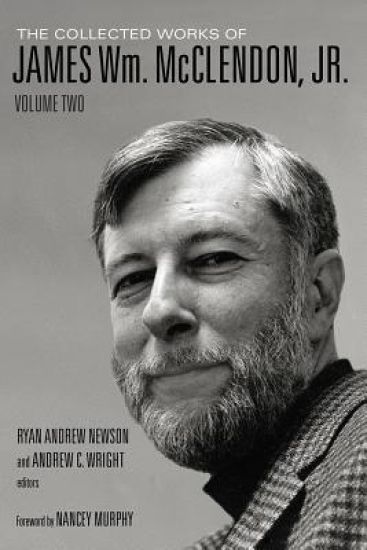
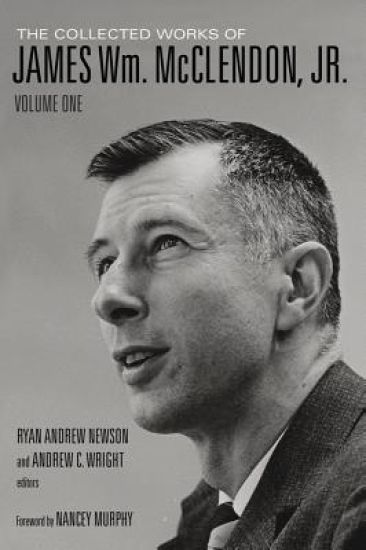
James Wm. McClendon, Jr. was the most important ""baptist"" theologian of the twentieth century. McClendon crafted a systematic theology that refused to succumb to the pressures of individualism, grew out of the immediacy of preaching the text, and lamented the stunted public witness of a fractured Protestant ecclesiology. This two-volume set mixes previously unpublished and published lectures and essays with rare and little known works to form a representative collection of the essential themes of McClendon's work. The first volume focuses on the philosophical and theological shifts leading to McClendon's articulation of the baptist vision. The second volume specifically elucidates the more philosophical themes that informed McClendon's work, including ways in which these themes had immediate theological import. Taken together, the set provides the most comprehensive presentation of McClendon's work now available, revealing the sustained and systematic character of his vision over the course of his life. These two volumes will provide scholars, preachers, and students with McClendon's radical, narrative, and connective theology.
James Wm. McClendon, Jr. was the most important ""baptist"" theologian of the twentieth century. McClendon crafted a systematic theology that refused to succumb to the pressures of individualism, grew out of the immediacy of preaching the text, and lamented the stunted public witness of a fractured Protestant ecclesiology. This two-volume set mixes previously unpublished and published lectures and essays with rare and little known works to form a representative collection of the essential themes of McClendon's work. The first volume focuses on the philosophical and theological shifts leading to McClendon's articulation of the baptist vision. The second volume specifically elucidates the more philosophical themes that informed McClendon's work, including ways in which these themes had immediate theological import. Taken together, the set provides the most comprehensive presentation of McClendon's work now available, revealing the sustained and systematic character of his vision over the course of his life. These two volumes will provide scholars, preachers, and students with McClendon's radical, narrative, and connective theology.
If humans are purely physical, and if it is the brain that does the work formerly assigned to the mind or soul, then how can it fail to be the case that all of our thoughts and actions are determined by the laws of neurobiology? If this is the case, then free will, moral responsibility, and, indeed, reason itself would appear to be in jeopardy. Nancey Murphy and Warren S. Brown here defend a non-reductive version of physicalism whereby humans are (sometimes) the authors of their own thoughts and actions. Did My Neurons Make Me Do It? brings together insights from both philosophy and the cognitive neurosciences to defeat neurobiological reductionism. One resource is a 'post-Cartesian' account of mind as essentially embodied and constituted by action-feedback-evaluation-action loops in the environment, and 'scaffolded' by cultural resources. Another is a non-mysterious account of downward (mental) causation explained in terms of a complex, higher-order system exercising constraints on lower-level causal processes. These resources are intrinsically related: the embeddedness of brain events in action-feedback loops is the key to their mentality, and those broader systems have causal effects on the brain itself. With these resources Murphy and Brown take on two problems in philosophy of mind: a response to the charges that physicalists cannot account for the meaningfulness of language nor the causal efficacy of the mental qua mental. Solutions to these problems are a prerequisite to addressing the central problem of the book: how can biological organisms be free and morally responsible? The authors argue that the free-will problem is badly framed if it is put in terms of neurobiological determinism; the real issue is neurobiological reductionism. If it is indeed possible to make sense of the notion of downward causation, then the relevant question is whether humans exert downward causation over some of their own parts and processes. If all organisms do this to some extent, what needs to be added to this animalian flexibility to constitute free and responsible action? The keys are sophisticated language and hierarchically ordered cognitive processes allowing (mature) humans to evaluate their own actions, motives, goals, and rational and moral principles.
If humans are purely physical, and if it is the brain that does the work formerly assigned to the mind or soul, then how can it fail to be the case that all of our thoughts and actions are determined by the laws of neurobiology? If this is the case, then free will, moral responsibility, and, indeed, reason itself would appear to be in jeopardy. Nancey Murphy and Warren S. Brown here defend a non-reductive version of physicalism whereby humans are (sometimes) the authors of their own thoughts and actions. Did My Neurons Make Me Do It? brings together insights from both philosophy and the cognitive neurosciences to defeat neurobiological reductionism. One resource is a 'post-Cartesian' account of mind as essentially embodied and constituted by action-feedback-evaluation-action loops in the environment, and 'scaffolded' by cultural resources. Another is a non-mysterious account of downward (mental) causation explained in terms of a complex, higher-order system exercising constraints on lower-level causal processes. These resources are intrinsically related: the embeddedness of brain events in action-feedback loops is the key to their mentality, and those broader systems have causal effects on the brain itself. With these resources Murphy and Brown take on two problems in philosophy of mind: a response to the charges that physicalists cannot account for the meaningfulness of language nor the causal efficacy of the mental qua mental. Solutions to these problems are a prerequisite to addressing the central problem of the book: how can biological organisms be free and morally responsible? The authors argue that the free-will problem is badly framed if it is put in terms of neurobiological determinism; the real issue is neurobiological reductionism. If it is indeed possible to make sense of the notion of downward causation, then the relevant question is whether humans exert downward causation over some of their own parts and processes. If all organisms do this to some extent, what needs to be added to this animalian flexibility to constitute free and responsible action? The keys are sophisticated language and hierarchically ordered cognitive processes allowing (mature) humans to evaluate their own actions, motives, goals, and rational and moral principles.
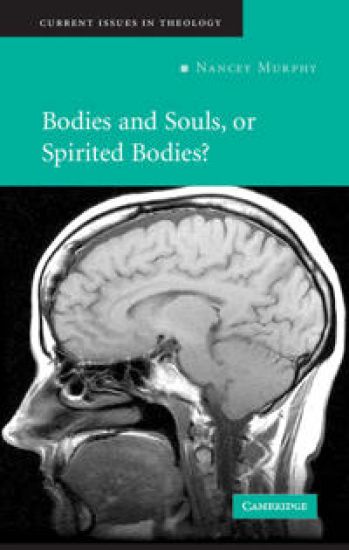
Are humans composed of a body and a nonmaterial mind or soul, or are we purely physical beings? Opinion is sharply divided over this issue. In this clear and concise book, Nancey Murphy argues for a physicalist account, but one that does not diminish traditional views of humans as rational, moral, and capable of relating to God. This position is motivated not only by developments in science and philosophy, but also by biblical studies and Christian theology. The reader is invited to appreciate the ways in which organisms are more than the sum of their parts. That higher human capacities such as morality, free will, and religious awareness emerge from our neurobiological complexity and develop through our relation to others, to our cultural inheritance, and, most importantly, to God. Murphy addresses the questions of human uniqueness, religious experience, and personal identity before and after bodily resurrection.
Are humans composed of a body and a nonmaterial mind or soul, or are we purely physical beings? Opinion is sharply divided over this issue. In this clear and concise book, Nancey Murphy argues for a physicalist account, but one that does not diminish traditional views of humans as rational, moral, and capable of relating to God. This position is motivated not only by developments in science and philosophy, but also by biblical studies and Christian theology. The reader is invited to appreciate the ways in which organisms are more than the sum of their parts. That higher human capacities such as morality, free will, and religious awareness emerge from our neurobiological complexity and develop through our relation to others, to our cultural inheritance, and, most importantly, to God. Murphy addresses the questions of human uniqueness, religious experience, and personal identity before and after bodily resurrection.
Ethics, the first volume of McClendon s Systematic Theology, explored the shape of life in the Christian community. Doctrine, the second volume, investigated the teaching necessary to sustain that life. Witness, the third and final volume of the work, considers the wider context in which that life takes place. It asserts that the church s identity is established not only by how it lives and what it teaches but also by how it enters into conversation and connects with systems of thought and social structures outside itself. McClendon continues here his exploration of the baptist vision, a tradition of the church s understanding of itself, its relation to Scripture, and its place in the larger society, which flows from the Radical Reformation of the 16th century. He employs that vision to engage in conversation with three principal partners: other theologies; current philosophy; and culture, including science and letters, the fine and performing arts, and politics in short, what Scripture calls the world. "
Winner of Prize for Outstanding Book in Theology and the Natural Sciences As science crafts increasingly detailed accounts of human nature, what has become of the soul? This collaborative project strives for greater consonance between contemporary science and Christian faith. Outstanding scholars in biology, genetics, neuroscience, cognitive science, philosophy, theology, biblical studies, and ethics join here to offer contemporary accounts of human nature consistent with Christian teaching. Their central theme is a nondualistic account of the human person that does not consider the "soul" an entity separable from the body; scientific statements about the physical nature of human beings are about exactly the same entity as are theological statements concerning the spiritual nature of human beings. For all those interested in fundamental questions of human identity posed by the present context, this volume will provide a fascinating and authoritative resource.
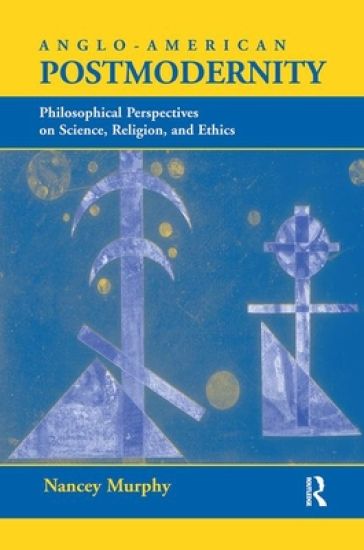
The term postmodern is generally used to refer to current work in philosophy, literary criticism, and feminist thought inspired by Continental thinkers such as Friedrich Nietzsche and Jacques Derrida. In this book, Nancey Murphy appropriates the term to describe emerging patterns in Anglo-American thought and to indicate their radical break from the thought patterns of Enlightened modernity. The book examines the shift from modern to postmodern in three areas: epistemology, philosophy of language, and metaphysics. Murphy contends that whole clusters of terms in each of these disciplines have taken on new uses in the past fifty years and that these changes have radical consequences for all areas of academia, especially in philosophy of science, philosophy of religion, and ethics.
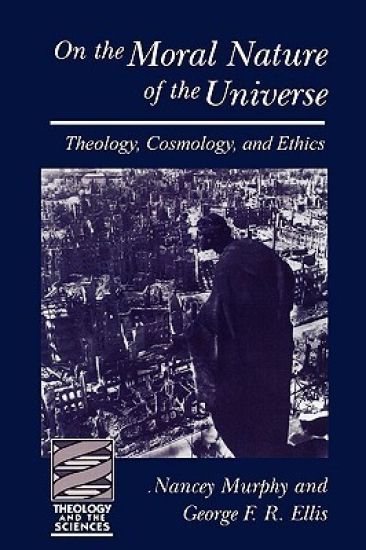
What is the ethical import of contemporary scientific cosmology? How does our understanding of the universe relate to our most pressing social concerns? How do the disparate fields of theology, ethics, and the sciences relate to each other? Murphy and Ellis offer a coherent construction of these relations and show how a particular moral vision-a "kenotic" ethic-is supported "from below" by the social sciences and "from above" by theology. The theological import of contemporary cosmology, they argue, points ultimately to an ethic that centers on self-sacrifice and nonviolence. In ambition, rigor, and scale, in its search for an integrated and coherent worldview at a time of unprecedented complexity and uncertainty, readers will find this volume daring and important.
American Protestant Christianity is often described as a two-party system divided into liberals and conservatives. This book clarifies differences between the intellectual positions of these two groups by advancing the thesis that the philosophy of the modern period is largely responsible for the polarity of Protestant Christian thought. A second thesis is that the modern philosophical positions driving the division between liberals and conservatives have themselves been called into question. It therefore becomes opportune to ask how theology ought to be done in a postmodern era, and to envision a rapprochement between theologians of the left and right. A concluding chapter speculates specifically on the era now dawning and the likelihood that the compulsion to separate the spectrum into two distinct camps will be precluded by the coexistence of a wide range of theological positions from left to right. Nancey C. Murphy is Associate Professor of Christian Philosophy at Fuller Theological Seminary, Pasadena, and the author of Reasoning and Rhetoric in Religion, also published by Trinity Press. Her book Theology in the Age of Scientific Reasoning earned the American Academy of Religion's Award for Excellence.
Christian doctrine, McClendon tells us, is no laundry list of propositions to be believed, but is rather an essential practice of the church. Doctrines are those shared convictions which the church must teach and live out if it is to be the church. The author rejects the prevailing assumptions stemming from the rationalism of the Enlightenment, and redefines theology as a discipline within the context of particular religious beliefs and practices of concrete believing communities. McClendon ties the reading of Scripture to the community's understanding of itself and its own mission.
In this timely and provocative book, Nancey Murphy sets out to dispel skepticism regarding Christian belief. She argues for the rationality of Christian belief by showing that theological reasoning is similar to scientific reasoning as described by contemporary philosophy of science. Murphy draws on new historicist accounts of science, particularly that of lmre Lakatos. According to Lakatos, scientists work within a "research program" consisting of a fixed core theory and a series of changing auxiliary hypotheses that allow for prediction and explanation of novel facts: Murphy argues that strikingly similar patterns of reasoning can be used to justify theological assertions. She provides an original characterization of theological data and explores the consequences for theology and philosophy of religion of adopting such an approach.