Kirjojen hintavertailu – 12 859 829 kirjaa ja 27 kauppaa

Kirjailija

Nancy Beck Young

Kirjat ja teokset yhdessä paikassa: 10 kirjaa, julkaisuja vuosilta 2000–2022, suosituimpiin kuuluu Lou Henry Hoover. Vertaile teosten hintoja ja tarkista saatavuus suomalaisista kirjakaupoista.

10 kirjaa

Kirjojen julkaisuvuodet: 2000–2022.

Two Suns of the Southwest

Two Suns of the Southwest

Nancy Beck Young

UNIVERSITY PRESS OF KANSAS
2022
nidottu

Halvin toimitettuna 33,40 €

Over time the presidential election of 1964 has come to be seen as a generational shift, a defining moment in which Americans deliberated between two distinctly different visions for the future. In its juxtaposition of these divergent visions, Two Suns of the Southwest is the first full account of this critical election and its legacy for US politics. The 1964 election, in Nancy Beck Young’s telling, was a contest between two men of the Southwest, each with a very different idea of what the Southwest was and what America should be. Barry Goldwater, the Republican senator from Arizona, came to represent a nostalgic, idealized past, a preservation of traditional order, while Lyndon B. Johnson, the Democratic incumbent from Texas, looked boldly and hopefully toward an expansive, liberal future of increased opportunity. Thus, as we see in Two Suns of the Southwest, the election was also a showdown between liberalism and conservatism, an election whose outcome would echo throughout the rest of the century. Young explores how demographics, namely the rise of the Sunbelt, factored into the framing and reception of these competing ideas. Her work situates Johnson’s Sunbelt liberalism as universalist, designed to create space for all Americans; Goldwater’s Sunbelt conservatism was far more restrictive, at least with regard to what the federal government should do. In this respect the election became a debate about individual rights versus legislated equality as priorities of the federal government. Young explores all the cultural and political elements and events that figured in this narrative, allowing Johnson to unite disaffected Republicans with independents and Democrats in a winning coalition. On a final note Young connects the 1964 election to the current state of our democracy, explaining the irony whereby the winning candidate’s vision has grown stale while the losing candidate’s has become much more central to American politics.
Two Suns of the Southwest

Two Suns of the Southwest

Nancy Beck Young

University Press of Kansas
2019
sidottu
Over time the presidential election of 1964 has come to be seen as a generational shift, a defining moment in which Americans deliberated between two distinctly different visions for the future. In its juxtaposition of these divergent visions, Two Suns of the Southwest is the first full account of this critical election and its legacy for US politics. The 1964 election, in Nancy Beck Young's telling, was a contest between two men of the Southwest, each with a very different idea of what the Southwest was and what America should be. Barry Goldwater, the Republican senator from Arizona, came to represent a nostalgic, idealized past, a preservation of traditional order, while Lyndon B. Johnson, the Democratic incumbent from Texas, looked boldly and hopefully toward an expansive, liberal future of increased opportunity. Thus, as we see in Two Suns of the Southwest, the election was also a showdown between liberalism and conservatism, an election whose outcome would echo throughout the rest of the century. Young explores how demographics, namely the rise of the Sunbelt, factored into the framing and reception of these competing ideas. Her work situates Johnson's Sunbelt liberalism as universalist, designed to create space for all Americans; Goldwater's Sunbelt conservatism was far more restrictive, at least with regard to what the federal government should do. In this respect the election became a debate about individual rights versus legislated equality as priorities of the federal government. Young explores all the cultural and political elements and events that figured in this narrative, allowing Johnson to unite disaffected Republicans with independents and Democrats in a winning coalition. On a final note Young connects the 1964 election to the current state of our democracy, explaining the irony whereby the winning candidate's vision has grown stale while the losing candidate's has become much more central to American politics.
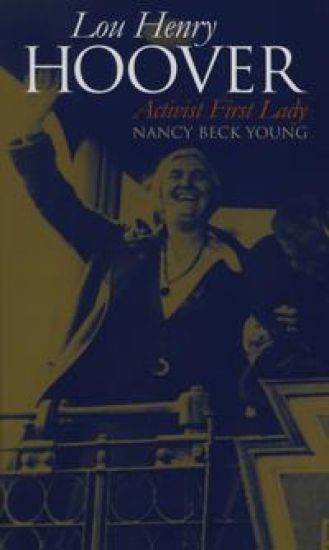
Lou Henry Hoover

Lou Henry Hoover

Nancy Beck Young

University Press of Kansas
2016
nidottu
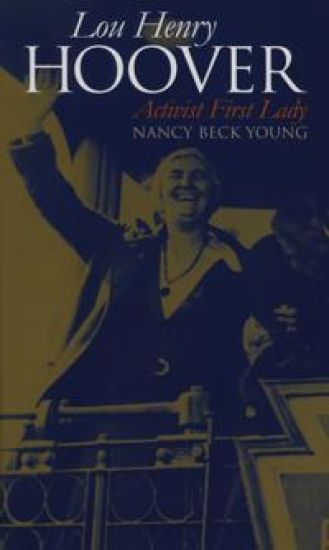
Although overshadowed by her higher-profile successors, Lou Henry Hoover was in many ways the nation’s first truly modern First Lady. She was the first to speak on the radio and give regular interviews. She was the first to be a public political persona in her own right. And, although the White House press corps saw in her “old-fashioned wifehood,” she very much foreshadowed the ""new woman"" of the era. Nancy Beck Young presents the first thoroughly documented study of Lou Henry Hoover’s White House years, 1929–1933, showing that, far from a passive prelude to Eleanor Roosevelt, she was a true innovator. Young draws on the extensive collection of Lou Hoover’s personal papers to show that she was not only an important First Lady but also a key transitional figure between nineteenth- and twentieth-century views on womanhood. Lou Hoover was a multifaceted woman: a college graduate, a lover of the outdoors, a supporter of Girl Scouting, and a person engaged in social activism who endorsed political involvement for women and created a program to fight the Depression. Young traces Hoover’s many philanthropic efforts both before and during the Hoover presidency—contrasting them with those of her husband—and places her public activities in the larger context of contemporary women's activism. And she shows that, unlike her predecessors, Hoover did more than entertain: she revolutionized the office of First Lady. Yet as Young reveals, Hoover was constrained as First Lady by her inability to achieve the same results that she had previously accomplished in her very public career for the volunteer community. As diligently as she worked to combat the hardship of the Depression for average Americans by mobilizing private relief efforts, her efforts ultimately had little effect. Although her celebrity has paled in the shadow of her husband’s negative association with the Great Depression, Lou Hoover’s story reveals a dynamic woman who used her activism to refashion the office of First Lady into a modern institution reflecting changes in the ways American women lived their lives. Young’s study of Hoover’s White House years shows that her legacy of innovation made a lasting mark on the office and those who followed.
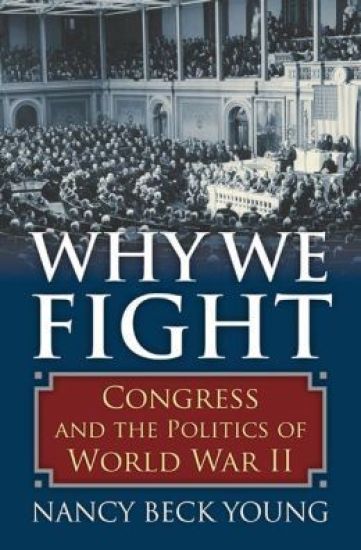
Why We Fight

Why We Fight

Nancy Beck Young

University Press of Kansas
2013
sidottu
History tells us that World War II united Americans, but as in other conflicts it was soon back to politics as usual. Nancy Beck Young argues that the illusion of cooperative congressional behaviour actually masked internecine party warfare over the New Deal. Young takes a close look at Congress during the most consensual war in American history to show how its members fought intense battles over issues ranging from economic regulation to social policies. Her book highlights the extent of—and reasons for—liberal successes and failures, while challenging assumptions that conservatives had gained control of legislative politics by the early 1940s. It focuses on the role of moderates in modern American politics, arguing that they, not conservatives, determined the outcomes in key policy debates and also established the methods for liberal reform that would dominate national politics until the early 1970s. Why We Fight—which refers as much to the conflicts between lawmakers as to war propaganda films of Frank Capra—unravels the tangle of congressional politics, governance, and policy formation in what was the defining decade of the twentieth century. It demonstrates the fragility of wartime liberalism, the nuances of partisanship, and the reasons for a bifurcated record on economic and social justice policy, revealing difficulties in passing necessary wartime measures while exposing racial conservatism too powerful for the moderate-liberal coalition to overcome. Young shows that scaling back on certain domestic reforms was an essential compromise liberals and moderates made in order to institutionalise the New Deal economic order. Some programmes were rejected—including the Civilian Conservation Corps, the National Youth Administration, and the Works Progress Administration—while others like the Wagner Act and economic regulation were institutionalised. But on other issues, such as refugee policy, racial discrimination, and hunting communist spies, the discord proved insurmountable. This wartime political dynamic established the dominant patterns for national politics through the remainder of the century. Impeccably researched, Young’s study shows that we cannot fully appreciate the nuances of American politics after World War II without careful explication of how the legislative branch redefined the New Deal in the decade following its creation.
Lou Henry Hoover

Lou Henry Hoover

Nancy Beck Young

University Press of Kansas
2005
sidottu
Although overshadowed by her higher-profile successors, Lou Henry Hoover was in many ways the nation's first truly modern First Lady. She was the first to speak on the radio and give regular interviews. She was the first to be a public political persona in her own right. And, although the White House press corps saw in her "old-fashioned wifehood," she very much foreshadowed the "new woman" of the era. Nancy Beck Young presents the first thoroughly documented study of Lou Henry Hoover's White House years, 1929-1933, showing that, far from a passive prelude to Eleanor Roosevelt, she was a true innovator. Young draws on the extensive collection of Lou Hoover's personal papers to show that she was not only an important First Lady but also a key transitional figure between nineteenth- and twentieth-century views on womanhood. Lou Hoover was a multifaceted woman: a college graduate, a lover of the outdoors, a supporter of Girl Scouting, and a person engaged in social activism who endorsed political involvement for women and created a program to fight the Depression. Young traces Hoover's many philanthropic efforts both before and during the Hoover presidency-contrasting them with those of her husband-and places her public activities in the larger context of contemporary women's activism. And she shows that, unlike her predecessors, Hoover did more than entertain: she revolutionized the office of First Lady. Yet as Young reveals, Hoover was constrained as First Lady by her inability to achieve the same results that she had previously accomplished in her very public career for the volunteer community. As diligently as she worked to combat the hardship of the Depression for average Americans by mobilizing private relief efforts, her efforts ultimately had little effect. Although her celebrity has paled in the shadow of her husband's negative association with the Great Depression, Lou Hoover's story reveals a dynamic woman who used her activism to refashion the office of First Lady into a modern institution reflecting changes in the ways American women lived their lives. Young's study of Hoover's White House years shows that her legacy of innovation made a lasting mark on the office and those who followed. This book is part of the Modern First Ladies series.
M.E.Sharpe Library of Franklin D.Roosevelt Studies: v. 1: Franklin D.Roosevelt and the Shaping of American Political Culture
How did Americans respond to the economic catastrophe of 1929? In what ways did the social and cultural responses of the American people inform the politics of the period? How did changes in political beliefs alter cultural activities? This volume examines the presidency of FDR through a very distinctive set of lenses: the representation of FDR in film and popular culture, discussions of New Deal art and art policy, the social and political meanings of public architecture, 1930s music, and many more.
The M.E.Sharpe Library of Franklin D.Roosevelt Studies

The M.E.Sharpe Library of Franklin D.Roosevelt Studies

Nancy Beck Young; William D. Pederson; Byron W. Daynes

Routledge
2000
sidottu
Although Roosevelt had no single plan to alter Congress's role, the incremental changes adopted during the New Deal transformed Congress. Examining the immediate reactions of groups in Congress and beyond, and the long-term effects, this study offers insights into a key period in US politics.