Kirjojen hintavertailu – 12 859 829 kirjaa ja 27 kauppaa

Kirjailija

Nancy Birdsall

Kirjat ja teokset yhdessä paikassa: 6 kirjaa, julkaisuja vuosilta 2002–2016, suosituimpiin kuuluu Towards a Better Global Economy. Vertaile teosten hintoja ja tarkista saatavuus suomalaisista kirjakaupoista.

6 kirjaa

Kirjojen julkaisuvuodet: 2002–2016.

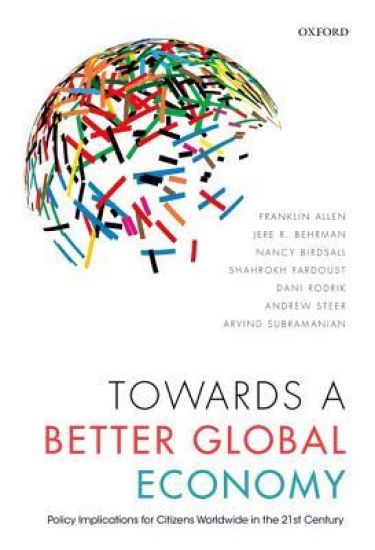
Towards a Better Global Economy

Towards a Better Global Economy

Franklin Allen; Jere R. Behrman; Nancy Birdsall; Shahrokh Fardoust; Dani Rodrik; Andrew Steer; Arvind Subramanian

Oxford University Press
2016
nidottu
Substantial progress in the fight against extreme poverty was made in the last two decades. But the slowdown in global economic growth and significant increases in income inequality in many developed and developing countries raise serious concerns about the continuation of this trend into the 21st century. The time has come to seriously think about how improvements in official global governance, coupled with and reinforced by rising activism of 'global citizens' can lead to welfare-enhancing and more equitable results for global citizens through better national and international policies. This book examines the factors that are most likely to facilitate the process of beneficial economic growth in low-, middle-, and high-income countries. It examines past, present, and future economic growth; demographic changes; the hyperglobalization of trade; the effect of finance on growth; climate change and resource depletion; and the sense of global citizenship and the need for global governance in order to draw longer-term implications, identify policy options for improving the lives of average citizens around the world, and make the case for the need to confront new challenges with truly global policy responses. The book documents how demographic changes, convergence, and competition are likely to bring about massive shifts in the sectoral and geographical composition of global output and employment, as the center of gravity of the global economy moves toward Asia and emerging economies elsewhere. It shows that the legacies of the 2008-09 crisis-high unemployment levels, massive excess capacities, and high debt levels-are likely to reduce the standard of living of millions of people in many countries over a long period of adjustment and that fluctuations in international trade, financial markets, and commodity prices, as well as the tendency of institutions at both the national and international level to favor the interests of the better-off and more powerful pose substantial risks for citizens of all countries. The chapters and their policy implications are intended to stimulate public interest and facilitate the exchange of ideas and policy dialogue.
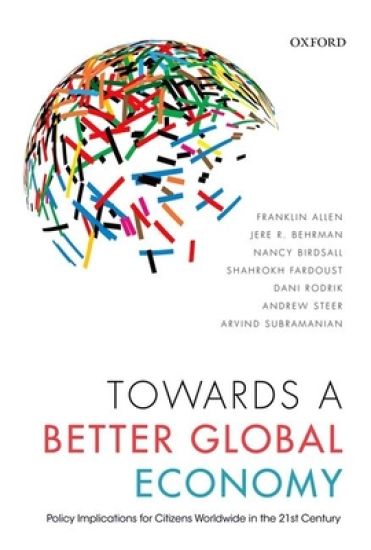
Towards a Better Global Economy

Towards a Better Global Economy

Franklin Allen; Jere R. Behrman; Nancy Birdsall; Shahrokh Fardoust; Dani Rodrik; Andrew Steer; Arvind Subramanian

Oxford University Press
2014
sidottu
Substantial progress in the fight against extreme poverty was made in the last two decades. But the slowdown in global economic growth and significant increases in income inequality in many developed and developing countries raise serious concerns about the continuation of this trend into the 21st century. The time has come to seriously think about how improvements in official global governance, coupled with and reinforced by rising activism of 'global citizens' can lead to welfare-enhancing and more equitable results for global citizens through better national and international policies. This book examines the factors that are most likely to facilitate the process of beneficial economic growth in low-, middle-, and high-income countries. It examines past, present, and future economic growth; demographic changes; the hyperglobalization of trade; the effect of finance on growth; climate change and resource depletion; and the sense of global citizenship and the need for global governance in order to draw longer-term implications, identify policy options for improving the lives of average citizens around the world, and make the case for the need to confront new challenges with truly global policy responses. The book documents how demographic changes, convergence, and competition are likely to bring about massive shifts in the sectoral and geographical composition of global output and employment, as the center of gravity of the global economy moves toward Asia and emerging economies elsewhere. It shows that the legacies of the 2008-09 crisis-high unemployment levels, massive excess capacities, and high debt levels-are likely to reduce the standard of living of millions of people in many countries over a long period of adjustment and that fluctuations in international trade, financial markets, and commodity prices, as well as the tendency of institutions at both the national and international level to favor the interests of the better-off and more powerful pose substantial risks for citizens of all countries. The chapters and their policy implications are intended to stimulate public interest and facilitate the exchange of ideas and policy dialogue.

Cash on Delivery

Cash on Delivery

Nancy Birdsall; William D. Savedoff

Centre for Global Development
2011
nidottu
Foreign aid has no shortage of critics. Some argue that it undermines development and inherently does more harm than good; others insist that aid must be seriously reformed to work properly. Cash on Delivery (COD) Aid proposes serious reform to make aid work well by forcing accountability, aligning the objectives of funders and recipients, and sharing information about what works. Public and private aid can improve lives in poor countries, but the willingness of taxpayers and private funders to finance aid programs depends more than ever on showing results. COD Aid is a funding mechanism that hinges on results. At its core is a contract between funders and recipients that stipulates a fixed payment for each unit of confirmed progress toward an agreed-upon goal. Once the contract is struck, the funder takes a hands-off approach, allowing the recipient the freedom and responsibility to achieve the goal on its own. Payment is made only after progress toward the goal is independently verified by a third party. At all steps, a COD Aid program is remarkably transparent: the contract, the amount of progress made, and the payment are disseminated publicly to highlight the credibility of the arrangement and improve accountability to the public. COD Aid is a new approach to foreign aid, but one that complements other aid programs and would ultimately encourage funders and recipients to use existing resources more efficiently. Cash On Delivery Aid: A New Approach to Foreign Aid explains the approach in detail and investigates its application in one sector: education. More specifically, the authors show how foreign aid agencies could use COD Aid to help developing countries achieve universal primary school education. The example illustrates how to deal with potential challenges of the approach —challenges that are no greater than those of traditional aid —and includes model term sheets for contracts that could be used for any COD Aid agreement.
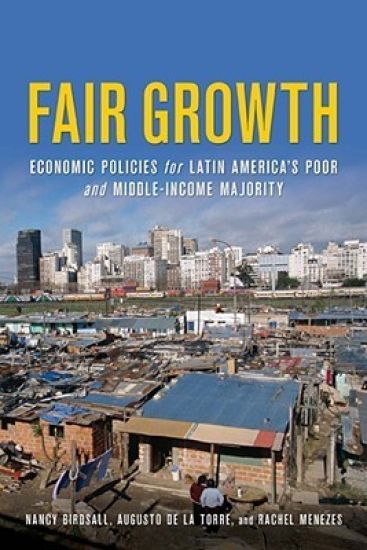
Fair Growth

Fair Growth

Nancy Birdsall; Augusto de la Torre; Rachel Menezes

Centre for Global Development
2008
nidottu
Until recently, students of development have put much more energy into understanding the causes and consequences of absolute poverty than of inequality. But globalization —with its new opportunities for winners and losers, and its new insecurities and competitive pressures —is changing that. Nowhere is the issue of inequality more worrying than in Latin America, the setting for many of the world's most unequal societies. This book presents a dozen ideas or "tools" meant to make life in Latin America more equitable and fair for the great majority of its people. It suggests policies and programs for making tax structures more progressive; giving small businesses a chance; protecting labor mobility and workers' rights; tackling corruption head on; and raising the levels of quality, efficiency, and equity of the education systems. Change and reform in the direction of greater fairness will require not only political leadership and technical know-how on the part of government officials and legislators, but support and input from the progressive business community, the increasingly effective and vocal civil society, and students and intellectuals.
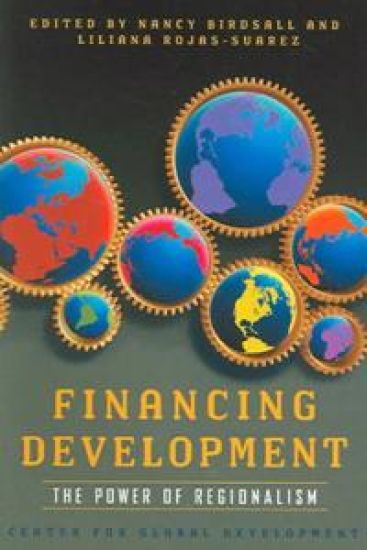
Financing Development – The Power of Regionalism

Financing Development – The Power of Regionalism

Nancy Birdsall; Liliana Rojas–suarez

The Peterson Institute for International Economics
2004
nidottu
This book advocates adding more open and radical regionalism to strategies for the financing of economic and social development in Africa, Asia, and Latin America. Editors Nancy Birdsall and Liliana Rojas-Suarez argue that agreements among countries within regions, rather than detracting from an open multilateral system, can promote greater integration into the global trading and financial system by helping to build the domestic institutions that developing countries need to cope with the challenges of the global economy. The essays in this volume point to the unrealized potential of regionalism in promoting not only reduction of trade barriers, but shared investment in infrastructure and enhanced policy cooperation in development of financial markets. The book also offers fresh insights on how regional development banks can catalyze collective action.
Delivering on Debt Relief – From IMF Gold to a New Aid Architecture

Delivering on Debt Relief – From IMF Gold to a New Aid Architecture

Nancy Birdsall; John Williamson; Brian Deese

The Peterson Institute for International Economics
2002
nidottu
This study brings readers up to date on the complicated and controversial subject of debt relief for the poorest countries of the world. What has actually been achieved? Has debt relief provided truly additional resources to fight poverty? How will the design and timing of the "enhanced Heavily Indebted Poor Country (HIPC) initiative" affect the development prospects of the world's poorest countries and their people? The study then moves on to address several broader policy questions: Is debt relief a step toward more efficient and equitable government spending, building better institutions, and attracting productive private investment in the poorest countries? Who pays for debt relief? Is there a case for further relief? Most important, how can the case for debt relief be sustained in a broader effort to combat poverty in the poorest countries?