Kirjojen hintavertailu – 12 903 742 kirjaa ja 27 kauppaa

Kirjailija

Nancy Burns

Kirjat ja teokset yhdessä paikassa: 5 kirjaa, julkaisuja vuosilta 2001–2025, suosituimpiin kuuluu What's Happened to the Gender Gap in Political Activity?. Vertaile teosten hintoja ja tarkista saatavuus suomalaisista kirjakaupoista.

5 kirjaa

Kirjojen julkaisuvuodet: 2001–2025.

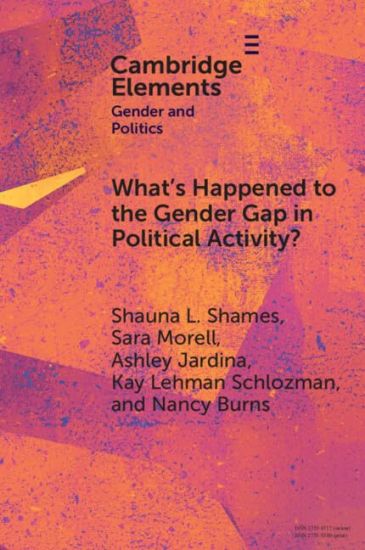
What's Happened to the Gender Gap in Political Activity?

What's Happened to the Gender Gap in Political Activity?

Shauna L. Shames; Sara Morell; Ashley Jardina; Kay Lehman Schlozman; Nancy Burns

Cambridge University Press
2025
pokkari
This Element considers recent changes to the long-standing pattern in US politics that women are less politically active than men. On one hand, the gender gap in political activity beyond voting has disappeared. On the other, the disparity remains when it comes to political money. What is the explanation? The Element begins with politics – both the long-term increase in women occupying political positions and the way that trends/events like MeToo, the defeat of Hillary Clinton, and Donald Trump's performative masculinity made gender salient. It then turns to social structural changes, examining in particular women's relative gains in income and, especially, education. Paying consistent attention to intersectional differences among men and among women, whether based on political party, race, or ethnicity, the authors find the explanation of these trends to be rooted not in politics, but rather in social structure. This title is also available as Open Access on Cambridge Core.
What's Happened to the Gender Gap in Political Activity?

What's Happened to the Gender Gap in Political Activity?

Shauna L. Shames; Sara Morell; Ashley Jardina; Kay Lehman Schlozman; Nancy Burns

Cambridge University Press
2025
sidottu
This Element considers recent changes to the long-standing pattern in US politics that women are less politically active than men. On one hand, the gender gap in political activity beyond voting has disappeared. On the other, the disparity remains when it comes to political money. What is the explanation? The Element begins with politics – both the long-term increase in women occupying political positions and the way that trends/events like MeToo, the defeat of Hillary Clinton, and Donald Trump's performative masculinity made gender salient. It then turns to social structural changes, examining in particular women's relative gains in income and, especially, education. Paying consistent attention to intersectional differences among men and among women, whether based on political party, race, or ethnicity, the authors find the explanation of these trends to be rooted not in politics, but rather in social structure. This title is also available as Open Access on Cambridge Core.

The Dragon Speaker

The Dragon Speaker

Nancy Burns

Penstemon Publications
2018
nidottu
Kalia's comfortable palace life in the Island Realm crumbled after a fierce attack by mysterious warriors mounted on dragons took the life of her father, King Maxilla. She now held the title of Queen, a role she resisted. Mounting a beautiful blue sleeter dragon belonging to the handsome Prince Maki, she set out on a voyage of discovery to visit neighboring realms to search for the missing prince, her mother and answers. She had no weapons and few skills except her dawning ability to speak to dragons. Would that be enough to save her kingdom- and perhaps her entire world from a looming disaster?
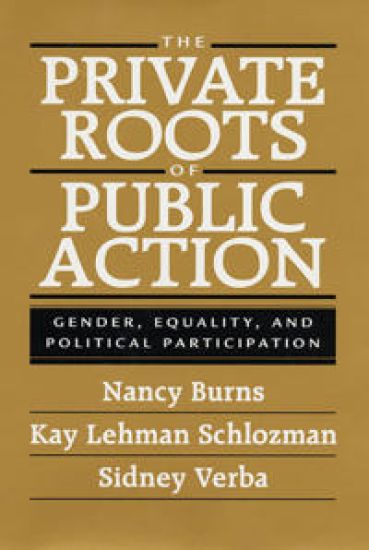
The Private Roots of Public Action

The Private Roots of Public Action

Nancy Burns; Kay Lehman Schlozman; Sidney Verba

Harvard University Press
2001
nidottu
Why, after several generations of suffrage and a revival of the women's movement in the late 1960s, do women continue to be less politically active than men? Why are they less likely to seek public office or join political organizations? The Private Roots of Public Action is the most comprehensive study of this puzzle of unequal participation. The authors develop new methods to trace gender differences in political activity to the nonpolitical institutions of everyday life--the family, school, workplace, nonpolitical voluntary association, and church. Different experiences with these institutions produce differences in the resources, skills, and political orientations that facilitate participation--with a cumulative advantage for men. In addition, part of the solution to the puzzle of unequal participation lies in politics itself: where women hold visible public office, women citizens are more politically interested and active. The model that explains gender differences in participation is sufficiently general to apply to participatory disparities among other groups--among the young, the middle-aged, and the elderly or among Latinos, African-Americans and Anglo-Whites.