Kirjojen hintavertailu – 12 903 725 kirjaa ja 27 kauppaa

Kirjailija

Nancy E. Riley

Kirjat ja teokset yhdessä paikassa: 11 kirjaa, julkaisuja vuosilta 2003–2024, suosituimpiin kuuluu Chinatown, Honolulu. Vertaile teosten hintoja ja tarkista saatavuus suomalaisista kirjakaupoista.

Nimi esiintyy myös muodoissa: Nancy E Riley

11 kirjaa

Kirjojen julkaisuvuodet: 2003–2024.

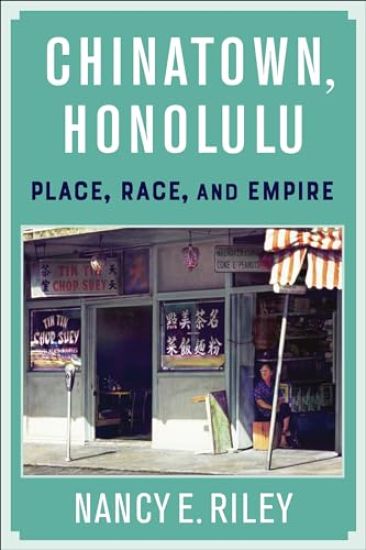
Chinatown, Honolulu

Chinatown, Honolulu

Nancy E. Riley

Columbia University Press
2024
sidottu
The Chinese experience in Hawai‘i has long been told as a story of inclusion and success. During the Cold War, the United States touted the Chinese community in Hawai‘i as an example of racial harmony and American opportunity, claiming that all ethnic groups had the possibility to attain middle-class lives. Today, Honolulu’s Chinatown is not only a destination for tourism and consumption but also a celebration of Chinese accomplishments, memorializing past discrimination and present prominence within a framework of multiculturalism. This narrative, however, conceals many other histories and processes that played crucial roles in shaping Chinatown. This book offers a critical account of the history of Chinese in Hawai‘i from the mid-nineteenth century to the present in this context of U. S. empire, settler colonialism, and racialization. Nancy E. Riley foregrounds elements that are often left out of narratives of Chinese history in Hawai‘i, particularly the place of Native Hawaiians, geopolitics and U. S. empire building, and the ongoing construction of race and whiteness. Tracing how Chinatown became a site of historical remembrance, she argues that it is also used to reinforce the ideology of neoliberal multiculturalism, which upholds racial hierarchy by lauding certain ethnic groups while excluding others. An insightful and in-depth analysis of the story of Honolulu’s Chinatown, this book offers new perspectives on the making of the racial landscape of Hawai‘i and the United States more broadly.
Chinatown, Honolulu

Chinatown, Honolulu

Nancy E. Riley

Columbia University Press
2024
pokkari
The Chinese experience in Hawai‘i has long been told as a story of inclusion and success. During the Cold War, the United States touted the Chinese community in Hawai‘i as an example of racial harmony and American opportunity, claiming that all ethnic groups had the possibility to attain middle-class lives. Today, Honolulu’s Chinatown is not only a destination for tourism and consumption but also a celebration of Chinese accomplishments, memorializing past discrimination and present prominence within a framework of multiculturalism. This narrative, however, conceals many other histories and processes that played crucial roles in shaping Chinatown. This book offers a critical account of the history of Chinese in Hawai‘i from the mid-nineteenth century to the present in this context of U. S. empire, settler colonialism, and racialization. Nancy E. Riley foregrounds elements that are often left out of narratives of Chinese history in Hawai‘i, particularly the place of Native Hawaiians, geopolitics and U. S. empire building, and the ongoing construction of race and whiteness. Tracing how Chinatown became a site of historical remembrance, she argues that it is also used to reinforce the ideology of neoliberal multiculturalism, which upholds racial hierarchy by lauding certain ethnic groups while excluding others. An insightful and in-depth analysis of the story of Honolulu’s Chinatown, this book offers new perspectives on the making of the racial landscape of Hawai‘i and the United States more broadly.
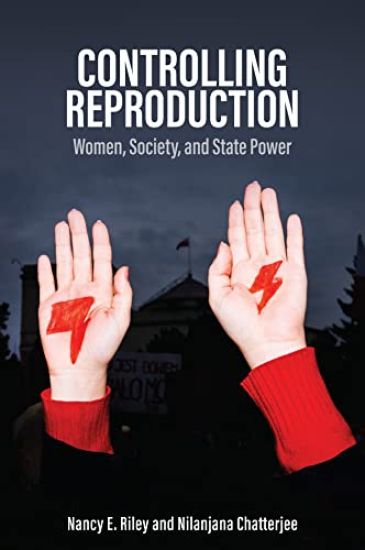
Controlling Reproduction

Controlling Reproduction

Nancy E. Riley; Nilanjana Chatterjee

JOHN WILEY AND SONS LTD
2022
nidottu

Halvin toimitettuna 30,20 €

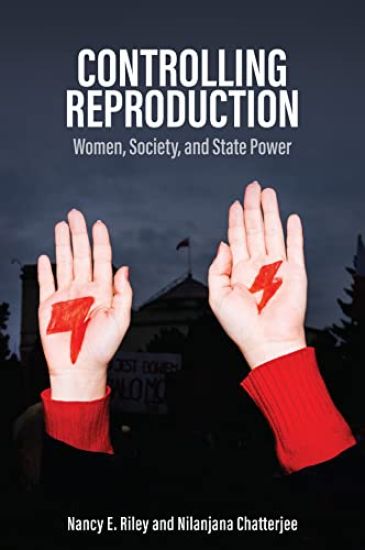
Controlling reproduction – who has children, how many, and when – is important to states, communities, families, and individuals across the globe. However, the stakes are even higher than might at first be appreciated: control over reproduction is an incredibly powerful tool. Contests over reproduction necessarily involve control over women and their bodies. Yet because reproduction is so intertwined with other social processes and institutions, controlling it also extends far into most corners of social, economic, and political life. Nancy Riley and Nilanjana Chatterjee explore how various social institutions beyond the individual – including state, religion, market, and family – are involved in the negotiation of reproductive power. They draw on examples from across the world, such as direct fertility policies in China and Romania, the influence of the Catholic Church in Poland and Brazil, racial discrimination and resistance in Mexico and the US, and how Japan and Norway use laws intended to encourage gender equality to indirectly shape reproduction. This engaging book sheds new light on the operations of power and gender in society. It will appeal to students taking courses on reproduction in departments of sociology, anthropology, and gender studies.
Controlling Reproduction

Controlling Reproduction

Nancy E. Riley; Nilanjana Chatterjee

JOHN WILEY AND SONS LTD
2022
sidottu
Controlling reproduction – who has children, how many, and when – is important to states, communities, families, and individuals across the globe. However, the stakes are even higher than might at first be appreciated: control over reproduction is an incredibly powerful tool. Contests over reproduction necessarily involve control over women and their bodies. Yet because reproduction is so intertwined with other social processes and institutions, controlling it also extends far into most corners of social, economic, and political life. Nancy Riley and Nilanjana Chatterjee explore how various social institutions beyond the individual – including state, religion, market, and family – are involved in the negotiation of reproductive power. They draw on examples from across the world, such as direct fertility policies in China and Romania, the influence of the Catholic Church in Poland and Brazil, racial discrimination and resistance in Mexico and the US, and how Japan and Norway use laws intended to encourage gender equality to indirectly shape reproduction. This engaging book sheds new light on the operations of power and gender in society. It will appeal to students taking courses on reproduction in departments of sociology, anthropology, and gender studies.
Population in China

Population in China

Nancy E. Riley

Polity Press
2016
nidottu
China is home to a fifth of the world?s inhabitants. For the last several decades, this huge population has been in flux: fertility has fallen sharply, mortality has declined, and massive rural-to-urban migration is taking place. The state has played a direct role in these changes, seeing population control as an important part of its intention to modernize the country. In this insightful new work, Nancy E. Riley argues that China?s population policies and outcomes are not simply imposed by the state onto an unresponsive citizenry, but have arisen from the social organization of China over the past sixty years. Riley demonstrates how China?s population and population policy are intertwined and interact with other social and economic features. Riley also examines the unintended consequences of state directives, including the extraordinary number of ?missing girls,? the rapid aging of the population, and an increase in inequality, particularly between rural and urban residents. Ultimately, China?s demographic story has to be understood as a complex, multi-pieced phenomenon. This book will be essential reading for researchers and students of China and social demography, as well as non-specialists interested in the changing nature of China?s population.
Population in China

Population in China

Nancy E. Riley

Polity Press
2016
sidottu
China is home to a fifth of the world?s inhabitants. For the last several decades, this huge population has been in flux: fertility has fallen sharply, mortality has declined, and massive rural-to-urban migration is taking place. The state has played a direct role in these changes, seeing population control as an important part of its intention to modernize the country. In this insightful new work, Nancy E. Riley argues that China?s population policies and outcomes are not simply imposed by the state onto an unresponsive citizenry, but have arisen from the social organization of China over the past sixty years. Riley demonstrates how China?s population and population policy are intertwined and interact with other social and economic features. Riley also examines the unintended consequences of state directives, including the extraordinary number of ?missing girls,? the rapid aging of the population, and an increase in inequality, particularly between rural and urban residents. Ultimately, China?s demographic story has to be understood as a complex, multi-pieced phenomenon. This book will be essential reading for researchers and students of China and social demography, as well as non-specialists interested in the changing nature of China?s population.
Gender, Work, and Family in a Chinese Economic Zone
This book examines the dynamics of power within the families of married women who have migrated from rural areas to China's Dalian Economic Zone. Engaging the question of whether waged work gives women power in their families, this ethnographic study finds that women do indeed use their new positions and urban status to negotiate their family status. However, women use these new resources not necessarily to promote their own individual liberation, but rather to strengthen their contribution as wives and, especially, as mothers. Thus, this new modernity provides a space for the re-inscribing of traditional roles, even as it may work to give women new-found power within their families. How and why this process occurs is related to the dual inequalities these women face as rural migrants and as women.
Gender, Work, and Family in a Chinese Economic Zone
This book examines the dynamics of power within the families of married women who have migrated from rural areas to China's Dalian Economic Zone. Engaging the question of whether waged work gives women power in their families, this ethnographic study finds that women do indeed use their new positions and urban status to negotiate their family status. However, women use these new resources not necessarily to promote their own individual liberation, but rather to strengthen their contribution as wives and, especially, as mothers. Thus, this new modernity provides a space for the re-inscribing of traditional roles, even as it may work to give women new-found power within their families. How and why this process occurs is related to the dual inequalities these women face as rural migrants and as women.
Making Families Through Adoption

Making Families Through Adoption

Nancy E. Riley; Krista E. Van Vleet

SAGE Publications Inc
2011
nidottu
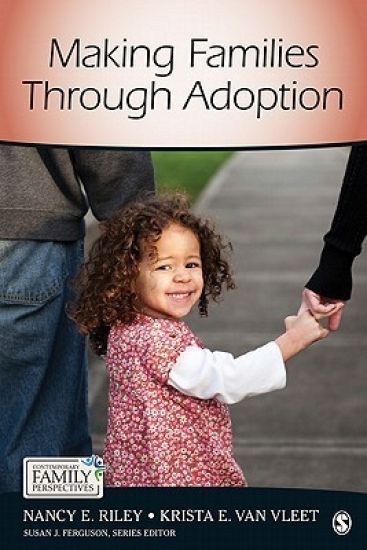
Making Families Through Adoption provides a comprehensive look at adoption practices both in the United States and in other cultures, and a general understanding of the practices and ideology of kinship and family. The subject of adoption allows a window into discussions of what constitutes family or kin, the role of biological connectedness, oversight of parenting practices by the state, and the role of race, gender, sexuality, and socio-economic class in the building of families. While reviewing practices of and issues surrounding adoption, the authors highlight the ways these practices and discussions allow us greater insight into overall practices of kinship and family.
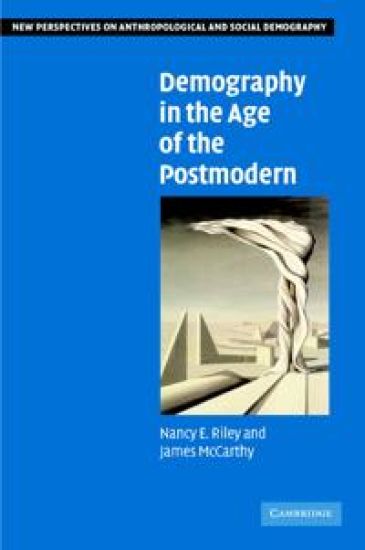
Demography in the Age of the Postmodern

Demography in the Age of the Postmodern

Nancy E. Riley; James McCarthy

Cambridge University Press
2003
pokkari
Demography has developed into a remarkably coherent field and now stands as a firmly established discipline with strong ties to policy-making agencies. However, in recent years there has been increasing recognition within demography of the limits of existing theories and methods, particularly its absence of a strong critical tradition and its isolation from recent theoretical developments in other social sciences. In this study, Nancy Riley and James McCarthy use the lens of postmodernism to structure a critical analysis of the field of demography. Paying particular attention to the fundamental epistemologies and methodologies that currently underlie the field, they explore how postmodern perspectives might serve to energize the field and how demography could be enhanced by the introduction of insights from other social sciences. Drawing on examples of new kinds of research in demography and related fields, this is an important new book that seeks to reinvigorate the field of demography.
Demography in the Age of the Postmodern

Demography in the Age of the Postmodern

Nancy E. Riley; James McCarthy

Cambridge University Press
2003
sidottu
Demography has developed into a remarkably coherent field and now stands as a firmly established discipline with strong ties to policy-making agencies. However, in recent years there has been increasing recognition within demography of the limits of existing theories and methods, particularly its absence of a strong critical tradition and its isolation from recent theoretical developments in other social sciences. In this study, Nancy Riley and James McCarthy use the lens of postmodernism to structure a critical analysis of the field of demography. Paying particular attention to the fundamental epistemologies and methodologies that currently underlie the field, they explore how postmodern perspectives might serve to energize the field and how demography could be enhanced by the introduction of insights from other social sciences. Drawing on examples of new kinds of research in demography and related fields, this is an important new book that seeks to reinvigorate the field of demography.