Kirjojen hintavertailu – 12 903 725 kirjaa ja 27 kauppaa

Kirjailija

Nancy Edwards

Kirjat ja teokset yhdessä paikassa: 7 kirjaa, julkaisuja vuosilta 1996–2023, suosituimpiin kuuluu The Archaeology of Early Medieval Ireland. Vertaile teosten hintoja ja tarkista saatavuus suomalaisista kirjakaupoista.

7 kirjaa

Kirjojen julkaisuvuodet: 1996–2023.

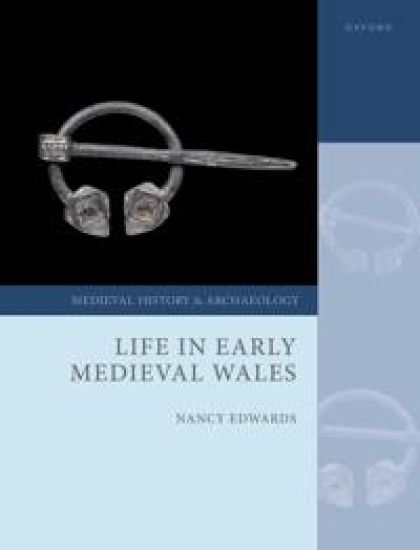
Life in Early Medieval Wales

Life in Early Medieval Wales

Nancy Edwards

Oxford University Press
2023
sidottu
Research for and the writing of this book was funded by the award of a Leverhulme Trust Major Research Fellowship. The period c. AD300--1050, spanning the collapse of Roman rule to the coming of the Normans, was formative in the development of Wales. Life in Early Medieval Wales considers how people lived in late Roman and early medieval Wales, and how their lives and communities changed over the course of this period. It uses a multidisciplinary approach, focusing on the growing body of archaeological evidence set alongside the early medieval written sources together with place-names and personal names. It begins by analysing earlier research and the range of sources, the significance of the environment and climate change, and ways of calculating time. Discussion of the fourth, fifth, and sixth centuries focuses on the disintegration of the Roman market economy, fragmentation of power, and the emergence of new kingdoms and elites alongside evidence for changing identities, as well as important threads of continuity, notably Latin literacy, Christianity, and the continuation of small-scale farming communities. Early medieval Wales was an entirely rural society. Analysis of the settlement archaeology includes key sites such as hillforts, including Dinas Powys, the royal crannog at Llangorse, and the Viking Age and earlier estate centre at Llanbedrgoch alongside the development, from the seventh century onwards, of new farming and other rural settlements. Consideration is given to changes in the mixed farming economy reflecting climate deterioration and a need for food security, as well as craft working and the roles of exchange, display, and trade reflecting changing outside contacts. At the same time cemeteries and inscribed stones, stone sculpture and early church sites chart the course of conversion to Christianity, the rise of monasticism, and the increasing power of the Church. Finally, discussion of power and authority analyses emerging evidence for sites of assembly, the rise of Mercia, and increasing English infiltration, together with the significance of Offa's and Wat's Dykes, and the Viking impact. Throughout the evidence is placed within a wider context enabling comparison with other parts of Britain and Ireland and, where appropriate, with other parts of Europe to see broader trends, including the impacts of climate, economic, and religious change.
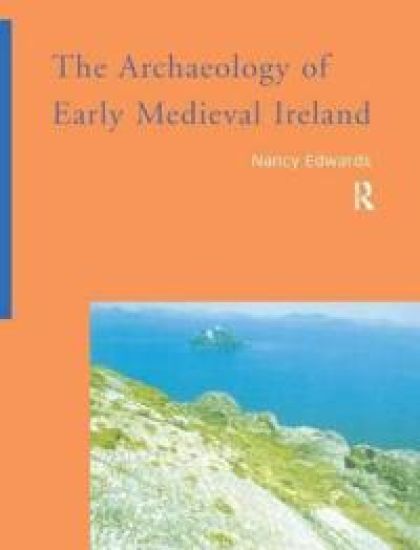
The Archaeology of Early Medieval Ireland
In the first major work on the subject for over 30 years, Nancy Edwards provides a critical survey of the archaeological evidence in Ireland (c. 400-1200), introducing material from many recently discovered sites as well as reassessing the importance of earlier excavations. Beginning with an assessment of Roman influence, Dr Edwards then discusses the themse of settlement, food and farming, craft and technology, the church and art, concluding with an appraisal of the Viking impact. The archaeological evidence for the period is also particularly rich and wide-ranging and our knowledge is expanding repidly in the light of modern techniques of survey and excavation.
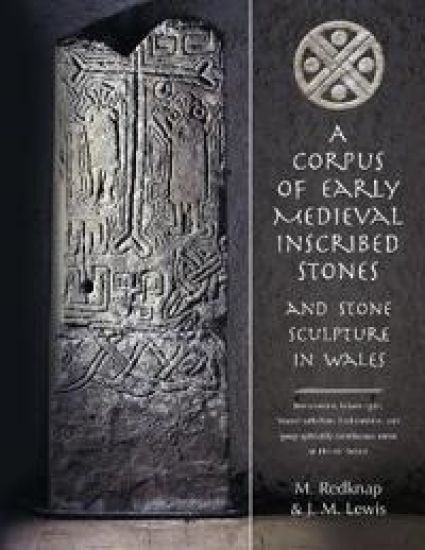
A Corpus of Early Medieval Inscribed Stones and Stone Sculpture in Wales

A Corpus of Early Medieval Inscribed Stones and Stone Sculpture in Wales

Mark Redknap; John Lewis; Nancy Edwards

University of Wales Press
2013
nidottu
All three regional volumes of A Corpus of Early Medieval Inscribed Stones and Stone Sculpture in Wales are available in this set. Volume I covers South-East Wales and the English Border (2007). Volume II and Volume III cover South-West Wales (2007) and North Wales (2013) respectively. Each volume consists of a full analytical introduction and a catalogue of individual monuments with discussions and numerous photographs and line-drawings. Volume II is a winner of the Cambrian Archaeological Association's G. T. Clark Prize. Around 550 early medieval inscribed stones and pieces of stone sculpture are now known from Wales and are of crucial importance to our understanding of the period between the end of Roman Britain and the coming of the Normans. For example, their archaeological context can help us to identify early burial and church sites and reveal much about the development of Christianity and the patronage of major monasteries. Equally, a study of the form, ornament and iconography of the monuments, as well as the inscriptions, their formulae, languages (both Latin and Celtic) and epigraphy (including ogam), can shed valuable light on the functions and dating of the stones and indicate Christian contacts, both between different parts of Wales, and further afield with the Continent, Ireland, Anglo-Saxon England, and the ‘Irish Sea Province’ in the Viking period.
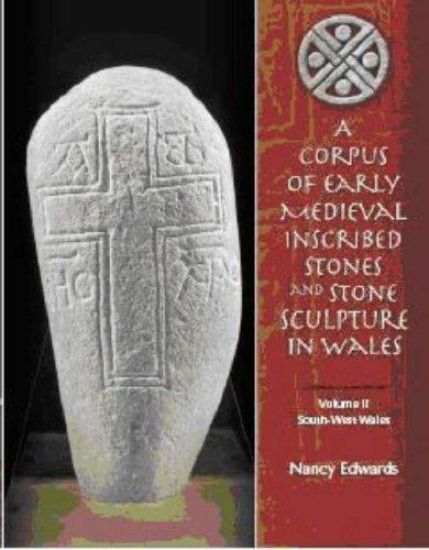
A Corpus of Medieval Inscribed Stones and Stone Sculpture in Wales: South-West Wales v. 2
Inscribed stones and stone sculpture forms the most prolific body of material evidence which survives for Wales in the period c AD 400-1100. Stones inscribed in Latin or Old Irish ogam (or both), which date to the fifth to seventh centuries, commemorate the elite of Welsh society. They are crucial to understanding the degree of Roman continuity, the impact of Irish settlement and the development of both the early kingdoms and Christianity in Wales. The inscriptions on these and the later sculpture are a major source for the Latin, Welsh and Irish languages and early medieval literacy. The cross-carved stones, which probably begin in the seventh century, and the larger freestanding crosses and other monuments, which are mostly of ninth- to eleventh-century date, allow us to identify a range of early medieval ecclesiastical sites within a wider landscape and trace the patronage of the church by the secular elite. The ornament, iconography and inscriptions allow a study of the impact and interchange of cultural contacts with Ireland, the Irish Sea zone, Anglo-Saxon England, the Vikings and the Continent.
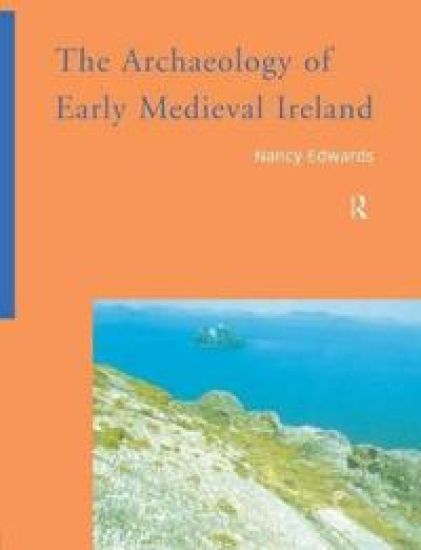
The Archaeology of Early Medieval Ireland
In the first major work on the subject for over 30 years, Nancy Edwards provides a critical survey of the archaeological evidence in Ireland (c. 400-1200), introducing material from many recently discovered sites as well as reassessing the importance of earlier excavations. Beginning with an assessment of Roman influence, Dr Edwards then discusses the themse of settlement, food and farming, craft and technology, the church and art, concluding with an appraisal of the Viking impact. The archaeological evidence for the period is also particularly rich and wide-ranging and our knowledge is expanding repidly in the light of modern techniques of survey and excavation.