Kirjojen hintavertailu – 12 903 724 kirjaa ja 27 kauppaa

Kirjailija

Nancy Eisenberg

Kirjat ja teokset yhdessä paikassa: 10 kirjaa, julkaisuja vuosilta 1989–2022, suosituimpiin kuuluu Loose-Leaf Version of How Children Develop 4e & Launchpad (Six Month Access) [With Access Code]. Vertaile teosten hintoja ja tarkista saatavuus suomalaisista kirjakaupoista.

10 kirjaa

Kirjojen julkaisuvuodet: 1989–2022.

Entwicklungspsychologie im Kindes- und Jugendalter

Entwicklungspsychologie im Kindes- und Jugendalter

Robert Siegler; Jenny R. Saffran; Elizabeth T. Gershoff; Nancy Eisenberg

Springer-Verlag Berlin and Heidelberg GmbH Co. KG
2022
muu
Dieses Standardwerk bietet allen, die sich beruflich oder privat für die Entwicklung im Kindes- und Jugendalter interessieren, umfassende Einblicke in den spannenden Prozess des Erwachsenwerdens. Die Autor*innen sind renommierte Wissenschaftler und Pädagogen. Sie haben diese Auflage grundlegend überarbeitet und um wichtige neue Informationen zur sozialen und emotionalen Entwicklung ergänzt. Studierende finden hier alles Wichtige für die Prüfung im Modul Entwicklungspsychologie: einen umfassenden Überblick über zentrale Konzepte, Theorien, Methoden und Ergebnisse entwicklungspsychologischer Forschung; geschrieben in einfacher und klar verständlicher Sprache; von Sabina Pauen, Professorin für Entwicklungspsychologie, für den deutschsprachigen Markt angepasst; mit Selbsttest-Fragen und Antworten über die Flashcards-App und mit hilfreichen Zusatzmaterialien über die Begleitwebseite. Eine Vielzahl an Illustrationen, Fallbeispielen und Praxisbezügen helfen dabei, den Stoff zuverstehen, zu strukturieren und zu verinnerlichen. So ist dieses Lehrbuch der Entwicklungspsychologie ein echtes Lese- und Lernvergnügen, auch für Laien. Die Inhalte des Werks gehen dabei weit über den klassischen Lehrstoff für Bachelor-Prüfungen hinaus; sie vermitteln ein vertieftes Verständnis dafür, wie die Entwicklung in unterschiedlichen Bereichen zusammenhängt, von welchen sozialen und gesellschaftlichen Rahmenbedingungen sie abhängt und wie die Entstehung von Problemen verhindert werden kann. Dieses Hintergrundwissen ist entscheidend für vielfältige Anwendungsfelder. Das Lehrbuch dient damit auch als wichtiges Nachschlagewerk im Master-Studium. Auch wenn Sie bereits beruflich oder privat mit Kindern und Jugendlichen zu tun haben, wird Ihnen das Buch Lust machen, mehr über die Prozesse und Mechanismen zu erfahren, die Entwicklung erst möglich machen, sie unterstützen oder auch behindern.
Altruistic Emotion, Cognition, and Behavior (PLE: Emotion)
Originally published in 1986, this book was an effort to integrate thinking and research concerning the role of emotion and cognition in altruistic behaviour. Prior to publication there was a vast body of research and theorizing concerning the development and maintenance of prosocial (including altruistic) behaviour. This book focusses primarily on a specific set of intrapsychic factors involved in prosocial responding, especially emotions and cognitions believed to play a major role in altruistic behaviour. In the final chapters these intrapsychic factors are also discussed in relation to a variety of other relevant factors including socialization and situational influences on altruism.
Loose-Leaf Version of How Children Develop 4e & Launchpad (Six Month Access) [With Access Code]

Loose-Leaf Version of How Children Develop 4e & Launchpad (Six Month Access) [With Access Code]

Robert S. Siegler; Nancy Eisenberg; Judy S. Deloache

WORTH PUBLISHERS
2016
irtolehti
With How Children Develop, students get an up-to-date, topically-organized introduction to child development, presented by researchers and teachers who themselves are guiding the field into new directions. The authors emphasize fundamental principles, enduring themes, and important recent studies, avoiding excessive detail and making typically difficult topics easier to grasp. This thoroughly updated edition welcomes new co-author Jenny Saffran, and is accompanied by an expanded media package.
Altruistic Emotion, Cognition, and Behavior (PLE: Emotion)
Originally published in 1986, this book was an effort to integrate thinking and research concerning the role of emotion and cognition in altruistic behaviour. Prior to publication there was a vast body of research and theorizing concerning the development and maintenance of prosocial (including altruistic) behaviour. This book focusses primarily on a specific set of intrapsychic factors involved in prosocial responding, especially emotions and cognitions believed to play a major role in altruistic behaviour. In the final chapters these intrapsychic factors are also discussed in relation to a variety of other relevant factors including socialization and situational influences on altruism.
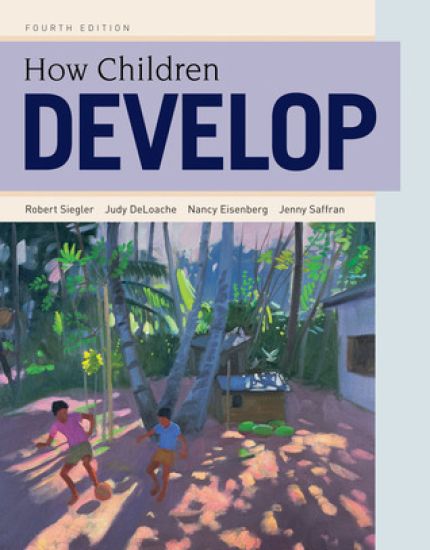
How Children Develop

How Children Develop

Robert S. Siegler; Judy DeLoache; Nancy Eisenberg; Jenny Saffran

Worth Publishers Inc.,U.S.
2014
sidottu
Written for topically-organized child development modules, How Children Develop provides a fresh perspective on the field of child development, emphasizing fundamental principles, enduring themes and important recent studies. The authors - all noted scholars and respected researchers are exceptionally skillful at making difficult topics accessible.
Understanding Mother-Adolescent Conflict Discussions

Understanding Mother-Adolescent Conflict Discussions

Nancy Eisenberg; Claire Hofer; Tracy L. Spinrad; Elizabeth T. Gershoff; Carlos Valiente; Qing Zhou; Amanda Cumberland; Jeffrey Liew; Mark Reiser; Elizabeth Maxon

Wiley-Blackwell (an imprint of John Wiley Sons Ltd)
2008
nidottu
Adolescence is often thought of as a period during which parent–child interactions can be relatively stressed and conflictual. There are individual differences in this regard, however, with only a modest percent of youth experiencing extremely conflictual relationships with their parents. Relatively little empirical research, however, addresses individual differences in the quality of parent–adolescent interactions concerning potentially conflictual issues. The research reported in this monograph examined dispositional and parenting predictors of the quality of parents’ and their adolescent children’s emotional displays and positive and negative verbalizations when dealing with conflictual issues. Of particular interest were patterns of continuity and discontinuity in the factors related to conflicts. A multimethod, multireporter (mother, teacher, and sometimes adolescent reports) longitudinal approach(over 4 years) was used to assess adolescents’ dispositional characteristics (control/regulation, resiliency, and negative emotionality), youths’ externalizing problems, and parenting variables (warmth, positive expressivity, discussion of emotion, positive and negative family expressivity). Parentadolescent conflicts appear to be influenced by both child characteristics and quality of prior and concurrent parenting, and child effects may be more evident than parent effects in this pattern of relations.
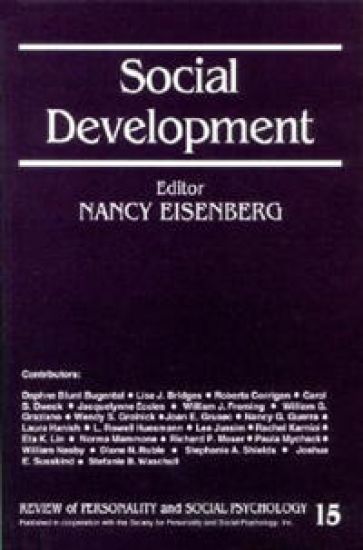
Social Development

Social Development

Nancy Eisenberg

SAGE Publications Inc
1994
nidottu
Published in cooperation with the Society for Personality and Social Psychology To some degree, the issues raised by social psychologists and developmentalists overlap, each of them offering unique possibilities by which to explore questions of interest. Social Development addresses this issue and attempts to foster an awareness of the interesting research on the interface of social and developmental psychology. Written by a cast of leading researchers, this volume provides a multi-level perspective on the common boundaries between social and developmental psychology with an eye toward synthesizing research from many fields including personality, education, social work, and family studies. The contributors raise questions that are often not recognized by investigators due to their lack of knowledge of work and ideas outside their own discipline. Some of the specific subjects covered are individual differences in predicting others' thoughts and feelings, naturally occurring interpersonal expectancies, self-conceptions and their development, and social development and self-monitoring. Researchers and students involved in social psychology, developmental psychology, personality, social work, family studies, sociology, and adolescence will find Social Development to be a lucid, insightful, and interesting volume.
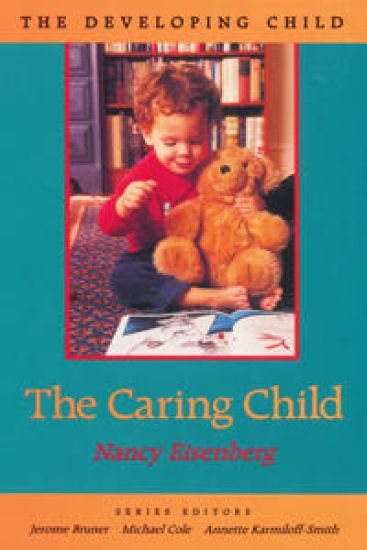
The Caring Child

The Caring Child

Nancy Eisenberg

Harvard University Press
1992
nidottu
Much of this century’s empirical research in the social sciences has been devoted to understanding the causes and contributing factors of antisocial behavior. In studies of children’s moral reasoning and conduct, developmental psychologists have probed the cognitive and social bases of aggression, conflict, delinquency, and prejudice. In contrast to psychology’s lengthy preoccupation with negative behavior in children, the study of children’s altruistic, cooperative, and sharing behavior has a relatively short history. The Caring Child provides the most up-to-date account of our current understanding of the motivations behind prosocial behaviors and how these motives develop and are elicited in various situations. When do children first exhibit prosocial behavior, particularly altruism? How do helping, sharing, and comforting behaviors change with age? Why are some children more caring than others? Are differences among children’s prosocial behaviors a result of hereditary factors, of how children are raised, or both? Can prosocial tendencies be enhanced by parents’ and educators’ deliberate attempts to instill altruistic motives and to teach caring behaviors? Nancy Eisenberg broadens our concept of the moral potential of children as she shifts the focus from censoring antisocial behaviors to the active promotion of kindness and caring in children.
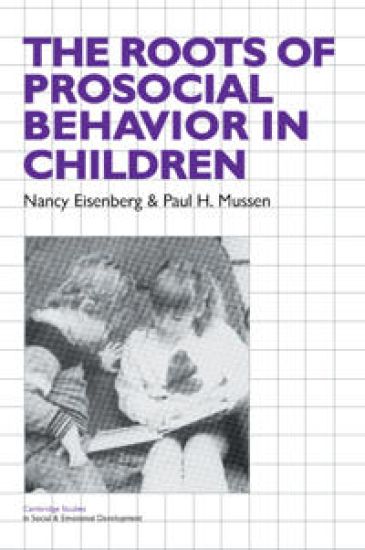
The Roots of Prosocial Behavior in Children

The Roots of Prosocial Behavior in Children

Nancy Eisenberg; Paul Henry Mussen

Cambridge University Press
1989
pokkari
What kinds of childbearing practices foster the development of helping, sharing, and other prosocial behaviours? What roles do biology and culture play in the development of prosocial behaviour? In this book, Nancy Eisenberg and Paul Mussen review and summarize scholarly research that has been devoted to the development of prosocial behaviour in children, and examine the variety of influences that contribute to children’s prosocial development, including the media, parents, peers, biology, culture, personal characteristics, as well as situational determinants. The authors argue that prosocial behaviour can be learned and is modifiable, and they suggest ways that parents, teachers, and other can enhance prosocial development. In addition, the authors attempt to communicate the advances in the study of prosocial development that have taken place over the last decade. The book highlights some questions that have not yet been addressed adequately by researchers, and suggests areas for future work.