Kirjojen hintavertailu – 12 859 819 kirjaa ja 27 kauppaa

Kirjailija

Nancy Frey

Kirjat ja teokset yhdessä paikassa: 146 kirjaa, julkaisuja vuosilta 2001–2026, suosituimpiin kuuluu Your Students, My Students, Our Students. Vertaile teosten hintoja ja tarkista saatavuus suomalaisista kirjakaupoista.

146 kirjaa

Kirjojen julkaisuvuodet: 2001–2026.

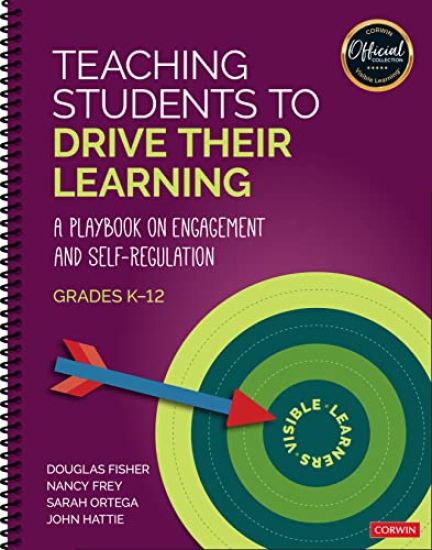
Teaching Students to Drive Their Learning

Teaching Students to Drive Their Learning

Douglas Fisher; Nancy Frey; Sarah Ortega; John Hattie

SAGE PUBLICATIONS INC
2023
kierre
High levels of engagement—it’s not an impossible dream. But to attain it we need to focus on what galvanizes learning, and ensure we are offering the tools and mindsets with which students can lean in. In this playbook, an ace team of educators give us the goods to guide self-starting learners. Nine modules show us how to: Coherent standards, success criteria, tasks, and goals so students can travel clear pathwaysOffer tools that allow learners to recognize the gap between their current performance and the expected performance, and select strategies to close that gapTalk with students about engagement as a continuum, and that there are actions they can take to heighten their buy-in to any endeavorStress-test our lesson plans to ensure students can discuss, debate, create and problem-solve around highly relevant contentUse lots of low-stakes assessment and feedback routines to develop effective collaboration that doesn’t depend on us. Our job as teachers is to guide learning experiences that build knowledge and self-efficacy. But from there, we need to stay on the sidelines and let students play. Only then will they develop the muscle to persevere, the strategic actions to excel, and the confidence to make our curriculum the springboard of their own dreams and goals.
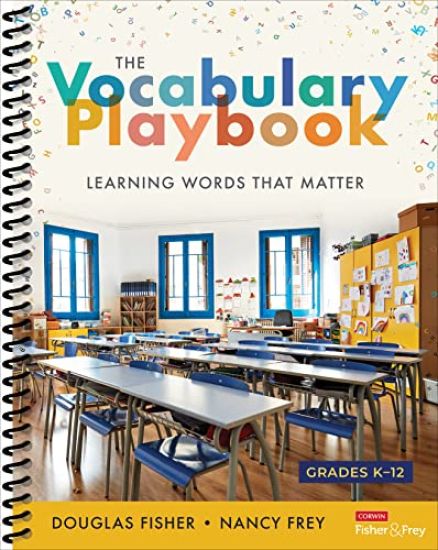
The Vocabulary Playbook

The Vocabulary Playbook

Douglas Fisher; Nancy Frey

SAGE PUBLICATIONS INC
2023
kierre
Concepts, conversation, collaboration—vocabulary instruction is so much more than lists of words. More is more when it comes to students’ vocabulary knowledge, and in The Vocabulary Playbook, educators in K-12 get ideas for transforming all children into curious, capable word learners. The key? Put away the word-list mindset, and embrace active modeling, peer work, and independent practice. Five modules offer direct instruction and effective routines that show how to: Select and teach only the most high-utility, transferable words that are ripe for discussionUse direct instruction to model word-solving in each content areaTeach morphology in ways that invite students to apply understandings in reading, writing, talk, and listeningTurn academic word-learning into a relevant experience with peer collaboration activitiesCreate a culture of word consciousness by emphasizing concepts, modeling curiosity, and offering "low-risk" routines that make it okay to not yet know Intentional vocabulary instruction is critical in every grade, and in every content area. With The Vocabulary Playbook, your approach is now tactical, transparent, and fun. Whether you are an administrator executing a school-wide plan or a teacher eager for practical strategies, this is the book that will help students build academic success—word by word.
Teaching Reading [Higher-Ed Version]

Teaching Reading [Higher-Ed Version]

Douglas Fisher; Nancy Frey; Diane K. Lapp

SAGE PUBLICATIONS INC
2023
kierre
Teaching Reading is the comprehensive guide you can trust for evidence-based reading practices. This edition provides free access to teaching ancillaries including lesson launchers, facilitator's notes, discussion board prompts, test banks, storyboards, and embedded tasks and assignments. It's settled science: developing skilled readers can enhance students’ lives. That’s why renowned educators Douglas Fisher, Nancy Frey, and Diane Lapp wrote this resource with the urgency of a code blue in an ER—because too many children, for many reasons, struggle with learning to become strong readers. Designed to be a one-stop shop for best practices, Teaching Reading is concise, encyclopedic, and essential. Thirteen interactive modules provide easy to read ideas to support you teaching every child to read very well. You will learn how to: Focus on two critical aspects of reading—word recognition and language comprehension. Select the best activities to support students in grades K-6 to learn letters and sound relationships. Provide developing readers with the most effective oral, written, and reading experiences. Recharge your confidence and craft with uplifting new research findings from neuroscience, cognitive science, and child development. Clear up confusions about phonics progressions, reading fluency, morphology, text selection, grammar, and more. Develop background knowledge, vocabulary, and comprehension instruction. Be up to date on how to help students attain deeper levels of comprehension by applying Theory of Mind and other cutting-edge ideas. Reading is a thrilling but complex process. It involves a heady mix of skills, schema, self-concept, and social dimensions. To give all students the chance to reap its rewards, we need a go-big kind of resource. This is it.
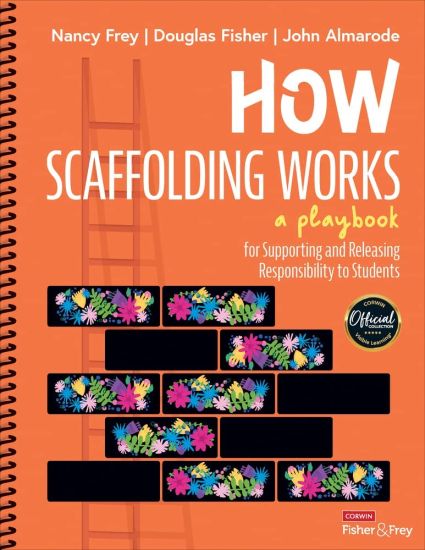
How Scaffolding Works

How Scaffolding Works

Nancy Frey; Douglas Fisher; John T. Almarode

SAGE PUBLICATIONS INC
2023
kierre
Provide the perfect structure and support to develop student independence. Effective scaffolding leads to learner autonomy—but too many educators have been airlifting students to right answers, perpetuating a generation who don’t know how to learn. Yes, we know the sweet spot for learning involves giving our students the right blend of productive failure and productive success, but how to do it is cloaked in misconceptions. How Scaffolding Works unveils the essential moves and methods. Ten interactive modules help every K-12 educator structure support in new ways, including knowing how to: Gradually release responsibility to students through intentional and purposeful scaffoldingDesign lessons and experiences that attend to the affective, metacognitive, and cognitive aspects of learningCollect data before, during, and after learning, so we can place, move, and take away scaffolds with greater intentionPromote independence with front-end scaffolds, distributed scaffolds, back-end scaffolds, peer scaffolds, and fading scaffoldsUse a blend of demonstration, modeling, coaching, explaining, questioning and choicePromote purposeful practice—in which learners knows where they’re going and how to get there Perhaps we rush in to rescue learners because the world seems fraught; we want to help our students reach the safety of academic success. Our intentions are good, but it’s time to step back, gradually and purposefully, and let them pilot their own learning.
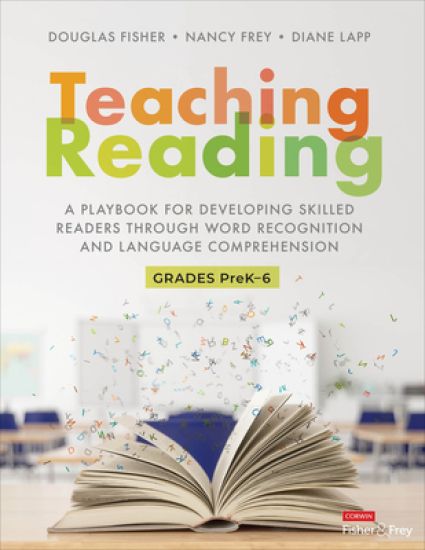
Teaching Reading

Teaching Reading

Douglas Fisher; Nancy Frey; Diane K. Lapp

SAGE PUBLICATIONS INC
2022
kierre
The comprehensive guide you can trust for evidence-based reading practices It's settled science: developing skilled readers can enhance students’ lives. That’s why renowned educators Douglas Fisher, Nancy Frey, and Diane Lapp wrote this resource with the urgency of a code blue in an ER—because too many children, for many reasons, struggle with learning to become strong readers. Designed to be a one-stop shop for best practices, Teaching Reading is concise, encyclopedic, and essential. Thirteen interactive modules provide easy to read ideas to support you teaching every child to read very well. You will learn how to: Focus on two critical aspects of reading—word recognition and language comprehension. Select the best activities to support students in grades K-6 to learn letters and sound relationships. Provide developing readers with the most effective oral, written, and reading experiences. Recharge your confidence and craft with uplifting new research findings from neuroscience, cognitive science, and child development. Clear up confusions about phonics progressions, reading fluency, morphology, text selection, grammar, and more. Develop background knowledge, vocabulary, and comprehension instruction. Be up to date on how to help students attain deeper levels of comprehension by applying Theory of Mind and other cutting-edge ideas. Reading is a thrilling but complex process. It involves a heady mix of skills, schema, self-concept, and social dimensions. To give all students the chance to reap its rewards, we need a go-big kind of resource. This is it.
The Early Childhood Education Playbook

The Early Childhood Education Playbook

Kateri Thunder; John T. Almarode; Alisha Demchak; Douglas Fisher; Nancy Frey

SAGE PUBLICATIONS INC
2022
kierre
Learn how the Visible Learning® research guides our planning and teaching as we partner with families and colleagues to have the greatest impact on the learning and development of young children.
How Feedback Works

How Feedback Works

John T. Almarode; Douglas Fisher; Nancy Frey

SAGE PUBLICATIONS INC
2022
kierre
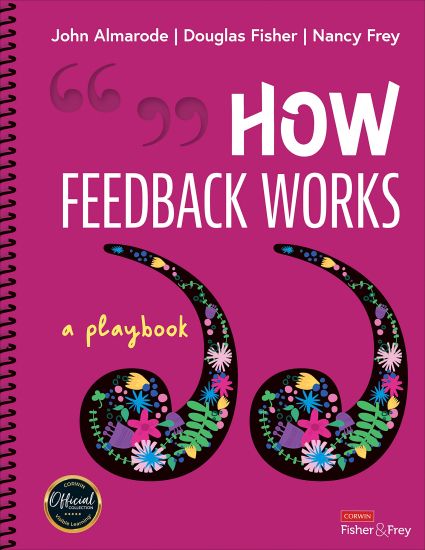
Feedback keeps learning moving forward. You have the power to improve everything about teaching and learning—through excellent feedback. Make it precise. Timely. Actionable. Feedback is absolutely necessary for learning, and is the one ingredient that, if missing, will hinder the learning process. In this Playbook, you will not only learn how to give effective feedback—but have abundant opportunities to practice this skill (and get feedback) as you learn. Bestselling authors John Almarode, Douglas Fisher, and Nancy Frey brilliantly organize this resource into 16 modules on the 4 C’s of Feedback: Care — create a culture in which teachers, students and leaders embrace feedback as a continuous loop of giving, receiving, and integrating suggestions Credibility — know how to stoke relatability, dynamism, and trust—and avoid the three most common barriers to students’ acting on feedback Clarity — align your learning goals, success criteria, and strategies so you gain the most useful evidence during learning from which to generate feedback. Communication — give feedback with intention, by speaking to the task; or to the learner’s process, or to the learner’s ability to monitor their own progress. Feedback is futile unless it motivates students to change their approach the next time, and still love learning. With the How Feedback Works: A Playbook you have the essential guide to ensuring students go-get their highest potential.
Leader Credibility

Leader Credibility

Douglas Fisher; Nancy Frey; Cathy J. Lassiter; Dominique Smith

SAGE PUBLICATIONS INC
2022
nidottu
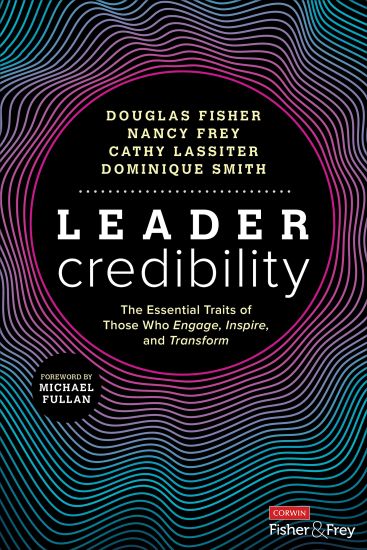
Passion, vision, relatability—can we ever quantify the facets of successful leadership? Is there sufficient "there-there" behind these feel-good words to transform a school into a culture of learning and bold hope? Yes, and yes! Inspired by John Hattie’s impressive research, Fisher, Frey, Lassiter, and Smith bring their trademark clarity to turn aspiration into energized action. For each of the five components that all effective leaders possess—trustworthiness, competence, dynamism, immediacy, and forward-thinking—leaders learn the first steps and bold leaps to mentor others. Each chapter abounds with professional development tools, including: Self-assessments so you know your baselinePause and ponder questions to envision changeREAL features to lead with alacrityChecklists to stay focused and strategicRelevant research to assimilate and share Now more than ever, schools need to be places where openness and trust are baked into every hallway hello and every meeting, so collective talents can take us farther than we ever imagined. Let Leader Credibility be your guide to steering others to that greatness.
Confronting the Crisis of Engagement

Confronting the Crisis of Engagement

Douglas B. Reeves; Nancy Frey; Douglas Fisher

SAGE PUBLICATIONS INC
2022
nidottu
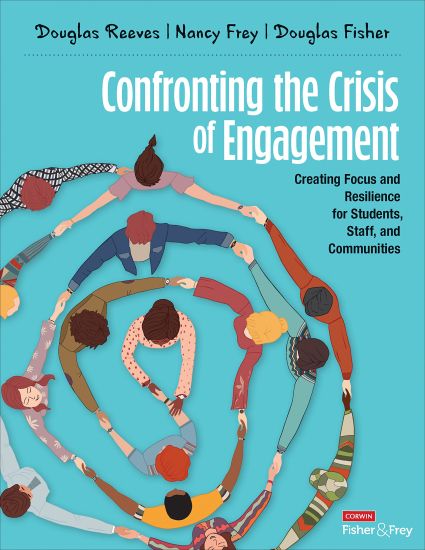
Stop apathy in its tracks with the 5 C’s of engagement Disengagement, disenchantment, distress—the three "D’s" of many post-pandemic schools. If we are to find our way back from this brink, every student, teacher, and leader must relearn how to lean in. It’s time to focus, know one another, and stop chasing so many initiatives. It’s time to shake things up so learners want to participate. From faculty meetings to student conferences, casual greetings to grading, you can learn to use practices that most powerfully reflect the Five C’s of Engagement: Connections — feeling known, valued, and tethered to othersConditions — being able to learn in a stable environment in which expectations are highChallenge — engaging in an endeavor knowing your "high jumps" in terms of intellectual and creative risks will be supportedControl — the privilege of learning with a balance between ownership and supportCollaboration — deepening one’s knowledge and identity as a learner by being skillful at relationship-building Our students are looking to us as the grownups in the room to model what it looks like to belong, believe, and balance high expectations with compassionate support. With Confronting the Crisis of Engagement in hand, you have the guide to make that happen.
The Restorative Practices Playbook

The Restorative Practices Playbook

Dominique Smith; Douglas Fisher; Nancy Frey

SAGE PUBLICATIONS INC
2022
kierre
Utilize restorative practices to create a safe, accepting, and equitable school climate where learning can flourish. When students have unfinished learning, educators create opportunities for students to learn. Unfortunately, this role seems to end when it comes to behavior. How can we turn behavior into a teachable moment? The Restorative Practices Playbook details a set of practices designed to teach prosocial behaviors based on strong relationships and a commitment to the well-being of others. Implementing restorative practices establishes a positive academic and social-emotional learning environment while building students’ capacity to self-regulate, make decisions, and self-govern—the very skills students need to achieve. In this eye-opening, essential playbook, renowned educators Dominique Smith, Douglas Fisher, and Nancy Frey support educators with the reflection prompts, tools, examples, and strategies needed to create restorative practices around several key concepts: A restorative school culture, grounded in respect, that builds agency and identity, establishes teacher credibility, sets high expectations, and fosters positive relationshipsRestorative conversations that equip adults and students with the capacity to resolve problems, make decisions, and arrive at solutions in ways that are satisfactory and growth-producingRestorative circles that promote academic learning through dialogue, build consensus in decision making, and help participants reach resolution through healingFormal restorative conferences that foster guided dialogue between victim(s) and offender(s) and include plans for re-entry into the school community By becoming adept in the skillful use of restorative practices, educators will foster equitable discipline that reduces exclusion and creates a school community driven by relationships and respect.
How Leadership Works

How Leadership Works

Cathy J. Lassiter; Douglas Fisher; Nancy Frey; Dominique Smith

SAGE PUBLICATIONS INC
2022
kierre
Sharpen your instructional leadership skills and guide your school toward equity and excellence for all. Just think about how great schools could be if every instructional leader exercised their influence to create change—maximizing the efforts of others and mobilizing those efforts to work toward a shared goal. How Leadership Works: A Playbook for Instructional Leaders walks educators through the processes of clarifying, articulating, and actualizing instructional leadership goals with the aim of delivering on the promise of equity and excellence for all. Grounded in Visible Learning® research, the exercises in this easy-to-use playbook illuminate the essential mindframes necessary for effective instructional leadership and prompt veteran, new, and aspiring educators to identify challenges and determine next steps. It includes: Ten essential mindframes for leaders, together with the leadership practices that illustrate each mindframe in actionTeaching practices, such as teacher clarity or student engagement in learning, that support teachers in delivering quality instruction, along with tools to document the impact of those practices on learningStrategies for leading learning, including establishing school culture, utilizing feedback, and supporting professional learning communities as a pathway to building collective teacher efficacy. Tools for applying the principles of change, conducting an initiative inventory, and implementing and de-implementing initiatives Exercise-by-exercise, educators and front office staff will deepen their knowledge, frame their priorities and practices, and gain new tools for supporting the instructional focus and initiatives designed to support learning at your school.
How Learning Works

How Learning Works

John T. Almarode; Douglas Fisher; Nancy Frey

SAGE Publications Inc
2022
kierre
Translate the science of learning into strategies for maximum learning impact in your classroom. The content, skills, and understandings students need to learn today are as diverse, complex, and multidimensional as the students in our classrooms. How can educators best create the learning experiences students need to truly learn? How Learning Works: A Playbook unpacks the science of how students learn and translates that knowledge into promising principles or practices that can be implemented in the classroom or utilized by students on their own learning journey. Designed to help educators create learning experiences that better align with how learning works, each module in this playbook is grounded in research and features prompts, tools, practice exercises, and discussion strategies that help teachers to Describe what is meant by learning in the local context of your classroom, including identifying any barriers to learning. Adapt promising principles and practices to meet the specific needs of your students—particularly regarding motivation, attention, encoding, retrieval and practice, cognitive load and memory, productive struggle, and feedback. Translate research on learning into learning strategies that accelerate learning and build students’ capacity to take ownership of their own learning—such as summarizing, spaced practice, interleaved practice, elaborate interrogation, and transfer strategies. Generate and gather evidence of impact by engaging students in reciprocal teaching and effective feedback on learning. Rich with resources that support the process of parlaying scientific findings into classroom practice, this playbook offers all the moves teachers need to design learning experiences that work for all students!
How Tutoring Works

How Tutoring Works

Nancy Frey; Douglas Fisher; John T. Almarode

SAGE Publications Inc
2021
nidottu
Build students’ confidence and competence with tutoring strategies that spark meaningful, accelerated learning. Tutoring is much more than telling students information. Effective tutoring begins with the strong and caring relationship a tutor establishes with a learner to build trust, fuel motivation, and drive critical learning. How Tutoring Works distills the complexity of strategic moves effective tutors make to build students’ confidence and competence. Harnessing decades of Visible Learning® research, this easy to read, eye-opening guide details the six essential components of any effective tutoring intervention—establishing a relationship and credibility, addressing student confidence and challenges, setting shared goals, helping a student learn how to learn, teaching and learning content, and establishing a habit of deliberate practice. Indispensable for any educator who intervenes with students, this rich resource includes: Examples of impactful tutoring conversations, including what to say and what not to say when building a relationship with a learner. Specific approaches to use when establishing credibility, addressing challenges to learning, leveraging the relevance of knowledge, setting goals, and ensuring practice. Learning strategies, with effect size, for teaching and learning content, including specific strategies for improving reading, writing, and mathematics. Tips and tools for helping students develop powerful cognitive, metacognitive, and affective study skills. Resources and advice for establishing an effective and transformational tutoring program. Done well, tutoring can repair a student’s damaged relationship to learning, address unrealized potential, and alter the course of a young person’s life. A strong and nurturing relationship between tutor and learner is key.
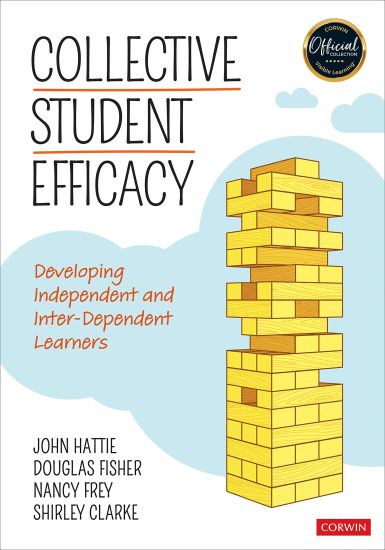
Collective Student Efficacy

Collective Student Efficacy

John Hattie; Douglas Fisher; Nancy Frey; Shirley Clarke

SAGE Publications Inc
2021
nidottu
Arm students with the confidence they need to pursue ambitious goals—together. Collective student efficacy— students’ beliefs that by working with other people, they will learn more—can be a powerful accelerator of student learning and a precursor to future employment success. Harnessing twenty-five years of VISIBLE LEARNING® research, Collective Student Efficacy: Developing Independent and Inter-Dependent Learners illuminates the power of collective efficacy and identifies the many ways teachers can activate collective efficacy with their students. More than cooperative and collaborative learning, collective efficacy requires the refinement of both individual and collective tasks that build on each other over time. This innovative book details how knowledge, skills, and dispositions entangle to create collective and individual beliefs, and leads educators to mobilize collective efficacy in the classroom. It includes: The vital components and evidence-based success criteria necessary for students' collective efficacy The "I" and "We" skills that need to be developed to ensure students have the skills and confidence to contribute to group success The nature of learning design, lesson planning, and classroom structures that ensure opportunities for all students to engage in collective efficacy The necessity for constructive alignment between learning intentions, tasks, success criteria, and assessments "Learning from a Distance" actions to facilitate building skills in remote learning environments The time is now to prepare students to meet the demands of the future. Through collective student efficacy, students will learn to become actionable agents of learning and change.
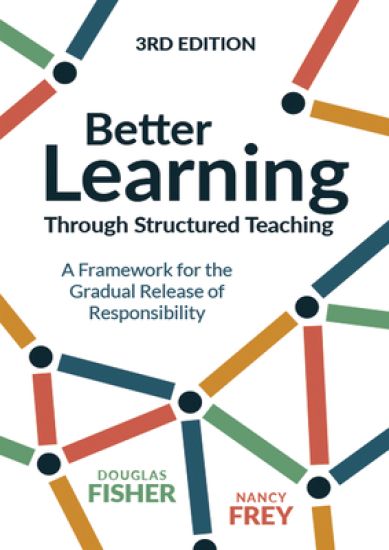
Better Learning Through Structured Teaching

Better Learning Through Structured Teaching

Douglas Fisher; Nancy Frey

Association for Supervision Curriculum Development
2021
nidottu
Now in its 3rd edition, Better Learning Through Structured Teaching is the definitive guide to the gradual release of responsibility—an instructional framework any teacher can use to help students to be more successful and self-directed learners. To gradually release responsibility is to equip students with what they need to master content and develop new competencies. On a day-to-day basis, it means delivering lessons intentionally structured to incorporate four interrelated phases:* Focused Instruction ("I do it") that sets students up for cognitive apprenticeship by establishing lesson purpose, modeling strategies and skills, and sharing information and insight.* Guided Instruction ("We do it together") that incorporates targeted prompts, cues, and questions to scaffold understanding.* Collaborative Learning ("You do it together") that allows students to consolidate and extend understanding through accountable group tasks built on discussion and cooperative problem solving.* Independent Learning ("You do it alone") that provides students opportunities to practice and apply the skills and knowledge they've acquired to create authentic products and ask new questions. Authors Douglas Fisher and Nancy Frey detail the components of each phase, sharing proven strategies and real-life examples. You'll find a variety of useful tips for classroom implementation, along with new guidance on teacher credibility, social-emotional learning, and embedding assessment throughout all four phases. No matter what grade level or subject you teach, Better Learning Through Structured Teaching is an essential resource for improving your practice and empowering your students.
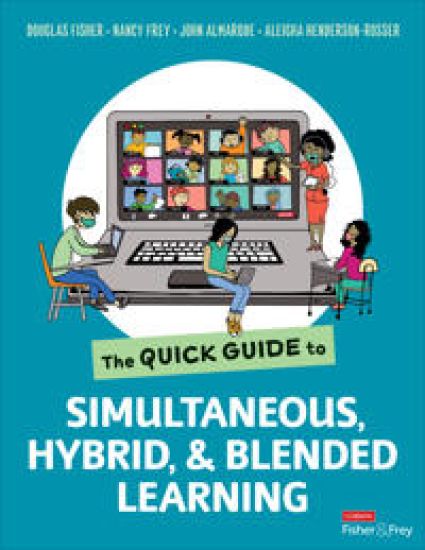
The Quick Guide to Simultaneous, Hybrid, and Blended Learning

The Quick Guide to Simultaneous, Hybrid, and Blended Learning

Douglas Fisher; Nancy Frey; John T. Almarode; Aleigha Henderson-Rosser

SAGE Publications Inc
2021
nidottu
What a year! Twelve months and counting since COVID expanded, stretched, and blurred the boundaries of teaching and learning, at least one thing has remained constant: our commitment as educators to move learning forward. It’s just the context that keeps changing—why Doug Fisher, Nancy Frey, John Almarode, and Aleigha Henderson-Rosser have created a follow-up to The Distance Learning Playbook, their all-new Quick Guide to Simultaneous, Hybrid, and Blended Learning. First, to be clear: simultaneous learning must not be an additive, meaning we combine two entirely different approaches and double our workload. That’s unsustainable! Instead, we must extract, integrate, and implement what works best from both distance learning and face-to-face learning environments. Then and only then—Doug, Nancy, John, and Aleigha insist—can we maximize the learning opportunities for all of our students. To that end, The Quick Guide to Simultaneous, Hybrid, and Blended Learning describes how to: Have clarity about the most important learning outcomes for our students. This will help us decide what is best done asynchronously and what is best done with our "Roomies" and "Zoomies." Capitalize on the potential of asynchronous learning and use that valuable time to preview and review. This way we can draw on evidence from these tasks to help us decide where to go next in our teaching and our students’ learning. Utilize synchronous learning for collaborative learning and scaffolding of content, skills, and essential understandings. In doing so, we can collect additional evidence of students’ learning so that we provide feedback that moves learning forward. Establish norms for combining synchronous and face-to-face environments in simultaneous learning. Importantly, we have to set up the environment for our Roomies and Zoomies to learn together. Develop learning experiences and tasks that maximize learner engagement for all learners in all settings. Focus on acceleration and learning recovery. In other words, no more deficit thinking! Our students are where they are and there are specific things that we can do to ensure their learning. Implement the guide’s many resources, strategies, and templates. "None of us chose to be in a situation where some learners are physically in our classrooms, while others attend virtually and remotely," write Doug, Nancy, John, and Aleigha. "However, what we hope to convey is that we’ve got this! While the context is different, the principles behind clarity, planning, high-yield strategies and interventions, student learning, and assessment hold steady." This is where The Quick Guide to Simultaneous, Hybrid, and Blended Learning will prove indispensable on this next leg of our journey.
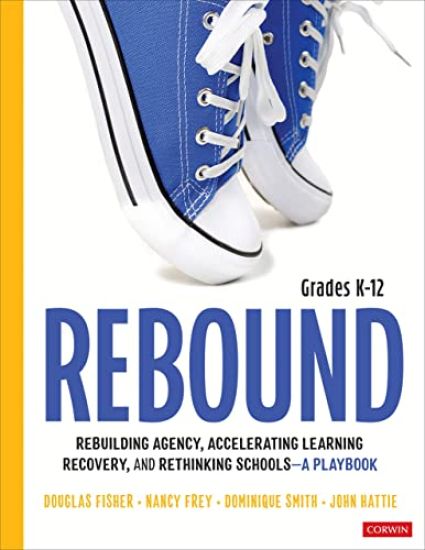
Rebound, Grades K-12

Rebound, Grades K-12

Douglas Fisher; Nancy Frey; Dominique Smith; John Hattie

SAGE Publications Inc
2021
kierre
"The greatest travesty that can arise for schools after 2020/21," Doug, Nancy, Dominique, and John write, "is to rush back to the old normal, and learn nothing, or little, about what worked well. That’s why this book has focused on rebounding, and taking the opportunity to create an even better schooling system, one that serves even more students, and focuses more on what matters most."
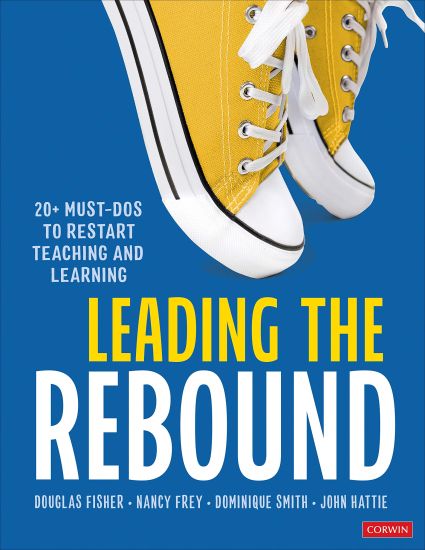
Leading the Rebound

Leading the Rebound

Douglas Fisher; Nancy Frey; Dominique Smith; John Hattie

SAGE Publications Inc
2021
nidottu
Let’s make the "next normal" a "better normal" If there ever was a time for our heroic school leadership to persevere, it’s now. Because now, well over one year since the pandemic stretched the resilience and reserves of our school systems, it’s time to "rebound." It’s time to leverage this once-in-a-lifetime opportunity to reboot teaching and learning as we know it so that we magnify the effective practices from the past while leveraging the so many recent lessons learned. This is where Doug Fisher, Nancy Frey, Dominique Smith, and John Hattie, coauthors of The Distance Learning Playbook series, are ideally equipped to serve as your collaborators. Inside Leading the Rebound: 20+ Must-Dos to Restart Teaching and Learning you’ll find immediate actions, mindsets, and approaches to take if we’re to reimagine and improve our schools and school systems. Step by step, you’ll discover explicit guidance on how to: 1. Take care of yourself 2. Take stock and find the path 3. Rebuild teacher agency 4. Rebuild collective teacher efficacy 5. Foreground social and emotional learning 6. Change the learning loss narrative 7. Guide teacher clarity 8. Ensure instructional excellence 9. Use assessments for a range of purposes 10. Design and implement interventions 11. Win back parent-teacher relationships 12. Establish restorative practices 13. Avoid stealing the conflict 14. Enhance teacher-student and student-student interactions 15. Develop early warning systems for attendance, behavior, and course completion 16. Confront cognitive challenges to learning 17. Ensure equitable and restorative grading 18. Enhance PLCs 19. Provide empathetic feedback 20. Host honest performance conversations 21. Maintain your social presence 22. Future-proof teachers and students What’s more Leading the Rebound is backed up with all kinds of resources--including VISIBLE LEARNING® research, sample planning tools, and other essential tips and strategies--to provide you with a start-to-finish roadmap for navigating this absolutely critical next leg in our journey toward a "better normal."