

Kirjailija
Nancy J. Jacobs
Kirjat ja teokset yhdessä paikassa: 6 kirjaa, julkaisuja vuosilta 2003–2026, suosituimpiin kuuluu The Global Grey Parrot. Vertaile teosten hintoja ja tarkista saatavuus suomalaisista kirjakaupoista.
6 kirjaa
Kirjojen julkaisuvuodet: 2003–2026.
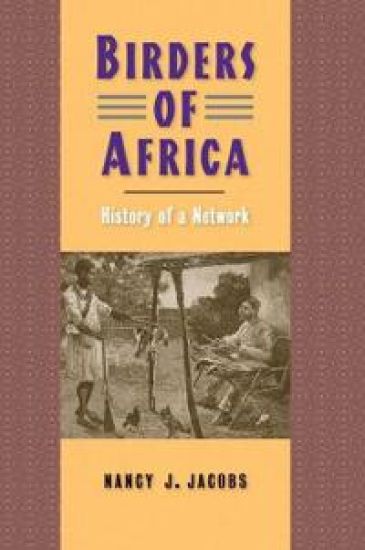
In this unique and unprecedented study of birding in Africa, historian Nancy Jacobs reconstructs the collaborations between well-known ornithologists and the largely forgotten guides, hunters, and taxidermists who worked with them. Drawing on ethnography, scientific publications, private archives, and interviews, Jacobs asks: How did white ornithologists both depend on and operate distinctively from African birders? What investment did African birders have in collaborating with ornithologists? By distilling the interactions between European science and African vernacular knowledge, this stunningly illustrated work offers a fascinating examination of the colonial and postcolonial politics of expertise about nature.
African History through Sources: Volume 1, Colonial Contexts and Everyday Experiences, c.1850–1946
Nancy J. Jacobs
Cambridge University Press
2014
sidottu
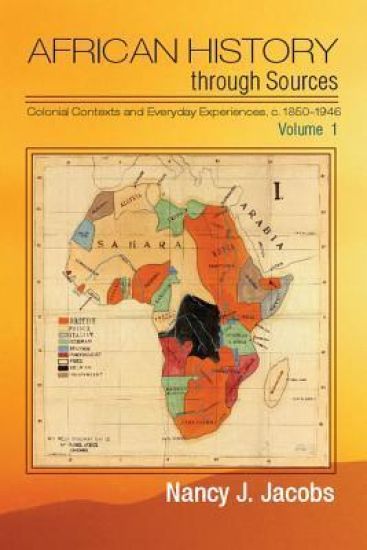
African History through Sources recounts the history of colonial Africa through more than 100 primary sources produced by a variety of actors: ordinary men and women, the educated elite, and colonial officials. Including official documents, as well as interviews, memoirs, lyrics, and photographs, the book balances coverage of the state and economy with attention to daily life, family life, and cultural change. Entries are drawn from all around sub-Saharan Africa, and many have been translated into English for the first time. Introductions to each source and chapter provide context and identify themes. African History through Sources allows readers to analyze change, understand perspectives, and imagine everyday life during an extraordinary time.
African History through Sources: Volume 1, Colonial Contexts and Everyday Experiences, c.1850–1946
Nancy J. Jacobs
Cambridge University Press
2014
pokkari
African History through Sources recounts the history of colonial Africa through more than 100 primary sources produced by a variety of actors: ordinary men and women, the educated elite, and colonial officials. Including official documents, as well as interviews, memoirs, lyrics, and photographs, the book balances coverage of the state and economy with attention to daily life, family life, and cultural change. Entries are drawn from all around sub-Saharan Africa, and many have been translated into English for the first time. Introductions to each source and chapter provide context and identify themes. African History through Sources allows readers to analyze change, understand perspectives, and imagine everyday life during an extraordinary time.

This book presents the socio-environmental history of black people around Kuruman, on the edge of the Kalahari in South Africa. Considering successive periods - Tswana agropastoral chiefdoms before colonial contact, the Cape frontier, British colonial rule, Apartheid, and the homeland of Bophuthatswana in the 1980s - Environment, Power and Injustice shows how the human relationship with the environment corresponded to differences of class, gender, and race. While exploring biological, geological, and climatological forces in history, this book argues that the challenges of existence in a semidesert arose more from human injustice than from deficiencies in the natural environment. In fact, powerful people drew strength from and exercised their power over others through the environment. At the same time, the natural world provided marginal peoples with some relief from human injustice.

This book presents the socio-environmental history of black people around Kuruman, on the edge of the Kalahari in South Africa. Considering successive periods - Tswana agropastoral chiefdoms before colonial contact, the Cape frontier, British colonial rule, Apartheid, and the homeland of Bophuthatswana in the 1980s - Environment, Power and Injustice shows how the human relationship with the environment corresponded to differences of class, gender, and race. While exploring biological, geological, and climatological forces in history, this book argues that the challenges of existence in a semidesert arose more from human injustice than from deficiencies in the natural environment. In fact, powerful people drew strength from and exercised their power over others through the environment. At the same time, the natural world provided marginal peoples with some relief from human injustice.