Kirjojen hintavertailu – 12 859 819 kirjaa ja 27 kauppaa

Kirjailija

Nancy Pick

Kirjat ja teokset yhdessä paikassa: 4 kirjaa, julkaisuja vuosilta 2012–2024, suosituimpiin kuuluu Rarest of the Rare: The Stories Behind the Harvard Museum of Natural History. Vertaile teosten hintoja ja tarkista saatavuus suomalaisista kirjakaupoista.

4 kirjaa

Kirjojen julkaisuvuodet: 2012–2024.

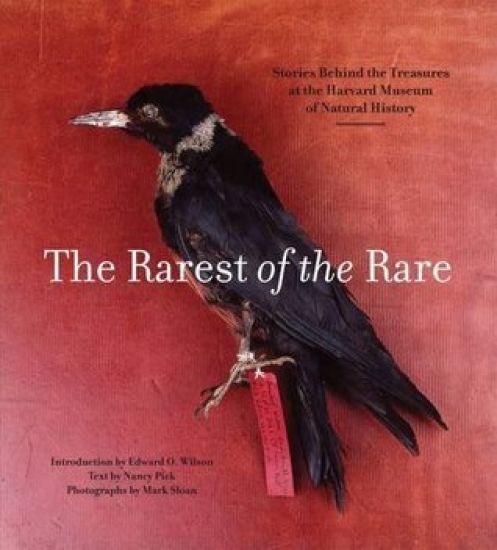
Rarest of the Rare: The Stories Behind the Harvard Museum of Natural History

Rarest of the Rare: The Stories Behind the Harvard Museum of Natural History

Nancy Pick; Mark Sloan; Edward O. Wilson

Scala Arts Heritage Publishers Ltd
2020
nidottu
Where do you find Nabokov's butterflies, George Washington's pheasants, and the only stuffed bird remaining from the Lewis and Clark expedition? The vast collections of animals, minerals and plants at the Harvard Museum of Natural History are among the oldest in the country, dating back to the 1700s. In the words of Edward O. Wilson, the museum stands as both "cabinet of wonder and temple of science." Its rich and unlikely history involves literary figures, creationists, millionaires, and visionary scientists from Asa Gray to Stephen Jay Gould. Its mastodon skeleton - still on display - is even linked to one of the nineteenth century's most bizarre and notorious murders. The Rarest of the Rare tells the fascinating stories behind the extinct butterflies, rare birds, lost plants, dazzling meteorites and other scientific and historic specimens that fill the museum's halls. You'll learn about the painting that catches Audubon in a shameful lie, the sand dollar collected by Darwin during the voyage of the Beagle, and dozens of other treasures in this surprising, informative, and often amusing tour of the natural world.

A Day in the World (eng)

A Day in the World (eng)

Jeppe Wikström; Johan Erséus; Kim Loughran; Nancy Pick; Christopher Westhorp; Jan Eliasson

Max Ström
2012
sidottu

Halvin toimitettuna 44,60 €

This is the largest photo book ever made about a single day – a historical and photographic document of everyday life involving photographers from all over the world. The book contains a selection of the best of all the pictures taken on May 15, 2012 – a date that is set to become renowned in the history of photography. This fascinating work contains a thousand pictures selected by an international jury. The book is also available in Swedish.
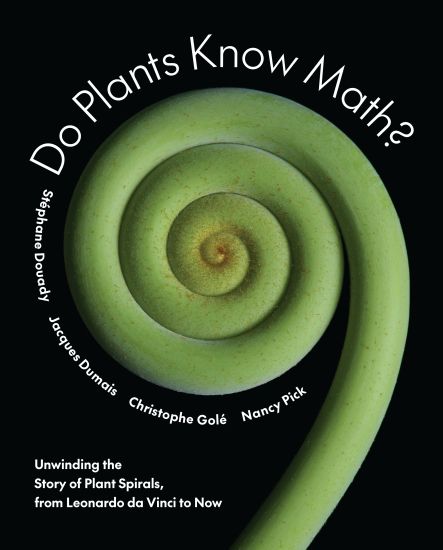
Do Plants Know Math?

Do Plants Know Math?

Stéphane Douady; Jacques Dumais; Christophe Golé; Nancy Pick

PRINCETON UNIVERSITY PRESS
2024
sidottu

Halvin toimitettuna 26,30 €

A breathtakingly illustrated look at botanical spirals and the scientists who puzzled over themCharles Darwin was driven to distraction by plant spirals, growing so exasperated that he once begged a friend to explain the mystery “if you wish to save me from a miserable death.” The legendary naturalist was hardly alone in feeling tormented by these patterns. Plant spirals captured the gaze of Leonardo da Vinci and became Alan Turing’s final obsession. This book tells the stories of the physicists, mathematicians, and biologists who found themselves magnetically drawn to Fibonacci spirals in plants, seeking an answer to why these beautiful and seductive patterns occur in botanical forms as diverse as pine cones, cabbages, and sunflowers. Do Plants Know Math? takes you down through the centuries to explore how great minds have been captivated and mystified by Fibonacci patterns in nature. It presents a powerful new geometrical solution, little known outside of scientific circles, that sheds light on why regular and irregular spiral patterns occur. Along the way, the book discusses related plant geometries such as fractals and the fascinating way that leaves are folded inside of buds. Your neurons will crackle as you begin to see the connections. This book will inspire you to look at botanical patterns—and the natural world itself—with new eyes. Featuring hundreds of gorgeous color images, Do Plants Know Math? includes a dozen creative hands-on activities and even spiral-plant recipes, encouraging readers to explore and celebrate these beguiling patterns for themselves.
The Writer and the Refugee: Paris 1947. Stig Dagerman and Etta Federn. Their encounter sparks a brilliant play - but why is it so cruel?
Sometimes life presents a mystery. An innocuous email from a stranger sets off a passionate journey of discovery. Why did Stig Dagerman, Swedish literary wunderkind (and Lo's father) write a shockingly cruel play based on Nancy Pick's relative, Etta Federn, the once eminent Austro-Jewish refugee he encountered in postwar Paris? What happened when Stig and Etta met? Nancy is determined to reclaim Etta feminist, writer, single mother, radical - the relative nobody ever spoke about] from the shadows. Lo is searching for the father she never knew. Each simply has to know. Stockholm 1947. Stig Dagerman was the new-generation writer on everybody's lips. Over the previous two years, at breakneck speed, he had written two novels and a much-praised short-story collection; made a spectacular debut as a playwright; and reported from the ruins of postwar Germany in a book titled German Autumn, destined to become a classic. Now, he was being sent to France to pen a sequel. He will indeed write about postwar France, but in an entirely unexpected way. Instead of a journalistic account, he feverishly writes a new play, Marty's Shadow . The play was modeled on people he'd met in a dank refugee hotel in Paris: The Austro-Jewish writer Etta Federn and Michel, her younger son. When Stig meets Etta she is old and ailing. Her elder son, Jean, had died a hero in the French Resistance. She had been on the run from Nazis and fascists since 1932, when as a fifty-year old single mother, a Jew and a radical, she had fled Berlin for Barcelona, taking her two young sons with her. In Berlin, she had been widely recognized as a writer (most notable are her biographies of Walther Rathenau and Christiane von Goethe, the wife of Goethe); as an accomplished translator working in sixteen languages; and as a radical feminist and anarcho-syndicalist in the vein of Emma Goldman. In her new life in Barcelona she builds a reputation as someone with the power to interpret character by looking into your hands. (Paul Federn, her brother, was a well-known psychoanalyst who had worked with Freud.) In 2011, I am astounded to receive an email from Nancy Pick, an American relative of Etta's. Nancy has heard of Stig's play about Etta and her sons, and wants to know more. Anxious, but also intrigued, I search for a way to break the bad news to her: Stig's play is brutal, a punch to the solar plexus: a monstrous mother murdered by a son. Marty's Shadow brings Nancy and me together. It confronts us with a shared question - but one which we initially want to answer in different ways: What could have driven my father, the young writer Stig Dagerman, to paint such a cruel portrait of the brilliant, heroic refugee, Etta Federn? This book lays out our search for answers. Lo Dagerman