
Kirjojen hintavertailu – 12 903 733 kirjaa ja 27 kauppaa

Kirjailija

Nancy R. Lackey

Kirjat ja teokset yhdessä paikassa: 2 kirjaa, julkaisuja vuodelta 2003, suosituimpiin kuuluu Making Sense of Factor Analysis. Vertaile teosten hintoja ja tarkista saatavuus suomalaisista kirjakaupoista.

2 kirjaa

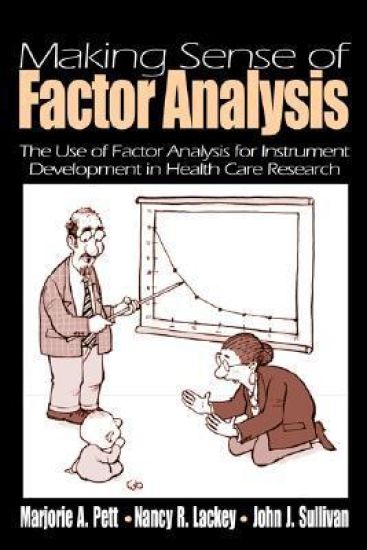
Making Sense of Factor Analysis

Making Sense of Factor Analysis

Marjorie (Marg) A. Pett; Nancy R. Lackey; John Sullivan

SAGE Publications Inc
2003
sidottu
Many health care practitioners and researchers are aware of the need to employ factor analysis in order to develop more sensitive instruments for data collection. Unfortunately, factor analysis is not a unidimensional approach that is easily understood by even the most experienced of researchers. Making Sense of Factor Analysis: The Use of Factor Analysis for Instrument Development in Health Care Research presents a straightforward explanation of the complex statistical procedures involved in factor analysis. Authors Marjorie A. Pett, Nancy M. Lackey, and John J. Sullivan provide a step-by-step approach to analyzing data using statistical computer packages like SPSS and SAS. Emphasizing the interrelationship between factor analysis and test construction, the authors examine numerous practical and theoretical decisions that must be made to efficiently run and accurately interpret the outcomes of these sophisticated computer programs. This accessible volume will help both novice and experienced health care professionals to Increase their knowledge of the use of factor analysis in health care research Understand journal articles that report the use of factor analysis in test construction and instrument development Create new data collection instruments Examine the reliability and structure of existing health care instruments Interpret and report computer-generated output from a factor analysis run Making Sense of Factor Analysis: The Use of Factor Analysis for Instrument Development in Health Care Research offers a practical method for developing tests, validating instruments, and reporting outcomes through the use of factor analysis. To facilitate learning, the authors provide concrete testing examples, three appendices of additional information, and a glossary of key terms. Ideal for graduate level nursing students, this book is also an invaluable resource for health care researchers.
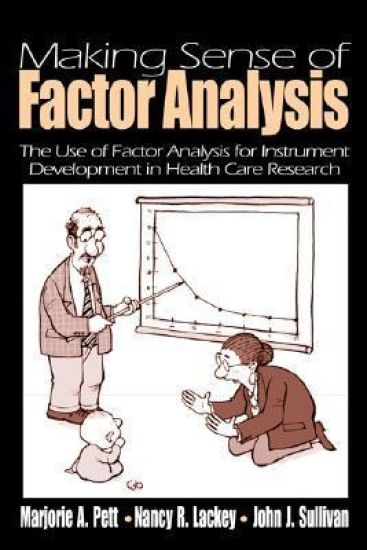
Making Sense of Factor Analysis

Making Sense of Factor Analysis

Marjorie (Marg) A. Pett; Nancy R. Lackey; John Sullivan

SAGE Publications Inc
2003
nidottu
Many health care practitioners and researchers are aware of the need to employ factor analysis in order to develop more sensitive instruments for data collection. Unfortunately, factor analysis is not a unidimensional approach that is easily understood by even the most experienced of researchers. Making Sense of Factor Analysis: The Use of Factor Analysis for Instrument Development in Health Care Research presents a straightforward explanation of the complex statistical procedures involved in factor analysis. Authors Marjorie A. Pett, Nancy M. Lackey, and John J. Sullivan provide a step-by-step approach to analyzing data using statistical computer packages like SPSS and SAS. Emphasizing the interrelationship between factor analysis and test construction, the authors examine numerous practical and theoretical decisions that must be made to efficiently run and accurately interpret the outcomes of these sophisticated computer programs. This accessible volume will help both novice and experienced health care professionals to Increase their knowledge of the use of factor analysis in health care research Understand journal articles that report the use of factor analysis in test construction and instrument development Create new data collection instruments Examine the reliability and structure of existing health care instruments Interpret and report computer-generated output from a factor analysis run Making Sense of Factor Analysis: The Use of Factor Analysis for Instrument Development in Health Care Research offers a practical method for developing tests, validating instruments, and reporting outcomes through the use of factor analysis. To facilitate learning, the authors provide concrete testing examples, three appendices of additional information, and a glossary of key terms. Ideal for graduate level nursing students, this book is also an invaluable resource for health care researchers.