Kirjojen hintavertailu – 12 903 725 kirjaa ja 27 kauppaa
Kirjailija
Naoki Ikegami
Kirjat ja teokset yhdessä paikassa: 5 kirjaa, julkaisuja vuosilta 1998–2015, suosituimpiin kuuluu Une Couverture Sanitaire Universelle Pour Un Développement Durable Inclusif. Vertaile teosten hintoja ja tarkista saatavuus suomalaisista kirjakaupoista.
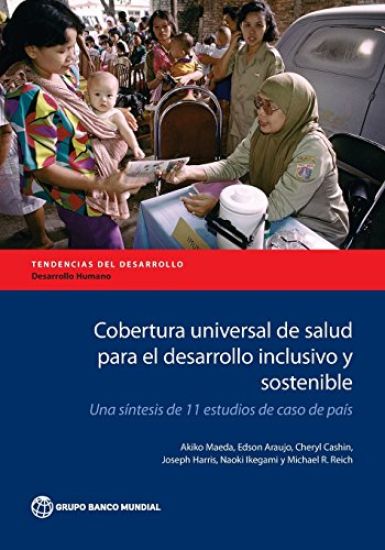
Los fines de la cobertura universal de salud son asegurar que toda la poblacion pueda acceder a servicios de salud de calidad. Parses que han logrado la cobertura universal de salud estan demostrando c6mo estos programas pueden servir como mecanismos esenciales de mejora de la salud.
La couverture sanitaire universelle pour un développement durable inclusif synthétise les expériences de 11 pays ? Bangladesh, Brésil, Éthiopie, France, Ghana, Indonésie, Japon, Pérou, Thaïlande, Turquie et Vietnam - dans la mise en ?uvre de politiques et de stratégies d'atteinte et de maintien de la CSU.
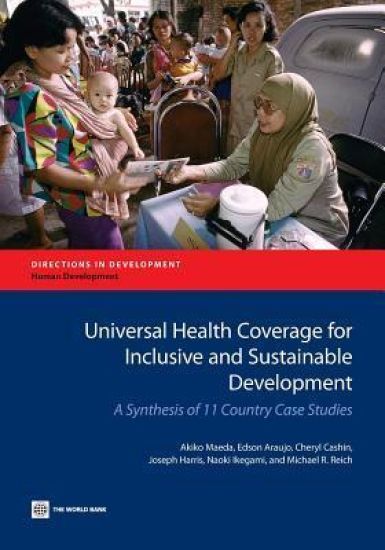
The goals of universal health coverage (UHC) are to ensure that all people can access quality health services, to safeguard all people from public health risks, and to protect all people from impoverishment due to illness, whether from out-of-pocket payments for health care or loss of income when a household member falls sick. Countries as diverse as Brazil, France, Japan, Thailand, and Turkey have shown how UHC can serve as vital mechanisms for improving the health and welfare of their citizens, and lay the foundation for economic growth and competitiveness grounded in the principles of equity and sustainability. Ensuring universal access to affordable, quality health services will be an important contribution to ending extreme poverty by 2030 and boosting shared prosperity in low-income and middle-income countries (LMICs), where most of the world's poor live. The book synthesizes the experiences from 11 countries – Bangladesh, Brazil, France, Ethiopia, Ghana, Indonesia, Japan, Peru, Thailand, Turkey and Vietnam – in implementing policies and strategies to achieve and sustain UHC. These countries represent diverse geographic and economic conditions, but all have committed to UHC as a key national aspiration and are approaching it in different ways. The study examined the UHC policies for each country around three common themes: (i) the political economy and policy process for adopting, achieving, and sustaining UHC; (ii) health financing policies to enhance health coverage; and (iii) human resources for health policies for achieving UHC. The findings from these country studies are intended to provide lessons that can be used by countries aspiring to adopt, achieve, and sustain UHC. Although the path to UHC is specific to each country, countries can benefit from the experiences of others in learning about different approaches and avoiding potential risks.
Compared to the rest of the world, Japan has a healthy population but pays relatively little for medical care. This book analyses how the health care works, and how it came into being. Taking a comparative perspective, the authors describe the politics of health care, the variety of providers, the universal health insurance system, and how the fee-schedule constrains costs at both the macro and micro levels. Special attention is paid to issues of quality and to the difficult problems of assuring adequate high-tech medicine and long-term care. Although the authors discuss the drawbacks to Japan's stringent cost-containment policy, they also keep in mind the possible implications for reform in the United States. Egalitarian values and a concern for 'balance' among constituents, the authors argue, are essential for cost containment as well as for access to health care.
Compared to the rest of the world, Japan has a healthy population but pays relatively little for medical care. This book analyses how the health care works, and how it came into being. Taking a comparative perspective, the authors describe the politics of health care, the variety of providers, the universal health insurance system, and how the fee-schedule constrains costs at both the macro and micro levels. Special attention is paid to issues of quality and to the difficult problems of assuring adequate high-tech medicine and long-term care. Although the authors discuss the drawbacks to Japan’s stringent cost-containment policy, they also keep in mind the possible implications for reform in the United States. Egalitarian values and a concern for ‘balance’ among constituents, the authors argue, are essential for cost containment as well as for access to health care.