Kirjojen hintavertailu – 12 859 819 kirjaa ja 27 kauppaa

Kirjailija

Natalie Schilling

Kirjat ja teokset yhdessä paikassa: 8 kirjaa, julkaisuja vuosilta 2009–2015, suosituimpiin kuuluu Mythologische Aspekte im 'Homo Faber' von Max Frisch. Vertaile teosten hintoja ja tarkista saatavuus suomalaisista kirjakaupoista.

8 kirjaa

Kirjojen julkaisuvuodet: 2009–2015.

American English

American English

Walt Wolfram; Natalie Schilling

John Wiley Sons Inc
2015
nidottu
The new edition of this classic text chronicles recent breakthrough developments in the field of American English, covering regional, ethnic, and gender-based differences. Now accompanied by a companion website with an extensive array of sound files, video clips, and other online materials to enhance and illustrate discussions in the textFeatures brand new chapters that cover the very latest topics, such as Levels of Dialect, Regional Varieties of English, Gender and Language Variation, The Application of Dialect Study, and Dialect Awareness: Extending Application, as well as new exercises with online answersUpdated to contain dialect samples from a wider array of US regionsWritten for students taking courses in dialect studies, variationist sociolinguistics, and linguistic anthropology, and requires no pre-knowledge of linguistics Includes a glossary and extensive appendix of the pronunciation, grammatical, and lexical features of American English dialects
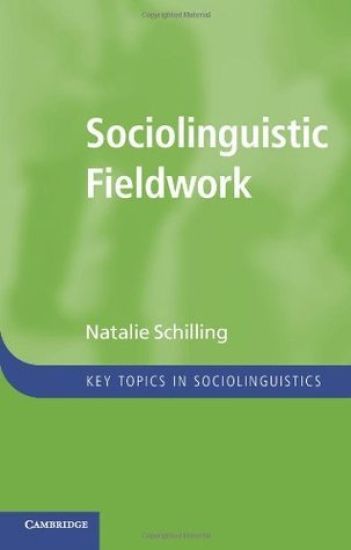
Sociolinguistic Fieldwork

Sociolinguistic Fieldwork

Natalie Schilling

Cambridge University Press
2013
pokkari
Looking for an easy-to-use, practical guide to conducting fieldwork in sociolinguistics? This invaluable textbook will give you the skills and knowledge required for carrying out research projects in 'the field', including: • How to select and enter a community • How to design a research sample • What recording equipment to choose and how to operate it • How to collect, store and manage data • How to interact effectively with participants and communities • What ethical issues you should be aware of. Carefully designed to be of maximum practical use to students and researchers in sociolinguistics, linguistic anthropology and related fields, the book is packed with useful features, including: • Helpful checklists for recording techniques and equipment specifications • Practical examples taken from classic sociolinguistic studies • Vivid passages in which students recount their own experiences of doing fieldwork in many different parts of the world
Sociolinguistic Fieldwork

Sociolinguistic Fieldwork

Natalie Schilling

Cambridge University Press
2013
sidottu
Looking for an easy-to-use, practical guide to conducting fieldwork in sociolinguistics? This invaluable textbook will give you the skills and knowledge required for carrying out research projects in 'the field', including: • How to select and enter a community • How to design a research sample • What recording equipment to choose and how to operate it • How to collect, store and manage data • How to interact effectively with participants and communities • What ethical issues you should be aware of. Carefully designed to be of maximum practical use to students and researchers in sociolinguistics, linguistic anthropology and related fields, the book is packed with useful features, including: • Helpful checklists for recording techniques and equipment specifications • Practical examples taken from classic sociolinguistic studies • Vivid passages in which students recount their own experiences of doing fieldwork in many different parts of the world
Mythologische Aspekte im 'Homo Faber' von Max Frisch
Studienarbeit aus dem Jahr 2008 im Fachbereich Germanistik - Neuere Deutsche Literatur, Note: 2.5, Unicersidad del Pa s Vasco (Unicersidad del Pa s Vasco, Filolog a alemana), Veranstaltung: Deutsche Literatur, Nachkriegsliteratur, 15 Quellen im Literaturverzeichnis, Sprache: Deutsch, Abstract: Der Roman "Homo Faber" von Max Frisch aus dem Jahre 1957, als "Bericht" bezeichnet, repr sentiert in eben dieser Art und Weise die menschliche Existenz der materialistischen Wirtschaftswunderjahre. Es findet eine Auseinandersetzung mit der Moderne statt und der verschiedenen Aspekte, die diese beinhaltet, n mlich auf der einen Seite eine fortschreitende Industrialisierung und Technisierung des Lebens und auf der anderen Seite die Problematiken, die diese mit sich bringen wie die Stellung des Individuums und fehlende Wertvorstellungen, sowie das Verschwinden der Religion, die der Mensch des 19. Jahrhunderts mit Beginn der Technisierung abschafft. Der Mensch ist Herr ber die Natur geworden und kann au er seinen eigenen Tod alles kontrollieren, wodurch Religionen au er Kraft gesetzt werden und gleichzeitig die Suche nach dem Sinn des Seins st rker hervortritt, als je zuvor. Gleichzeitig steht kontrastiv eine Orientierung in Richtung des Unbewussten statt. Glauben und Zweifel an Technik und Zivilisation werden durch eine "duale Erz hltechnik" dargestellt, die diese verschiedenen Perspektiven vermittelt. Dem entspricht eine doppelte Erz hlmotivation des Berichterstatters und Protagonisten, der auf der einen Seite versucht, sich und seiner damaligen Freundin Hanna die Unschuld am Tod ihrer Tochter Sabeth zu beteuern, auf der anderen Seite res miert er sein Leben in einem R ckblick, mit der Gewissheit, bald sterben zu m ssen. Auf der Gegenseite zur Technik ist im Roman ein weitverzweigtes Netz aus mythologischen Anspielungen entworfen. Diese mal mehr, mal weniger deutlichen Metaphern sollen in dieser Arbeit untersucht werden und ihr Zusammenhang zum technischen Menschen und dem, wa

Baskische Sprache und Literatur

Baskische Sprache und Literatur

Natalie Schilling

Grin Publishing
2009
nidottu
Studienarbeit aus dem Jahr 2006 im Fachbereich Romanistik - Spanische Sprache, Literatur, Landeskunde, Note: 2, Albert-Ludwigs-Universit t Freiburg (Romanisches Seminar), Veranstaltung: Proseminar II: Regional- und Minderheitensprachen in Spanien, 8 Quellen im Literaturverzeichnis, Sprache: Deutsch, Abstract: In dieser Arbeit zum Proseminar II "Regional- und Minderheitensprachen Spaniens" soll die baskische Sprache als solche vorgestellt werden, da im Seminar dieser Themenabschnitt aus Zeitgr nden leider unbehandelt blieb. Dabei werden Verbreitung, Dialekte, Sprachgebrauch, heutige Sprachsituation und Bildungssystem geschildert, basierend auf dem Aufsatz "The Basque- speaking Communities" von Jasone Cenoz und Josu Perales (2001). Da das Baskische eine lange Tradition in oraler berlieferung aufweist, soll anschlie end ein Blick auf die aktuelle baskische Literatur geworfen werden.