Kirjojen hintavertailu – 12 859 818 kirjaa ja 27 kauppaa
Kirjailija
Natasha Zaretsky
Kirjat ja teokset yhdessä paikassa: 5 kirjaa, julkaisuja vuosilta 2013–2020, suosituimpiin kuuluu Acts of Repair. Vertaile teosten hintoja ja tarkista saatavuus suomalaisista kirjakaupoista.
Acts of Repair explores how ordinary people grapple with decades of political violence and genocide in Argentina—a history that includes the Holocaust, the political repression of the 1976–1983 dictatorship, and the 1994 AMIA bombing. Although the struggle against impunity seems inevitably incomplete, Argentines have created possibilities for repair through cultural memory, yielding spaces for transformation and agency critical to personal and political recovery.
Acts of Repair explores how ordinary people grapple with decades of political violence and genocide in Argentina—a history that includes the Holocaust, the political repression of the 1976–1983 dictatorship, and the 1994 AMIA bombing. Although the struggle against impunity seems inevitably incomplete, Argentines have created possibilities for repair through cultural memory, yielding spaces for transformation and agency critical to personal and political recovery.
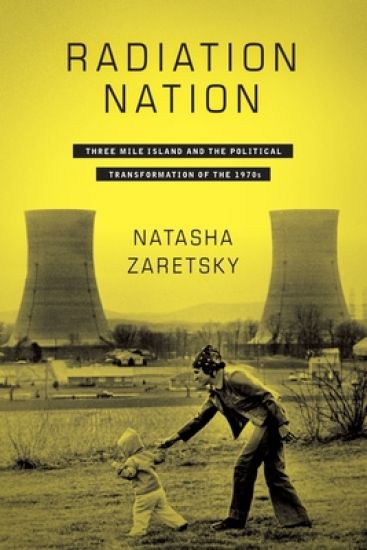
On March 28, 1979, the worst nuclear reactor accident in U. S. history occurred at the Three Mile Island power plant in Central Pennsylvania. Radiation Nation tells the story of what happened that day and in the months and years that followed, as local residents tried to make sense of the emergency. The near-meltdown occurred at a pivotal moment when the New Deal coalition was unraveling, trust in government was eroding, conservatives were consolidating their power, and the political left was becoming marginalized. Using the accident to explore this turning point, Natasha Zaretsky provides a fresh interpretation of the era by disclosing how atomic and ecological imaginaries shaped the conservative ascendancy. Drawing on the testimony of the men and women who lived in the shadow of the reactor, Radiation Nation shows that the region's citizens, especially its mothers, grew convinced that they had sustained radiological injuries that threatened their reproductive futures. Taking inspiration from the antiwar, environmental, and feminist movements, women at Three Mile Island crafted a homegrown ecological politics that wove together concerns over radiological threats to the body, the struggle over abortion and reproductive rights, and eroding trust in authority. This politics was shaped above all by what Zaretsky calls "biotic nationalism," a new body-centered nationalism that imagined the nation as a living, mortal being and portrayed sickened Americans as evidence of betrayal. The first cultural history of the accident, Radiation Nation reveals the surprising ecological dimensions of post-Vietnam conservatism while showing how growing anxieties surrounding bodily illness infused the political realignment of the 1970s in ways that blurred any easy distinction between left and right.
On March 28, 1979, the worst nuclear reactor accident in U. S. history occurred at the Three Mile Island power plant in Central Pennsylvania. Radiation Nation tells the story of what happened that day and in the months and years that followed, as local residents tried to make sense of the emergency. The near-meltdown occurred at a pivotal moment when the New Deal coalition was unraveling, trust in government was eroding, conservatives were consolidating their power, and the political left was becoming marginalized. Using the accident to explore this turning point, Natasha Zaretsky provides a fresh interpretation of the era by disclosing how atomic and ecological imaginaries shaped the conservative ascendancy. Drawing on the testimony of the men and women who lived in the shadow of the reactor, Radiation Nation shows that the region's citizens, especially its mothers, grew convinced that they had sustained radiological injuries that threatened their reproductive futures. Taking inspiration from the antiwar, environmental, and feminist movements, women at Three Mile Island crafted a homegrown ecological politics that wove together concerns over radiological threats to the body, the struggle over abortion and reproductive rights, and eroding trust in authority. This politics was shaped above all by what Zaretsky calls "biotic nationalism," a new body-centered nationalism that imagined the nation as a living, mortal being and portrayed sickened Americans as evidence of betrayal. The first cultural history of the accident, Radiation Nation reveals the surprising ecological dimensions of post-Vietnam conservatism while showing how growing anxieties surrounding bodily illness infused the political realignment of the 1970s in ways that blurred any easy distinction between left and right.
Designed to encourage critical thinking about history, the Major Problems in American History series introduces students to both primary sources and analytical essays on important topics in U. S. history. This reader serves as the primary anthology for the Post-1945 U. S. History course, Comprehensive topical coverage includes the Cold War; the cultural and political movements of the 50s, 60s, 70s, and 80s; Vietnam; the return of conservatism; globalization; life in the new information age; the post-Cold War era; and race and ethnicity. The Fourth Edition extends its consideration of the period since the 1960s by adding two entirely new chapters and substantially reconfiguring others. In this way, this edition devotes far more attention to the 1970s, a period that has received especially notable scholarly scrutiny in the last few years, and to the period since the end of the Cold War. Key pedagogical elements of the Major Problems format have been retained: chapter introductions, headnotes, and suggested readings.