Kirjojen hintavertailu – 12 903 725 kirjaa ja 27 kauppaa

Kirjailija

Nathalie Sinclair

Kirjat ja teokset yhdessä paikassa: 9 kirjaa, julkaisuja vuosilta 2006–2025, suosituimpiin kuuluu Go-to Guide: Teaching Geometry, Grades 9–12. Vertaile teosten hintoja ja tarkista saatavuus suomalaisista kirjakaupoista.

9 kirjaa

Kirjojen julkaisuvuodet: 2006–2025.

Go-to Guide: Teaching Geometry, Grades 9–12

Go-to Guide: Teaching Geometry, Grades 9–12

Nathalie Sinclair; David Pimm; Melanie Skelin; Rose Mary Zbiek; Robert N. Ronau; Dan Meyer; Terry Crites

National Council of Teachers of Mathematics,U.S.
2025
nidottu
Get a deeper understanding of Geometry with our concise and comprehensive Go-To Guide. Based on Developing Essential Understanding of Geometry and Putting Essential Understanding of Geometry into Practice, this summary distills the key concepts and ideas into a quick-reference guide that's perfect for: Supplementing your reading of Developing Essential Understanding of Geometry and Putting Essential Understanding of Geometry into Practice Reviewing the basics before diving deeper into the subject Refreshing your knowledge and filling in gaps in your understanding Identifying areas where you need more information and want to learn more Go-To Guides are designed to provide you with a thorough grasp of the mathematical ideas and principles needed to teach Geometry by focusing on the core concepts and relationships that underlie the subject. This Go-To Guide is perfect for those looking to: Develop a deeper understanding of Geometry Create targeted lessons and activities that meet the needs of students Anticipate common student misconceptions and errors Design effective assessments and evaluations Enhance your own math knowledge and skills Whether you're new to teaching Geometry or an experienced educator, our Go-To Guides will be your trusted resource for teaching with confidence and clarity.
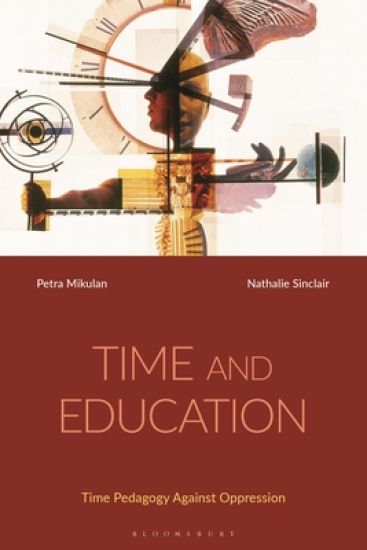
Time and Education

Time and Education

Petra Mikulan; Nathalie Sinclair

BLOOMSBURY PUBLISHING PLC
2024
nidottu

Halvin toimitettuna 48,60 €

Despite pervading all aspects of educational practice and theory, little scholarship focuses on time in education. This book addresses that lacuna questioning our assumptions about time and their ramifications on theories of learning, issues of equity and diversity, and on the purposes of education itself. The authors examine ideas about time in a wide variety of contexts, from ancient Greek fiction to 19th century theories of evolution and from 20th century indigenous stories to 20th century afro-futurist fiction. They show how pervasive the image of ‘time as an arrow’ has become, an image of time that is one-way, singular and teleological. Through exploring other theories of time, the authors propose alternatives for time in education. They argue that time is one of the key biopolitical tools we think and operate with, but rarely address as a historical, cultural and pedagogical category with which schools reproduce oppressive structures around race, class, and gender in society. The book draws on ideas from the arts and the sciences to illustrate and trouble assumptions of time drawing on artistic and theoretic work from Édouard Glissant, Henri Lefebvre, Giordano Nanni, Denise Ferreira da Silva, Bonnie Honig and others.
Time and Education

Time and Education

Petra Mikulan; Nathalie Sinclair

BLOOMSBURY PUBLISHING PLC
2023
sidottu
Despite pervading all aspects of educational practice and theory, little scholarship focuses on time in education. This book addresses that lacuna questioning our assumptions about time and their ramifications on theories of learning, issues of equity and diversity, and on the purposes of education itself. The authors examine ideas about time in a wide variety of contexts, from ancient Greek fiction to 19th century theories of evolution and from 20th century indigenous stories to 20th century afro-futurist fiction. They show how pervasive the image of ‘time as an arrow’ has become, an image of time that is one-way, singular and teleological. Through exploring other theories of time, the authors propose alternatives for time in education. They argue that time is one of the key biopolitical tools we think and operate with, but rarely address as a historical, cultural and pedagogical category with which schools reproduce oppressive structures around race, class, and gender in society. The book draws on ideas from the arts and the sciences to illustrate and trouble assumptions of time drawing on artistic and theoretic work from Édouard Glissant, Henri Lefebvre, Giordano Nanni, Denise Ferreira da Silva, Bonnie Honig and others.
Disrupting Boundaries in Education and Research

Disrupting Boundaries in Education and Research

Suzanne Smythe; Cher Hill; Margaret MacDonald; Diane Dagenais; Nathalie Sinclair; Kelleen Toohey

Cambridge University Press
2017
sidottu
In Disrupting Boundaries in Education and Research, six educational researchers explore together the potentialities of transdisciplinary research that de-centres human behaviour and gives materiality its due in the making of educational worlds. The book presents accounts of what happens when researchers think and act with new materiality and post-human theories to disrupt boundaries such as self and other, human and non-human, representation and objectivity. Each of the core chapters works with different new materiality concepts to disrupt these boundaries and to consider the emotive, sensory, nuanced, material and technological aspects of learning in diverse settings, such as in mathematics and learning to swim, discovering the bio-products of 'eco-sustainable' building, making videos and contending with digital government and its alienating effects. When humans are no longer at the centre of the unfolding world it is both disorienting and exhilarating. This book is an invitation to continue along these paths.
Lesson Play in Mathematics Education:

Lesson Play in Mathematics Education:

Rina Zazkis; Nathalie Sinclair; Peter Liljedahl

Springer-Verlag New York Inc.
2015
nidottu
Lesson play is a novel construct in research and teachers’ professional development in mathematics education. Lesson play refers to a lesson or part of a lesson presented in dialogue form—inspired in part by Lakatos’s evocative Proofs and Refutations—featuring imagined interactions between a teacher and her/his students. We have been using and refining our use of this tool for a number of years and using it in a variety of situations involving mathematics thinking and learning. The goal of this proposed book is to offer a comprehensive survey of the affordances of the tool, the results of our studies—particularly in the area of pre-service teacher education, and the reasons that the tool offers such productive possibilities for both researchers and teacher educators.
Lesson Play in Mathematics Education:

Lesson Play in Mathematics Education:

Rina Zazkis; Nathalie Sinclair; Peter Liljedahl

Springer-Verlag New York Inc.
2012
sidottu
Lesson play is a novel construct in research and teachers’ professional development in mathematics education. Lesson play refers to a lesson or part of a lesson presented in dialogue form—inspired in part by Lakatos’s evocative Proofs and Refutations—featuring imagined interactions between a teacher and her/his students. We have been using and refining our use of this tool for a number of years and using it in a variety of situations involving mathematics thinking and learning. The goal of this proposed book is to offer a comprehensive survey of the affordances of the tool, the results of our studies—particularly in the area of pre-service teacher education, and the reasons that the tool offers such productive possibilities for both researchers and teacher educators.
Developing Essential Understanding of Geometry for Teaching Mathematics in Grades 6-8

Developing Essential Understanding of Geometry for Teaching Mathematics in Grades 6-8

Nathalie Sinclair; David Pimm; Melanie Skelin

National Council of Teachers of Mathematics,U.S.
2012
pokkari
Focuses on essential knowledge for teachers about geometry. It is organized around four big ideas, supported by multiple smaller, interconnected ideas-essential understandings. Taking you beyond a simple introduction to geometry, the book will broaden and deepen your mathematical understanding of one of the most challenging topics for students-and teachers.
Developing Essential Understanding of Geometry for Teaching Mathematics in Grades 9-12

Developing Essential Understanding of Geometry for Teaching Mathematics in Grades 9-12

Nathalie Sinclair; David Pimm; Melanie Skelin

National Council of Teachers of Mathematics,U.S.
2012
pokkari
Focuses on essential knowledge for teachers about geometry. It is organised around four big ideas, supported by multiple smaller, interconnected ideas-essential understandings. Taking you beyond a simple introduction to geometry, the book will broaden and deepen your mathematical understanding of one of the most challenging topics for students-and teachers.
Mathematics and Beauty

Mathematics and Beauty

Nathalie Sinclair

Teachers' College Press
2006
nidottu
In this innovative book, Nathalie Sinclair makes a compelling case for the inclusion of the aesthetic in the teaching and learning of mathematics. Using a provocative set of philosophical, psychological, mathematical, technological, and educational insights, she illuminates how the materials and approaches we use in the mathematics classroom can be enriched for the benefit of all learners. While ranging in scope from the young learner to the professional mathematician, there is a particular focus on middle school, where negative feelings toward mathematics frequently begin. Offering specific recommendations to help teachers evoke and nurture their students’ aesthetic abilities, this book:Features powerful episodes from the classroom that show students in the act of developing a sense of mathematical aesthetics. Analyzes how aesthetic sensibilities to qualities such as connectedness, fruitfulness, apparent simplicity, visual appeal, and surprise are fundamental to mathematical inquiry. Includes examples of mathematical inquiry in computer-based learning environments, revealing some of the roles they play in supporting students’ aesthetic inclinations.