Kirjojen hintavertailu – 12 903 727 kirjaa ja 27 kauppaa

Kirjailija

Nathan W. Pino

Kirjat ja teokset yhdessä paikassa: 7 kirjaa, julkaisuja vuosilta 1998–2026, suosituimpiin kuuluu Unraveling the Crime-Development Nexus. Vertaile teosten hintoja ja tarkista saatavuus suomalaisista kirjakaupoista.

7 kirjaa

Kirjojen julkaisuvuodet: 1998–2026.

Unraveling the Crime-Development Nexus

Unraveling the Crime-Development Nexus

Jarrett Blaustein; Tom Chodor; Nathan W. Pino

BLOOMSBURY PUBLISHING PLC
2024
nidottu
Unraveling the Crime-Development Nexus interrogates the claim that crime represents a significant threat to economic development. Combining historical analysis with a unique empirical perspective based on interviews with high-level international crime policy insiders, it accounts for how and why the ‘crime-development nexus’ has been invoked by international actors, including the United Nations, to advance and secure variations of a global capitalist development agenda since the 19th Century. Drawing on perspectives anchored in critical criminology, International Relations, and development studies, Unraveling the Crime Development Nexus reveals that the international crime policy agenda today remains overwhelmingly responsive to those who benefit from the further expansion of neoliberal globalisation, while simultaneously marginalising subordinate actors throughout the ‘developing’ world. The book concludes by considering how international organisations, civil society actors, and major donors might support a more equitable and sustainable model of global crime governance that addresses the structural causes of crime and uneven development at a global level.

Unraveling the Crime-Development Nexus

Unraveling the Crime-Development Nexus

Jarrett Blaustein; Tom Chodor; Nathan W. Pino

BLOOMSBURY PUBLISHING PLC
2022
sidottu
Unraveling the Crime-Development Nexus offers the first criminological account of the relationship between international development, crime, and security in nearly thirty-five years. It historically situates and critiques the assumption that crime represents both a significant threat to economic development and a consequence of underdevelopment. The book acknowledges evidence of a heightened risk of experiencing crime and violence for residents of many ‘developing’ countries but challenges the uncritical embrace of this empirically and theoretically problematic discourse by proponents of a post-neoliberal development agenda. It is argued that many of the reforms advocated for are structurally criminogenic and that these prescriptions for economic liberalisation and securitisation fundamentally prioritise the economic interests and security needs of those who stand to profit from further incursions by neoliberal globalisation rather than the economic and security needs of local residents and communities. To confront this dynamic, the book concludes that international institutions like the United Nations Office for Drugs and Crime (UNODC) along with major international donors should shift their attention towards the structural causes of crime and embrace alternative development approaches, including those informed by feminist and post-colonial perspectives, in order to address the major drivers of crime, violence and exploitation in the global South.
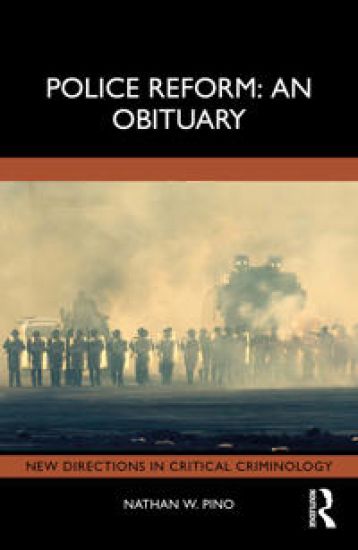
Police Reform: An Obituary

Police Reform: An Obituary

Nathan W. Pino

TAYLOR FRANCIS LTD
2026
nidottu
The fight against police brutality and impunity is a global struggle. This book argues that police reform efforts around the world should be extirpated and replaced with locally developed and led non-carceral alternatives that can produce community safety, social justice, and quality of life over the long-term from a decolonial, feminist, anti-capitalist, and abolitionist perspective. The book introduces the concept of artificial insecurity, defined as a condition in societies under racial capitalism whereby the social structures that promote safe, secure communities are weakened or removed, and the survival strategies of individuals are criminalized, coercing people to seek protection from policing and other carceral institutions that are undemocratic, violent, and fail to provide security, thus maintaining coloniality and inequality. Academics and other reformers should refuse to engage further in police reform efforts, and should instead seek ruptural social changes democratically based on an uncompromising abolitionist politics that produces genuine community safety and decolonizes economies in the face of hostility from politicians, police, and academic allies and collaborators with police. The book provides alternative policies and practices to reduce crime and promote community safety that do not rely on criminal justice systems. Since the book concerns current, important debates regarding police defunding and abolition, it will be a useful resource for students and scholars of criminology, policymakers, local stakeholders, nongovernmental organizations, and activists involved in various social justice movements around the world.
Police Reform: An Obituary

Police Reform: An Obituary

Nathan W. Pino

TAYLOR FRANCIS LTD
2026
sidottu
The fight against police brutality and impunity is a global struggle. This book argues that police reform efforts around the world should be extirpated and replaced with locally developed and led non-carceral alternatives that can produce community safety, social justice, and quality of life over the long-term from a decolonial, feminist, anti-capitalist, and abolitionist perspective. The book introduces the concept of artificial insecurity, defined as a condition in societies under racial capitalism whereby the social structures that promote safe, secure communities are weakened or removed, and the survival strategies of individuals are criminalized, coercing people to seek protection from policing and other carceral institutions that are undemocratic, violent, and fail to provide security, thus maintaining coloniality and inequality. Academics and other reformers should refuse to engage further in police reform efforts, and should instead seek ruptural social changes democratically based on an uncompromising abolitionist politics that produces genuine community safety and decolonizes economies in the face of hostility from politicians, police, and academic allies and collaborators with police. The book provides alternative policies and practices to reduce crime and promote community safety that do not rely on criminal justice systems. Since the book concerns current, important debates regarding police defunding and abolition, it will be a useful resource for students and scholars of criminology, policymakers, local stakeholders, nongovernmental organizations, and activists involved in various social justice movements around the world.
Rethinking Serial Murder, Spree Killing, and Atrocities

Rethinking Serial Murder, Spree Killing, and Atrocities

Robert Shanafelt; Nathan W. Pino

Routledge
2020
nidottu
Multiple killings by serial or spree killers and the mass violence seen in war crimes and other atrocities have typically been understood as discrete category types, which can foster the view that there are fundamentally different kinds of human beings, including "deviants" who are born evil and innately given to sadism or a callous lack of empathy. In contrast, this book considers the violence of these "deviants" in terms of larger questions about human violence. Therefore, in addition to describing the life histories of a sample of individual serial and spree murderers, the book includes analysis of macro-level phenomena such as genocide, mass rape and killing, and torture occurring under conditions of war, state authorization, or political upheaval. The chief claim of the book is that, given the "right" combination of factors occurring at different levels of analysis, virtually anyone can emerge as a killer or perpetrator of atrocities. While it is crucial to understand individual killers in terms of the details of their biographies, it is equally crucial to understand political atrocities in terms of the details of their histories; and to see that persons and groups are always the product of complexly interacting assemblage processes.
Rethinking Serial Murder, Spree Killing, and Atrocities

Rethinking Serial Murder, Spree Killing, and Atrocities

Robert Shanafelt; Nathan W. Pino

Routledge
2014
sidottu
Multiple killings by serial or spree killers and the mass violence seen in war crimes and other atrocities have typically been understood as discrete category types, which can foster the view that there are fundamentally different kinds of human beings, including "deviants" who are born evil and innately given to sadism or a callous lack of empathy. In contrast, this book considers the violence of these "deviants" in terms of larger questions about human violence. Therefore, in addition to describing the life histories of a sample of individual serial and spree murderers, the book includes analysis of macro-level phenomena such as genocide, mass rape and killing, and torture occurring under conditions of war, state authorization, or political upheaval. The chief claim of the book is that, given the "right" combination of factors occurring at different levels of analysis, virtually anyone can emerge as a killer or perpetrator of atrocities. While it is crucial to understand individual killers in terms of the details of their biographies, it is equally crucial to understand political atrocities in terms of the details of their histories; and to see that persons and groups are always the product of complexly interacting assemblage processes.