Kirjojen hintavertailu – 12 859 819 kirjaa ja 27 kauppaa

Kirjailija

Nathanaël Wallenhorst

Kirjat ja teokset yhdessä paikassa: 10 kirjaa, julkaisuja vuosilta 2020–2026, suosituimpiin kuuluu Philosophy of Education in the Anthropocene. Vertaile teosten hintoja ja tarkista saatavuus suomalaisista kirjakaupoista.

10 kirjaa

Kirjojen julkaisuvuodet: 2020–2026.

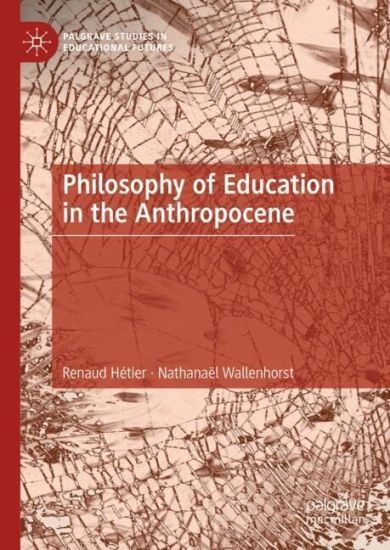
Philosophy of Education in the Anthropocene

Philosophy of Education in the Anthropocene

Renaud Hétier; Nathanaël Wallenhorst

Springer International Publishing AG
2026
Nidottu
This book develops a philosophy of education for the Anthropocene, proposing that we think about education in the light of contemporary bioclimatic challenges. Education is seen as the political means of choice for containing the runaway Earth system change and ensuring the sustainability of human life in society. In this book, Hétier and Wallenhorst continue their work on the biogeophysical and socio-political analysis of the Anthropocene here, tracing the path toward the re-founding of a political education to prepare students to address the greatest challenge of our time: the gradual disappearance of the bioclimatic conditions necessary for our very existence.
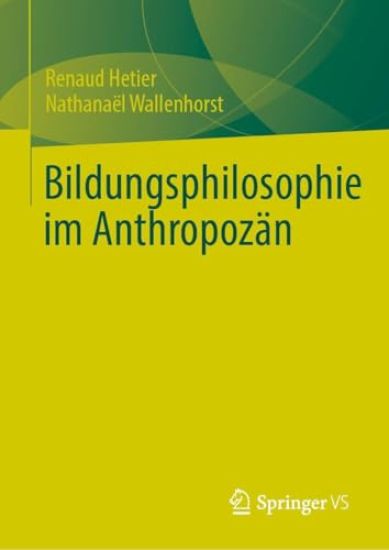
Bildungsphilosophie im Anthropozän

Bildungsphilosophie im Anthropozän

Renaud Hetier; Nathanaël Wallenhorst

Springer International Publishing AG
2025
sidottu
Dieses Buch entwickelt eine Bildungsphilosophie für das Anthropozän und schlägt vor, Bildung im Kontext der gegenwärtigen bioklimatischen Herausforderungen zu betrachten. Bildung wird als politisches Mittel der Wahl angesehen, um den unkontrollierbaren Wandel des Erdsystems einzudämmen und die Nachhaltigkeit menschlichen Lebens in der Gesellschaft zu gewährleisten. In diesem Buch setzen Hétier und Wallenhorst ihre Arbeit zur biogeophysikalischen und soziopolitischen Analyse des Anthropozäns fort und verfolgen den Weg zur Neugründung einer politischen Bildung, die die Studierenden darauf vorbereitet, die größte Herausforderung unserer Zeit anzugehen: das schrittweise Verschwinden der bioklimatischen Bedingungen, die für unser Überleben notwendig sind.
Philosophy of Education in the Anthropocene

Philosophy of Education in the Anthropocene

Renaud Hétier; Nathanaël Wallenhorst

Springer International Publishing AG
2025
sidottu
This book develops a philosophy of education for the Anthropocene, proposing that we think about education in the light of contemporary bioclimatic challenges. Education is seen as the political means of choice for containing the runaway Earth system change and ensuring the sustainability of human life in society. In this book, Hétier and Wallenhorst continue their work on the biogeophysical and socio-political analysis of the Anthropocene here, tracing the path toward the re-founding of a political education to prepare students to address the greatest challenge of our time: the gradual disappearance of the bioclimatic conditions necessary for our very existence.
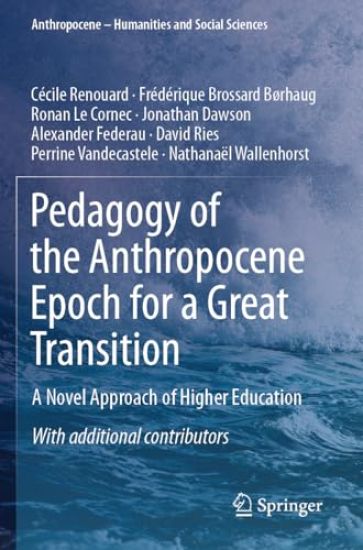
Pedagogy of the Anthropocene Epoch for a Great Transition

Pedagogy of the Anthropocene Epoch for a Great Transition

Cécile Renouard; Frédérique Brossard Børhaug; Ronan Le Cornec; Jonathan Dawson; Alexander Federau; David Ries; Perrine Vandecastele; Nathanaël Wallenhorst

Springer International Publishing AG
2025
nidottu
This book functions as a practical guide to support teachers and higher education institutions in the construction of their courses and programmes in light of the Anthropocene. It is divided into two complementary parts. The first part lays the theoretical foundations of what is a transition pedagogy and provides a pedagogical framework. It offers practical tools and didactic levers to be used by teachers and institutions to build a truly transformative pedagogy for students, with reference to universities already experimenting such alternative methods. The second part presents an analysis of the pedagogical tools and levers experienced in worldwide institutions, by teachers, as well as philosophers and experts of pedagogy. The authors of this book advocate for an embodied pedagogy which not only gives students access to content but also to ways of thinking and acting in all conscience. A pedagogy of the Anthropocene epoch therefore encourages the mobilization of reason, emotions and senses as well as systemic reflection in the questioning of our lifestyles and the development of transversal skills. Based on internationally recognized research and practical experiences of institutions and teachers all over the western world, this book gathers the knowledge and experience of professors and researchers, coming from a wide variety of disciplines and cultural context. Their reflections have led them to develop a “head-heart-body approach” and a “6 Gates questioning method” to remodel pedagogy. This book is of interest to those working in the education sector.
Eine kritische Theorie für das Anthropozän

Eine kritische Theorie für das Anthropozän

Nathanaël Wallenhorst

Springer International Publishing AG
2024
sidottu
Dieser Band, der in biogeophysikalischen Studien verwurzelt ist, befasst sich mit Konzepten des politischen Handelns im Anthropozän und der Spannung zwischen dem Wunsch, das prometheische Projekt der Moderne zu vollenden, und einem post-prometheischen Ansatz. Diese Arbeit untersucht die Idee einer anthropologischen Mutation der politischen Konsolidierung von einem "postprometheanischen Miteinander" zur Schaffung der Fähigkeit zum gemeinsamen Handeln. Das von Hannah Arendt entwickelte politische Denken über die conditio humana ist hier als Ressource für das Denken über die Menschheit im Sinne des menschlichen Abenteuers wichtig. Dieses hat drei Dimensionen: Hybris, Welt und Koexistenz, die sich jeweils auf die Logik des Profits des homo oeconomicus, die Logik der Verantwortung des homo collectivus und die Logik der Gastfreundschaft des homo religatus beziehen.. Die in diesem Buch skizzierte intellektuelle und politische Haltung ist eine Erweiterungder kritischen Theorie: Das Werk übt auch Kritik an dem, was in unserer Beziehung zur Welt ein Problem darstellt, und schlägt vor, wie es überwunden werden kann, wobei das Endziel die soziale Transformation ist. Der Autor schlägt einen Aufstand und eine anthropologische Konsolidierung der Politik vor, die auf der Wiederbelebung beruht, die durch das Teilen einer Konvivialität sowohl zwischen den Menschen als auch mit dem Nicht-Menschlichen hervorgerufen wird. Die Identifizierung der Konvivialität als ein Bildungsparadigma, um das Anthropozän zu überleben, gibt uns trotz dieses Erbes des Anthropozäns den dringend benötigten Grund zur Hoffnung. Neben dem Arendt'schen Denken stützt sich diese kritische Theorie für das Anthropozän auf das politische Denken mehrerer zeitgenössischer Autoren, darunter Maurice Bellet, Hartmut Rosa, Andreas Weber, Dominique Bourg und Christian Arnsperger. Dieser Band ist für Forscher des Anthropozäns von Interesse.
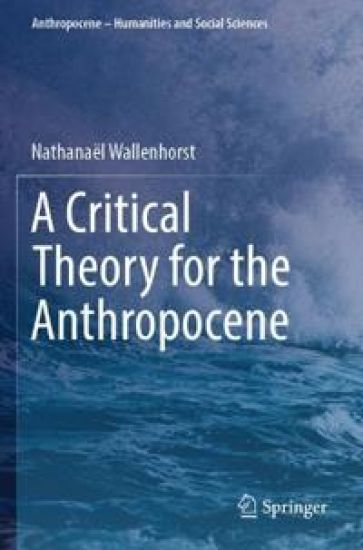
A Critical Theory for the Anthropocene

A Critical Theory for the Anthropocene

Nathanaël Wallenhorst

Springer International Publishing AG
2024
nidottu
This volume, which is rooted in biogeophysical studies, addresses conceptions of political action in the Anthropocene and the tension between a desire to accomplish the Promethean project of modernity and a post-Promethean approach. This work explores the idea of ??an anthropological mutation of political consolidation from a “post-Promethean togetherness”, to creating the capacity to act together. The political thinking of the human condition developed by Hannah Arendt is important here as a resource for thinking about humanity in terms of human adventure. This has three dimensions: hubris, the world and coexistence referring respectively to the logic of profit of the homo oeconomicus, the logic of responsibility of the homo collectivus and the logic of the hospitality of the homo religatus. The intellectual and political attitude outlined in this book is an extension of critical theory: the work also puts forward acritique of what poses a problem in our relationship to the world and suggests how to overcome it, the ultimate goal being social transformation. The author propose an uprising and an anthropological consolidation of politics based on the revitalization that is brought about by the sharing of a conviviality both between humans and with what is non-human. The identification of conviviality as an educational paradigm to survive the Anthropocene gives us the much needed reason for hope despite this heritage of the Anthropocene. In addition to Arendtian thinking, this critical theory for the Anthropocene draws on the political thinking of several contemporary authors including Maurice Bellet, Hartmut Rosa, Andreas Weber, Dominique Bourg, and Christian Arnsperger. This volume is of interest to researchers in the Anthropocene.
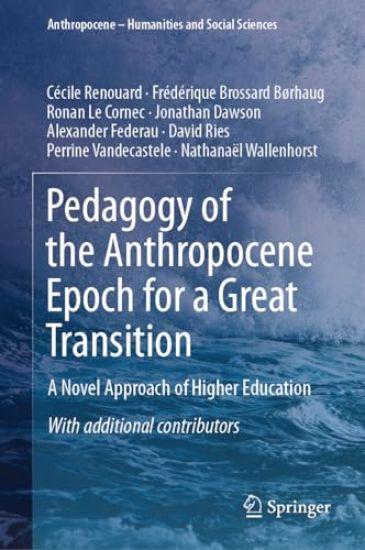
Pedagogy of the Anthropocene Epoch for a Great Transition

Pedagogy of the Anthropocene Epoch for a Great Transition

Cécile Renouard; Frédérique Brossard Børhaug; Ronan Le Cornec; Jonathan Dawson; Alexander Federau; David Ries; Perrine Vandecastele; Nathanaël Wallenhorst

Springer International Publishing AG
2024
sidottu
This book functions as a practical guide to support teachers and higher education institutions in the construction of their courses and programmes in light of the Anthropocene. It is divided into two complementary parts. The first part lays the theoretical foundations of what is a transition pedagogy and provides a pedagogical framework. It offers practical tools and didactic levers to be used by teachers and institutions to build a truly transformative pedagogy for students, with reference to universities already experimenting such alternative methods. The second part presents an analysis of the pedagogical tools and levers experienced in worldwide institutions, by teachers, as well as philosophers and experts of pedagogy. The authors of this book advocate for an embodied pedagogy which not only gives students access to content but also to ways of thinking and acting in all conscience. A pedagogy of the Anthropocene epoch therefore encourages the mobilization of reason, emotions and senses as well as systemic reflection in the questioning of our lifestyles and the development of transversal skills. Based on internationally recognized research and practical experiences of institutions and teachers all over the western world, this book gathers the knowledge and experience of professors and researchers, coming from a wide variety of disciplines and cultural context. Their reflections have led them to develop a “head-heart-body approach” and a “6 Gates questioning method” to remodel pedagogy. This book is of interest to those working in the education sector.
A Critical Theory for the Anthropocene

A Critical Theory for the Anthropocene

Nathanaël Wallenhorst

Springer International Publishing AG
2023
sidottu
This volume, which is rooted in biogeophysical studies, addresses conceptions of political action in the Anthropocene and the tension between a desire to accomplish the Promethean project of modernity and a post-Promethean approach. This work explores the idea of ??an anthropological mutation of political consolidation from a “post-Promethean togetherness”, to creating the capacity to act together. The political thinking of the human condition developed by Hannah Arendt is important here as a resource for thinking about humanity in terms of human adventure. This has three dimensions: hubris, the world and coexistence referring respectively to the logic of profit of the homo oeconomicus, the logic of responsibility of the homo collectivus and the logic of the hospitality of the homo religatus. The intellectual and political attitude outlined in this book is an extension of critical theory: the work also puts forward acritique of what poses a problem in our relationship to the world and suggests how to overcome it, the ultimate goal being social transformation. The author propose an uprising and an anthropological consolidation of politics based on the revitalization that is brought about by the sharing of a conviviality both between humans and with what is non-human. The identification of conviviality as an educational paradigm to survive the Anthropocene gives us the much needed reason for hope despite this heritage of the Anthropocene. In addition to Arendtian thinking, this critical theory for the Anthropocene draws on the political thinking of several contemporary authors including Maurice Bellet, Hartmut Rosa, Andreas Weber, Dominique Bourg, and Christian Arnsperger. This volume is of interest to researchers in the Anthropocene.