Kirjojen hintavertailu – 12 903 724 kirjaa ja 27 kauppaa
Kirjailija
National Energy Technology Laboratory
Kirjat ja teokset yhdessä paikassa: 62 kirjaa, julkaisuja vuosilta 2005–2015, suosituimpiin kuuluu Final Environmental Assessment for the Virginia State Energy Program's Cephas C&D Wastes Biomass Project, Richmond, Virginia (DOE/EA-1767). Vertaile teosten hintoja ja tarkista saatavuus suomalaisista kirjakaupoista.
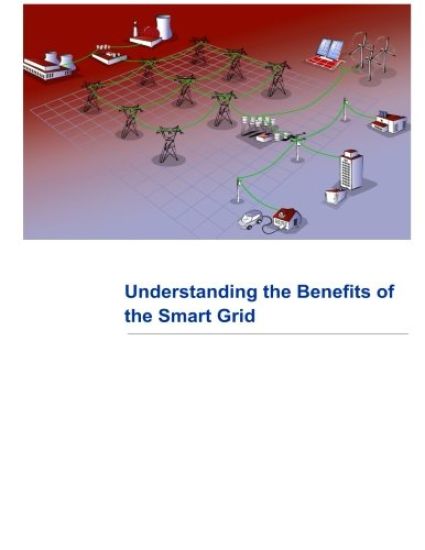
Since 2005, a great deal has been accomplished to develop and communicate the concepts that define what we call the smart grid today. A number of studies have concluded that, when viewed at a high level, the benefits of a smart grid far outweigh its costs-that is, when all costs and all benefits applicable to all stakeholders are included. But will the smart grid prove beneficial for everyone? The transition to the smart grid is fundamentally driven by market forces. The smart grid's ability to improve safety and efficiency, make better use of existing assets, enhance reliability and power quality, reduce dependence on imported energy, and minimize costly environmental impacts are all market forces that have substantial economic value. Recognizing these many attributes, the American Recovery and Reinvestment Act of 2009 (ARRA) was designed to provide additional stimulus, to accelerate the smart grid transition, and thereby realize the benefits sooner. As a result, the momentum for a smart grid is large and growing, but if it is to be sustained, the smart grid's value must become crystal clear to all stakeholders, especially to residential consumers. Residential electricity consumers are the force that drives our economy as well as the strongest political constituency. Therefore it is imperative that they clearly understand the values of a smart grid and that any concerns they may have with its implementation are addressed. Without this understanding and alignment, the U. S. consumer will lack the interest and motivation to support this market-based transition. Rather than a supporter, the consumer could instead become an obstacle to smart grid progress. There are two reasons to create a national smart grid. First, today's grid needs to be upgraded because it is aging, inadequate, and outdated in many respects "investment is needed to improve its material condition, ensure adequate capacity exists, and enable it to address the 21st-century power supply challenges. Status quo is not an option. Secondly, the benefits of the smart grid are substantial. These benefits will result from improvements in the following six key value areas:
Stabilization of atmospheric concentration of greenhouse gases, of which CO2 is the most important, "....at a level that would prevent dangerous anthropogenic interference with the climate system..."1 is a widely accepted policy goal. When concerted actions start to be taken to achieve this goal, fossil generating stations, as large point sources of CO2, may be required to make disproportionately large emission reductions because doing so will be cost effective. At present natural gas combined cycle (NGCC) is the technology of choice for providing new electric generating capacity in the U. S. for reasons that include environmental performance, thermal efficiency, high availability compared to renewables, and relatively low capital cost. Relatively low specific carbon emissions (kg C or kg CO2/kWh) compared to coal generators is another attraction of NGCC. Yet NGCC cannot be the only response of the electric power industry to the challenge of global warming even if affordable supplies of natural gas were assured into the indefinite future. Climate modelers estimate that upwards of 60% reduction in greenhouse gas emissions from current levels will be needed to stabilize atmospheric composition. That is a greater reduction than could be achieved even if all coal -fired units were replaced with state-of-art NGCC. This paper invites serious consideration of fossil fueled electricity generation technologies that capture nominally 90% of CO2 emissions and use the CO2 to conduct enhanced oil recovery. Carbon sequestration of this kind represents a fundamentally different approach to reducing carbon emissions that has potential not less than traditional approaches such as improvement of thermal efficiency of generation, improvement of end use efficiency, and use of renewables. There is no immediate prospect for commercial deployment of fossil generation with CO2 capture and sequestration, however, because with no value assigned to reducing carbon emissions, such processes are more expensive than conventional fossil generation. One approach to overcoming this problem is to investigate use of a carbon tax or carbon emission cap. This study takes a different approach. It considers how the economics of natural gas- and coal-based generation with carbon capture would fare if a market for the collected CO2 is assured for practice of EOR. Coal-based IGCC with CO2 capture and sequestration would yield only one fifth the specific carbon emissions (kg C or kg CO2 /kWh) as would state-of-art NGCC. California appears to be a good venue for consideration of IGCC+S: there is need for additional generating capacity and an unserved market for CO2 that could be used to conduct enhanced oil recovery. In this paper, a probabilistic analysis is conducted to determine Required Selling Price of Electricity (RSPOE) and expected rate of return on common stock equity for three fossil generating technologies: NGCC, NGCC+S (NGCC with capture and sequestration), and IGCC+S. Variables treated probabilistically are the costs of natural gas and coal fuels, and the values of electricity and CO2 products. Predictions of prices prepared by the Energy Information Agency are used together with measures of price variability based on historic price fluctuations. Installation of new generating plant is assumed to occur in 2010 and operate for a 20 year book life to 2030. It is shown that when CO2 can be sold at historically realized prices for use in enhanced oil recovery (EOR), IGCC+S is expected to be profitable with no subsidy for avoidance of CO2 emissions. Expected profitability of NGCC is greater than that of IGCC+S, but so is the uncertainty of RSPOE and expected rate of return on common stock equity, due principally to uncertainty of natural gas price. NGCC+S exhibits both a higher RSPOE and higher uncertainty of RSPOE than either of the other technologies.