Kirjojen hintavertailu – 12 903 724 kirjaa ja 27 kauppaa
Kirjailija
National Park Service
Kirjat ja teokset yhdessä paikassa: 728 kirjaa, julkaisuja vuosilta 1998–2021, suosituimpiin kuuluu Wind Cave National Park Natural Resource Condition Assessment. Vertaile teosten hintoja ja tarkista saatavuus suomalaisista kirjakaupoista.
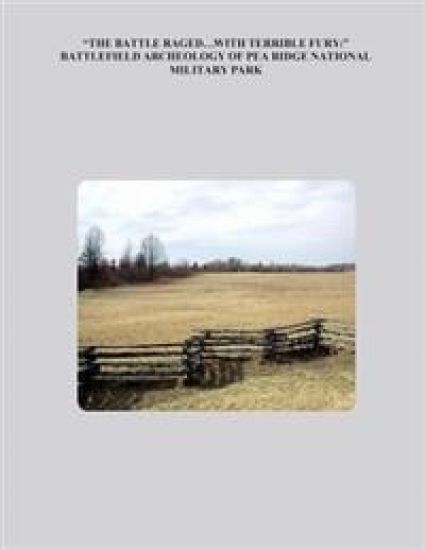
The first years of the Civil War in the west focused on the question of the allegiance of Missouri. Southern sympathizers in the state wished to secede and join the pro-slavery cause, but were prevented from doing so by a large Unionist population focused in St. Louis and in other areas of the state. The August, 1861 battle of Wilson's Creek did little to settle the question, as neither side gained complete control of the state. A strong Union military presence, centered in St. Louis, governed that city and the Missouri River Valley (Shea and Hess 1992:1). The southwest corner of Missouri, on the other hand, remained under the sway of the Missouri State Guard (MSG), the state's militia, under the command of Major General Sterling Price, a Mexican War general and former governor. The MSG was, on the surface, endeavoring to maintain Missouri neutrality by keeping Missouri free of a strong presence of either combatant. In actuality, the Guard and its command structure were pro-Confederate, and, from the outset of hostilities actively sought and received assistance from the Confederate government (Piston and Hatcher 2000:33). The Federals began a campaign in early 1862 bent on dispersing the Guard or driving it from the state. That campaign would carry over into Arkansas, where it would culminate at the battle of Pea Ridge. Pea Ridge was one of the largest battles to take place west of the Mississippi River, and certainly the most important strategic victory in the western South during the war (Figure 1). The Federal victory there secured Missouri for the North, and safeguarded St. Louis, a major transshipment point and a base of supply for later campaigns down the Mississippi River. The defeated Confederates shifted their attention away from Arkansas towards Tennessee and Mississippi, draining the region of most of its troops. Much of the fighting in Arkansas later in the war took place either between small armies, or between groups of partisans loyal to either side. In both Missouri and Arkansas, these partisan groups initiated a brutal form of warfare that closely resembles more recent episodes such as the conflict in the former Yugoslavia and Iraq. Human occupation of northwestern Arkansas began by 5,000 years ago and continued uninterrupted until the present. This project focuses on one aspect of that occupation, the March, 1862 battle between Federal and Confederate armies. The detritus of battle, the physical evidence for conflict, is a wellspring of archaeological data that can greatly further our understanding of the battle. This effort describes the findings of a multi-year inventory of those artifacts relating to the March, 1862 battle. Briefly, the Battle of Pea Ridge (Figure 2) began on the morning of March 7, 1862. The Confederate Army under the overall command of Major General Earl Van Dorn, including the Missouri State Guard, attempted to swing around the Federal right flank and fall upon the Union supply wagons parked near Elkhorn Tavern. Fatigue and poor roads forced a separation between the MSG and Major General Benjamin McCulloch's Confederate division, forcing the latter to take an alternate, shorter route to reconnect with Price's Missourians.
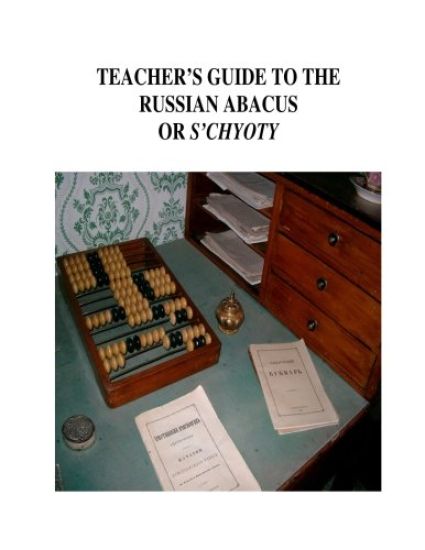
Sitka National Historical Park preserves the history and culture of the Tlingits who first settled in the Sitka area and the Russians who arrived in 1799 to colonize Alaska. From 1804-1867, Sitka was known as Novo-Arkhangels'k or New Archangel, the capital of Russian America. When the Russians arrived, they brought with them their religion, language, and culture to share with the Tlingit and other Europeans who colonized Alaska with the Russian American Company. They also brought along various business tools, like the Russian abacus, or s'chyoty. The Russian American Company kept extensive business records using the s'chyoty, or Russian abacus. The s'chyoty is used even to this day in some parts of Russia to determine sales totals. In the 1840's, the first Bishop of the Alaska Diocese of the Russian Orthodox Church, Bishop Innocent, established a residence and seminary in Sitka. He also created an elementary school in the 1843 Russian Bishop's House, a building built by the Russian American Company to hold the seminary, a chapel, and the Bishop's personal quarters. The historical Russian Bishop's House was restored to its 1853 appearance by the National Park Service and is cared for by Sitka National Historical Park today. This special building is one of only three or four Russian American buildings left in all of North America, it is over 70% original, and it is the only one restored to its original historical period with original furnishings inside. It also contains the oldest Russian Orthodox church (a small chapel) in Alaska. As Native Alaskans were converted to the Russian Orthodox Church, they became citizens of Russia and entitled to an education. Russian American Company officials wanted to ensure that local people would be able to function in the company as clerks, managers, accountants, etc. Curriculum in the mission schools included religious studies, arithmetic, history, languages, geography, penmanship, etc. Because of the regular use of the s'chyoty, therefore, students attending classes at the Russian Bishop's House would have used it for lessons in arithmetic. This arithmetic would also have been handy for the more practical skills of carpentry and blacksmithing also taught in the school.
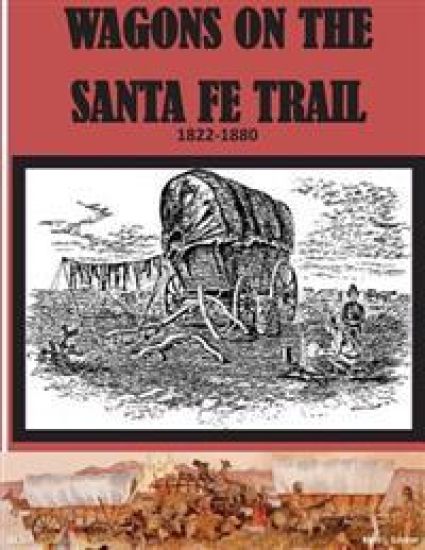
The first wagons to cross the plains from Missouri to New Mexico were part of William Becknell's 1822 Santa Fe trading expedition. The year previous, Becknell and five companions had been the first American traders to penetrate the newly independent Mexican nation. The handsome profits realized on that venture were the driving force behind the considerably more ambitious second expedition, which set out for Santa Fe within nine months of the first. According to Becknell's now-famous "journal," first published in the pages of the Missouri lntelligencer in 1823, his 1822 company consisted of "21 men, with three waggons. "1 It appears that only one of the wagons belonged to the expedition's leader, however.2 This wagon, it was later reported, had cost $150 in Missouri and was sold by Becknell in New Mexico for $700.3 The other wagons were probably disposed of in a like manner; they do not seem to have returned to Missouri. What these wagons looked like, their hauling capacities, and where they were made and by whom- all this is unknown. Their importance, however, is unquestioned. They proved that merchandise laden wagons could navigate the 800-plus miles between Franklin, Missouri, and Santa Fe--a remarkable feat that did not go unnoticed. No wagons were reported on the Santa Fe Trail in 1823, but the 1824 caravan contained an amazing assemblage of vehicles. Meredith Miles Marmaduke, a member of this company, recorded in his diary on May 24 that they traveled with "2 road waggons, 20 dearborns, 2 carts and one small piece of cannon. "4 Augustus Storrs, another member of the expedition, wrote some months later that there had been "twenty-three four-wheeled vehicles, one of which was a common road wagon. "5 Although Marmaduke and Storrs do not agree on the number of vehicles in the caravan, it is important to note their use of the term "road wagon." According to transportation historian Don Berkebile, in his Carriage Terminology: An Historical Dictionary, the term has two definitions. One describes a vehicle also known as a buggy. The term was "also loosely applied," Berkebile tells us, "to larger WAGONS that were employed in the movement of materials or merchandise over the roads. "6 The second definition is probably the one intended by Marmaduke and Storrs; Santa Fe trader and historian Josiah Gregg uses "road-wagon" in his Commerce of the Prairies (1844) to denote freight wagons.7 Although the term leaves us to speculate on the appearance of these vehicles, it is possible that the road wagons in the 1824 caravan were the first actual freight wagons to travel the Santa Fe Trail.8
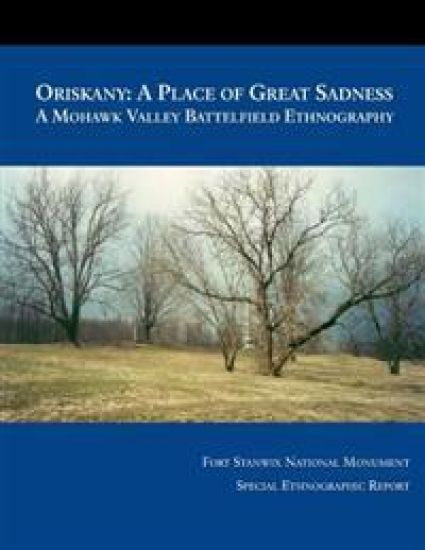
The Mohawk Valley Battlefield Ethnography Project was designed to documentthe relationships between contemporary Indian peoples and the events that occurred in central New York during the mid to late eighteenth century. The particular focus was Fort Stanwix, located near the Oneida Carry, which linked the Mohawk and St. Lawrence Rivers via Wood Creek, and the Oriskany Battlefield. Because of its strategic location, Fort Stanwix was the site of several critical treaties between the British and the Iroquois and, following the American Revolution, between the latter and the United States. This region was the homeland of the Six Nations of the Iroquois Confederacy whose neutrality or military support was desired by both the British and the rebels during the Revolution. The Battle of Oriskany, 6 August 1777, occurred as the Tryon County militia, aided by Oneida warriors, was marching to relieve the British siege of Ft. Stanwix. Within a few miles of the fort it was ambushed by a British force comprised primarily of Indian warriors, most of whom were Senecas and Mohawks, and, like the Oneidas members of the Iroquois Confederacy. Among the project's ethnographic objectives was to determine if there were oral histories of either the battle or the treaties which could balance the ethnocentric eighteenth century documents. Descendants of participants in those events were to be identified and their concerns and interests about the sites documented. This information could then be used by site managers to provide more accurate and culturally appropriate interpretations to the public and to inform management decisions. Another objective was to open lines of communication between park managers and Indian nations and individuals that would become part of an ongoing collaborative process. In addition to the ethnographic research, an archival component was designed to develop a history of the events surrounding the siege and battle as recorded in primary sources. Because the bulk of the Indian warriors were Iroquois, the first phase of the project focused exclusively on contemporary Iroquois peoples in the United States and Canada. During the course of the archival research it became apparent that other Indian nations were also represented at the battle and siege and the second phase, with similar objectives, focused on the Mississaugas, Hurons/Wyandots, Ottawas, Potawatomies, and Chippewas. No significant oral histories of either the battle or the siege were found. Webelieve that this is a reflection of both the length of time elapsed and the massive re-locations and traumas that occurred as a result of the Revolution. Interest was greatest among the Oneidas and Mohawks as the area is closest to their traditional homelands. Familiarity with the battle was much less among non-Iroquois who nevertheless eagerly sought what information we could give them about their ancestors' participation. Attempts to identify descendants of particular warriors were unsuccessful due to restrictions on the use of tribal enrollment records. For the Iroquois it is reasonable to assume that all contemporary people have some ancestral connection. Community consultants who had visited Fort Stanwix National Monument wereunanimous and outspoken in their objections to the orientation film then shown at the fort because it ignored the roles played by Indian warriors, dismissing them as "savages." (The film was withdrawn within a few months of the receipt of the final report of the project's first phase).
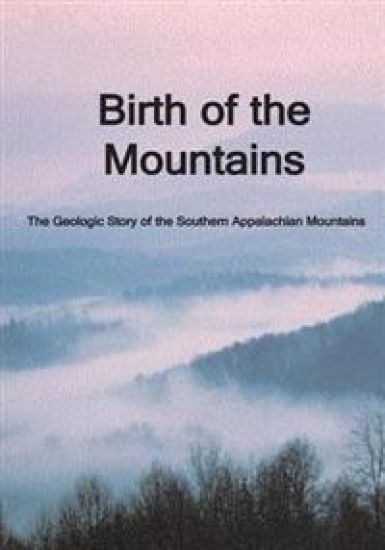
The Southern Appalachian Mountains include the Great Smokey Mountains National Park, and Blue Ridge Parkway, several National Forests, and numerous State and privately owned parks and recreation areas. The region is known worldwide for its great beauty and biological diversity. Why does this are have such beautiful scenery and a diversity of plants and animals that is greater than in all of Northern Europe? How do the Mountains, and the rocks and minerals of which they are made, affect the lives of people? How do people affect the mountains? To address these questions, we need to understand the geologic events that have shaped this region. We need to know how events that took place millions of years ago have influenced the landscape, climate, soils and living things we see today.
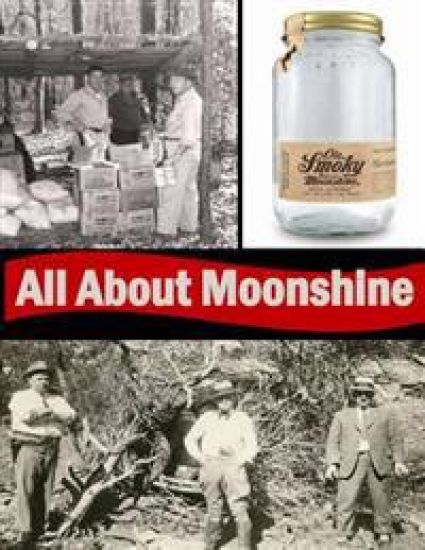
"Moonshining as a trade, required only a few materials. Like other forms of alcohol distillation, it is quite simple in theory, yet difficult in practice. The four main ingredients include grain (usually corn meal, but sometimes wheat or rye), sugar, yeast, and water. Many recipes for moonshine exist but the essentials are to mix one quart of corn meal and one quart ofcorn malt (sprouted corn) with five gallons of water. Allow this to ferment for seven days. One of the more colorful moonshiners in this area for many years was Le Roy Slaven (1916-1987). Le Roy learned to make shine from his father Cal and began drinking at age 16. He made moonshine with Jurdan Boyatt Jr. using Cal's recipe for moonshine which is:1 gallon - of Red Top Molasses1 - 40 lb. bag of seed corn, soaked to swell up and after sprouting ground up into a mash.25 lb. of sugar set all in a 55 gal. Barrel filled 2/3 full of water until fermented. At this point the mash was cooked, the alcohol was driven off and then condensed and collected.