Kirjojen hintavertailu – 12 859 829 kirjaa ja 27 kauppaa

Kirjailija

Natsume Soseki

Kirjat ja teokset yhdessä paikassa: 44 kirjaa, julkaisuja vuosilta 1988–2026, suosituimpiin kuuluu Der Bergmann. Vertaile teosten hintoja ja tarkista saatavuus suomalaisista kirjakaupoista.

Nimi esiintyy myös muodoissa: Natsume Sôseki

44 kirjaa

Kirjojen julkaisuvuodet: 1988–2026.

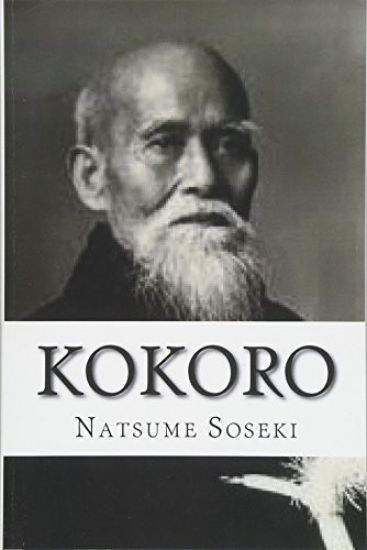
Kokoro: (translated by Edward McClellan)

Kokoro: (translated by Edward McClellan)

Natsume Soseki

Digireads.com
2018
nidottu
Literally meaning "heart", the Japanese word "kokoro" can be more distinctly translated as "the heart of things" or "feeling." Natsume Soseki's 1914 novel, which was originally published in serial format in a Japanese newspaper, "Kokoro" deals with the transition from the Japanese Meiji society to the modern era. Divided into three parts "Sensei and I," "My Parents and I," and "Sensei and His Testament," the novel explores the themes of loneliness and isolation. In the first part we find the narrator attending university where he befriends an older man, known only as "Sensei," who lives a largely reclusive life. In the second part of the novel the narrator graduates from college and returns home to await the death of his father. The third part of the novel recounts a letter that the narrator receives from the "Sensei," which describes the circumstances that caused his loss of faith in humanity and the guilt he feels over the death of a childhood friend which drives him to the reclusive life that he has led. A deeply thematic novel "Kokoro" provides an excellent introduction to one of Japan's most beloved authors, Natsume Soseki. This edition is printed on premium acid-free paper and follows the translation of Edwin McClelland.
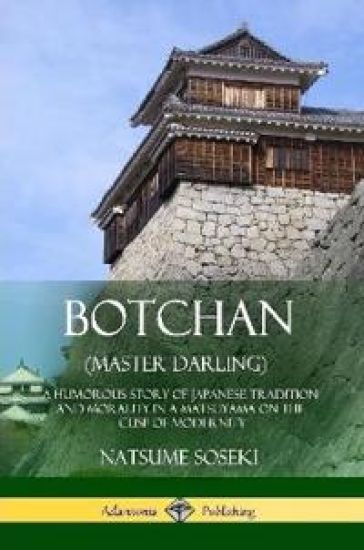
Botchan (Master Darling)

Botchan (Master Darling)

Yasotaro Morri; Natsume Soseki

Lulu.com
2018
pokkari
Botchan is one of Japan's most popular novels for young people for its meditations upon Japanese culture, lively characters, and coming-of-age theme. The titular character is a young, headstrong and reckless youth who is nevertheless possessed of a serious sense of honor and integrity. Although his temper and impulsiveness create problems, Botchan's moral convictions underpin his journey: indeed, whether he will compromise his morals is the central question. After taking a job as a junior teacher in a local middle school, Botchan comes into conflict with Red Shirt; his school's eloquent but manipulative and conniving head teacher. Vying for the hand of a local beauty, Red Shirt will stop at nothing to achieve his aims, using his position and the system to undermine or defeat others. However a hot tempered but justice-seeking mathematics teacher, Yama Arashi, is determined to oppose such underhand behavior. Who will Botchan side with in the end?
Light and Dark

Light and Dark

Natsume Soseki

Columbia University Press
2016
pokkari
Light and Dark, Natsume Soseki's longest novel and masterpiece, although unfinished, is a minutely observed study of haute-bourgeois manners on the eve of World War I. It is also a psychological portrait of a new marriage that achieves a depth and exactitude of character revelation that had no precedent in Japan at the time of its publication and has not been equaled since. With Light and Dark, Soseki invented the modern Japanese novel. Recovering in a clinic following surgery, thirty-year-old Tsuda Yoshio receives visits from a procession of intimates: his coquettish young wife, O-Nobu; his unsparing younger sister, O-Hide, who blames O-Nobu's extravagance for her brother's financial difficulties; his self-deprecating friend, Kobayashi, a ne'er-do-well and troublemaker who might have stepped from the pages of a Dostoevsky novel; and his employer's wife, Madam Yoshikawa, a conniving meddler with a connection to Tsuda that is unknown to the others. Divergent interests create friction among this closely interrelated cast of characters that explodes into scenes of jealousy, rancor, and recrimination that will astonish Western readers conditioned to expect Japanese reticence. Released from the clinic, Tsuda leaves Tokyo to continue his convalescence at a hot-springs resort. For reasons of her own, Madam Yoshikawa informs him that a woman who inhabits his dreams, Kiyoko, is staying alone at the same inn, recovering from a miscarriage. Dissuading O-Nobu from accompanying him, Tsuda travels to the spa, a lengthy journey fraught with real and symbolic obstacles that feels like a passage from one world to another. He encounters Kiyoko, who attempts to avoid him, but finally manages a meeting alone with her in her room. Soseki's final scene is a sublime exercise in indirection that leaves Tsuda to "explain the meaning of her smile."

The Miner

The Miner

Natsume Soseki

Aardvark Bureau
2016
pokkari
From the great Meiji writer Natsume Soseki, The Miner is an absurdist tale about the indeterminate nature of human personality. 'It makes me very happy that I can read this novel written over a hundred years ago as if it were contemporary and be deeply affected by it. It cannot and should not be overlooked. It is one of my favorites' Haruki Murakami The Miner is the most daringly experimental and least well-known novel of Japanese writer Natsume Soseki. An absurdist tale written in 1908, it was in many ways a precursor to the work of James Joyce and Samuel Beckett. Translated by Jay Rubin, and with an introduction from Haruki Murakami, this is bound to appeal to fans of Japanese literature.
Ten Nights Dreaming

Ten Nights Dreaming

Natsume Soseki

Dover Publications Inc.
2015
nidottu

Halvin toimitettuna 17,40 €

A murderer discovers his true nature from a talking infant, a samurai is frustrated in his attempts to meditate, and a dying man bestows his hat on a friend in these surrealistic short stories. Written by the father of Japanese modernist literature, the dream-like, open-ended tales offer thought-provoking reading. This edition includes a fine new English translation by a noted expert.
Träume aus zehn Nächten

Träume aus zehn Nächten

Natsume Soseki

Books on Demand
2015
pokkari
In den Tr umen aus zehn N chten verarbeitet Soseki die gesellschaftlichen Konflikte der Meji Zeit (1868 - 1912) in der literarischen Form der Kurzgeschichte. Alle Tr ume sind, bis auf eine Ausnahme, aus der Ich-Perspektive erz hlt. Sie spielen zu verschiedenen Zeitaltern und an unterschiedlichen Orten. Leitmotive sind: Loyalit t und Verrat, Liebe und Tod, Ber hmtheit und Unsterblichkeit, gesellschaftliche Au enseiter, Ehre und Gesichtsverlust, Verzweiflung und Hoffnung. Der Originaltext wurde vollst ndig mit Furigana versehen, um allen Studenten der japanischen Sprache die fl ssige Lesbarkeit zu erm glichen. Jeder Traum ist kommentiert und soll so dem Leser Denkanst sse f r seine eigene Interpretation dieses spannenden, philosophischen Werks geben.
Light and Dark

Light and Dark

Natsume Soseki

Columbia University Press
2013
sidottu
Light and Dark, Natsume Soseki's longest novel and masterpiece, although unfinished, is a minutely observed study of haute-bourgeois manners on the eve of World War I. It is also a psychological portrait of a new marriage that achieves a depth and exactitude of character revelation that had no precedent in Japan at the time of its publication and has not been equaled since. With Light and Dark, Soseki invented the modern Japanese novel. Recovering in a clinic following surgery, thirty-year-old Tsuda Yoshio receives visits from a procession of intimates: his coquettish young wife, O-Nobu; his unsparing younger sister, O-Hide, who blames O-Nobu's extravagance for her brother's financial difficulties; his self-deprecating friend, Kobayashi, a ne'er-do-well and troublemaker who might have stepped from the pages of a Dostoevsky novel; and his employer's wife, Madam Yoshikawa, a conniving meddler with a connection to Tsuda that is unknown to the others. Divergent interests create friction among this closely interrelated cast of characters that explodes into scenes of jealousy, rancor, and recrimination that will astonish Western readers conditioned to expect Japanese reticence. Released from the clinic, Tsuda leaves Tokyo to continue his convalescence at a hot-springs resort. For reasons of her own, Madam Yoshikawa informs him that a woman who inhabits his dreams, Kiyoko, is staying alone at the same inn, recovering from a miscarriage. Dissuading O-Nobu from accompanying him, Tsuda travels to the spa, a lengthy journey fraught with real and symbolic obstacles that feels like a passage from one world to another. He encounters Kiyoko, who attempts to avoid him, but finally manages a meeting alone with her in her room. Soseki's final scene is a sublime exercise in indirection that leaves Tsuda to "explain the meaning of her smile."

Kokoro

Kokoro

Natsume Soseki

Digireads.com
2013
nidottu

Halvin toimitettuna 16,10 €

Literally meaning "heart", the Japanese word "kokoro" can be more distinctly translated as "the heart of things" or "feeling." Natsume Soseki's 1914 novel, which was originally published in serial format in a Japanese newspaper, "Kokoro" deals with the transition from the Japanese Meiji society to the modern era. Divided into three parts "Sensei and I," "My Parents and I," and "Sensei and His Testament," the novel explores the themes of loneliness and isolation. In the first part we find the narrator attending university where he befriends an older man, known only as "Sensei," who lives a largely reclusive life. In the second part of the novel the narrator graduates from college and returns home to await the death of his father. The third part of the novel recounts a letter that the narrator receives from the "Sensei," which describes the circumstances that caused his loss of faith in humanity and the guilt he feels over the death of a childhood friend which drives him to the reclusive life that he has led. A deeply thematic novel "Kokoro" provides an excellent introduction to one of Japan's most beloved authors, Natsume Soseki.
The Gate

The Gate

Natsume Soseki

NYRB Classics
2012
nidottu

Halvin toimitettuna 20,40 €

An NYRB Classics Original A humble clerk and his loving wife scrape out a quiet existence on the margins of Tokyo. Resigned, following years of exile and misfortune, to the bitter consequences of having married without their families' consent, and unable to have children of their own, Sōsuke and Oyone find the delicate equilibrium of their household upset by a new obligation to meet the educational expenses of Sōsuke's brash younger brother. While an unlikely new friendship appears to offer a way out of this bind, it also soon threatens to dredge up a past that could once again force them to flee the capital. Desperate and torn, Sōsuke finally resolves to travel to a remote Zen mountain monastery to see if perhaps there, through meditation, he can find a way out of his predicament. This moving and deceptively simple story, a melancholy tale shot through with glimmers of joy, beauty, and gentle wit, is an understated masterpiece by one of Japan's greatest writers. At the end of his life, Natsume Sōseki declared The Gate, originally published in 1910, to be his favorite among all his novels. This new translation captures the oblique grace of the original while correcting numerous errors and omissions that marred the first English version.
Botchan

Botchan

Natsume Soseki

Penguin Classics
2012
pokkari

Halvin toimitettuna 15,40 €

Botchan is a modern young man from the Tokyo metropolis, sent to the ultra-traditional Matsuyama district as a Maths teacher after his the death of his parents. Cynical, rebellious and immature, Botchan finds himself facing several tests, from the pupils - prone to playing tricks on their new, naïve teacher; the staff - vain, immoral, and in danger of becoming a bad influence on Botchan; and from his own as-yet-unformed nature, as he finds his place in the world. One of the most popular novels in Japan where it is considered a classic of adolescence, as seminal as The Catcher in the Rye, Botchan is as funny, poignant and memorable as it was when first published, over 100 years ago. In J. Cohn's introduction to his colourful translation, he discusses Botchan's success, the book's clash between Western intellectualism and traditional Japanese values, and the importance of names and nicknames in the novel.
Light and Darkness: Natsume Sôseki's Meian: A New Translation By V. H. Viglielmo

Light and Darkness: Natsume Sôseki's Meian: A New Translation By V. H. Viglielmo

Natsume Sôseki

Createspace Independent Publishing Platform
2011
nidottu
Japan's preeminent modern novelist, Natsume S seki (1867-1916), may be better known for his works of fiction such as Kokoro, Botchan, and I Am a Cat, than for his last novel, Meian, uncompleted at his death, which remains something of an enigma -- a neglected masterpiece. A simple plot summary doesn't do it justice: the marriage of Tsuda and O-Nobu is threatened when Kobayashi and others begin dropping hints about another woman. Tsuda departs on a trip to rendezvous with the woman in question, Kiyoko, his former fianc e. The novel is a study of human character, a marriage tested, and what it means to be an individual in the modern world.
Kokoro

Kokoro

Natsume Soseki

Penguin Classics
2010
pokkari

Halvin toimitettuna 18,70 €

Kokoro, meaning 'heart', is a tantalising novel about the friendship between a young man and an enigmatic elder whom he calls Sensei. Set in the early twentieth century, when the death of the emperor Meiji gave way to a new era in Japanese politicial and cultural life, the novel enacts the transition from one generation to the next in the dynamic between Sensei, who is haunted by mysterious events in his past, and the unnamed young man, one of the new generation's elite who will inherit the coming era.
Sanshiro

Sanshiro

Natsume Soseki

Penguin Classics
2009
pokkari

Halvin toimitettuna 17,00 €

'Even bigger than Japan is the inside of your head. Don't ever surrender yourself - not to Japan, not to anything'Soseki's work of gentle humour and doomed innocence depicts twenty-three-year-old Sanshiro, a recent graduate from a provincial college, as he begins university life in the big city of Tokyo. Baffled and excited by the traffic, the academics and - most of all - the women, Sanshiro must find his way amongst the sophisticates that fill his new life. An incisive social and cultural commentary, Sanshiro is also a subtle study of first love, tradition and modernization, and the idealism of youth against the cynicism of middle age. This Penguin Classics edition of Soseki's beloved novel is translated by Jay Rubin with an introduction by Haruki Murakami.