Kirjailija
Navid Kermani
Kirjat ja teokset yhdessä paikassa: 63 kirjaa, julkaisuja vuosilta 2011–2026, suosituimpiin kuuluu Dein Name. Vertaile teosten hintoja ja tarkista saatavuus suomalaisista kirjakaupoista.
63 kirjaa
Kirjojen julkaisuvuodet: 2011–2026.
Plough Quarterly No. 35 – Pain and Passion
Randall Gauger; Benjamin Crosby; Lisabeth Button; Navid Kermani; Tom Holland; Rick Warren; Brewer Eberly; Eleanor Parker
PLOUGH PUBLISHING HOUSE
2023
nidottu
Pain is inevitable. Almost everyone is living with some kind of pain, whether the cause is physical, emotional, financial, social, or spiritual. A desire to escape it has led thousands of Canadians to seek euthanasia, and countless others into opioid addiction. What can we learn from people around the world for whom pain is a fact of life? How can we help others bear their pain? How might the wisdom of earlier eras help us? What answers does faith offer? On this theme: - Navid Kermani visits farming Madagascar battling drought caused by climate change. - Benjamin Crosby asks why churches haven’t spoken out against Canada’s euthanasia experiment. - Tom Holland sums up the history of pain in two artworks and three lives. - Lisabeth Button shares correspondence with a friend succumbing to Alzheimer’s. - Rick Warren demonstrated how our own suffering can lead to our best ministry. - Wang Yi, an imprisoned Chinese pastor, calls churches to face repression boldly. - Leah Libresco Sargeant profiles nuns providing palliative care. - Eleanor Parker considers an Anglo-Saxon poem, “The Dream of the Rood.” - Brewer Eberly tells what he learned from an insufferable patient. - Randall Gauger, who lost his son to cancer, finds lessons in C. S. Lewis. Also in the issue: - A report on the resurgence of bison by Nathan Beacom - Original poetry by Sofia M. Starnes and Julia Nemirovskaya - An excerpt from a new graphic novel, By Water - Reviews of Barbara Kingsolver’s Demon Copperhead, James K. A. Smith’s How to Inhabit Time, and Nick Cave’s and Seán O’Hagan’s Faith, Hope and Carnage. - Readings from Eduardo Galeano, Felicity of Carthage, Anselm of Canterbury, Julian of Norwich, Martin Luther, and J. Heinrich Arnold Plough Quarterly features stories, ideas, and culture for people eager to apply their faith to the challenges we face. Each issue includes in-depth articles, interviews, poetry, book reviews, and art.
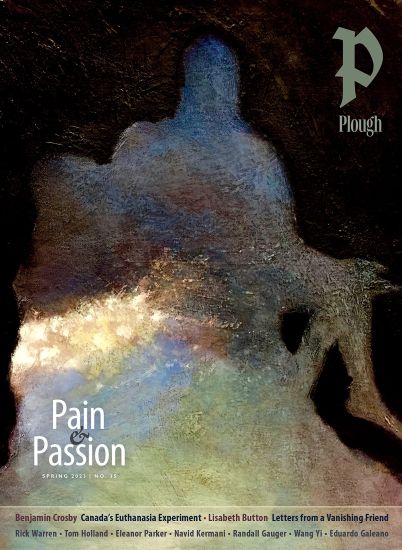
Plough Quarterly No. 35 – Pain and Passion
Randall Gauger; Benjamin Crosby; Lisabeth Button; Navid Kermani; Tom Holland; Rick Warren; Brewer Eberly; Eleanor Parker
PLOUGH PUBLISHING HOUSE
2023
nidottu
Pain is inevitable. Almost everyone is living with some kind of pain, whether the cause is physical, emotional, financial, social, or spiritual. A desire to escape it has led thousands of Canadians to seek euthanasia, and countless others into opioid addiction. What can we learn from people around the world for whom pain is a fact of life? How can we help others bear their pain? How might the wisdom of earlier eras help us? What answers does faith offer? On this theme: - Navid Kermani visits farming Madagascar battling drought caused by climate change. - Benjamin Crosby asks why churches haven’t spoken out against Canada’s euthanasia experiment. - Tom Holland sums up the history of pain in two artworks and three lives. - Lisabeth Button shares correspondence with a friend succumbing to Alzheimer’s. - Rick Warren demonstrated how our own suffering can lead to our best ministry. - Wang Yi, an imprisoned Chinese pastor, calls churches to face repression boldly. - Leah Libresco Sargeant profiles nuns providing palliative care. - Eleanor Parker considers an Anglo-Saxon poem, “The Dream of the Rood.” - Brewer Eberly tells what he learned from an insufferable patient. - Randall Gauger, who lost his son to cancer, finds lessons in C. S. Lewis. Also in the issue: - A report on the resurgence of bison by Nathan Beacom - Original poetry by Sofia M. Starnes and Julia Nemirovskaya - An excerpt from a new graphic novel, By Water - Reviews of Barbara Kingsolver’s Demon Copperhead, James K. A. Smith’s How to Inhabit Time, and Nick Cave’s and Seán O’Hagan’s Faith, Hope and Carnage. - Readings from Eduardo Galeano, Felicity of Carthage, Anselm of Canterbury, Julian of Norwich, Martin Luther, and J. Heinrich Arnold Plough Quarterly features stories, ideas, and culture for people eager to apply their faith to the challenges we face. Each issue includes in-depth articles, interviews, poetry, book reviews, and art.
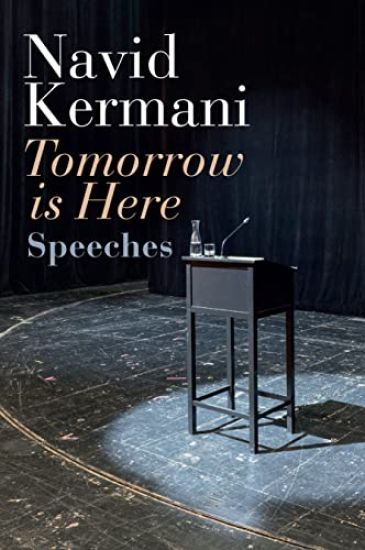
Navid Kermani is not only one of Germany’s most distinguished writers and public intellectuals, he is also an outstanding public speaker who mesmerizes audiences with his well-crafted sentences and turns of phrase. Whether he is speaking about the plight of refugees or delivering a eulogy at his father’s graveside, Kermani finds words that surprise his listeners, enlighten them, provoke them, disturb them or move them to tears. As a German of Iranian descent whose parents settled in Germany, Kermani is particularly sensitive to the issues raised by migration and the perceived tensions between Islam and the West. His speeches are a powerful demonstration of how much we stand to gain by adhering to the values of openness, tolerance and mutual respect for the beliefs and practices of those from other cultures who live among us.
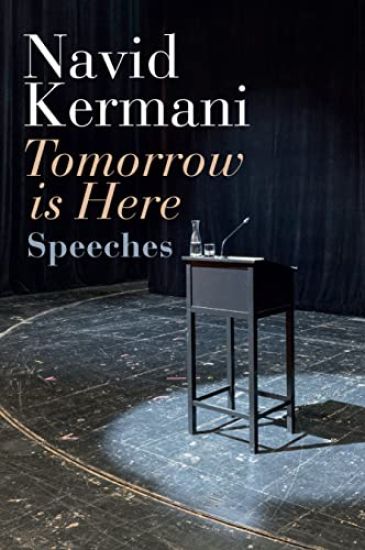
Navid Kermani is not only one of Germany’s most distinguished writers and public intellectuals, he is also an outstanding public speaker who mesmerizes audiences with his well-crafted sentences and turns of phrase. Whether he is speaking about the plight of refugees or delivering a eulogy at his father’s graveside, Kermani finds words that surprise his listeners, enlighten them, provoke them, disturb them or move them to tears. As a German of Iranian descent whose parents settled in Germany, Kermani is particularly sensitive to the issues raised by migration and the perceived tensions between Islam and the West. His speeches are a powerful demonstration of how much we stand to gain by adhering to the values of openness, tolerance and mutual respect for the beliefs and practices of those from other cultures who live among us.
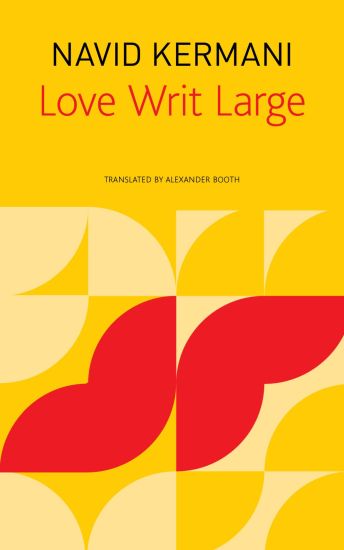
Now in paperback, a story of teenage love in Cold War-era Germany. For a fifteen-year-old, falling in love can eclipse everything else in the world, and make a few short weeks feel like a lifetime of experience. In Love Writ Large, Navid Kermani captures those intense feelings, from the emotional explosion of a first kiss to the staggering loss of a first breakup. As his teenage protagonist is wrapped up in these all-consuming feelings, however, Germany is in the crosshairs of the Cold War—and even the personal dramas of a small-town grammar school are shadowed by the threat of the nuclear arms race. Kermani’s novel manages to capture these social tensions without sacrificing any of the all-consuming passion of first love and, in a unique touch, sets the boy’s struggles within the larger frame of the stories and lives of numerous Arabic and Persian mystics. His becomes a timeless tale that reflects on the multiple ways love, loss, and risk weigh on our everyday lives.
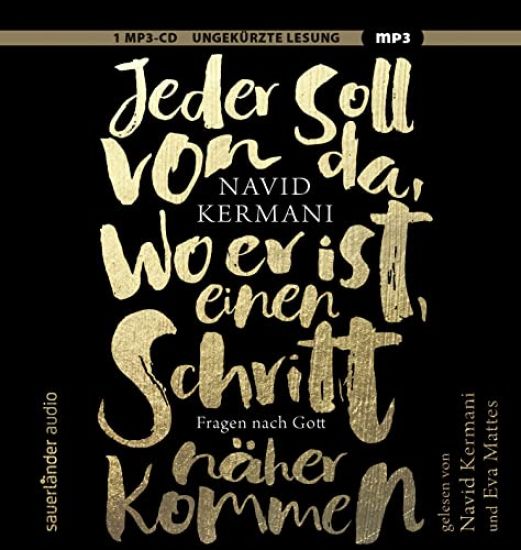
Jeder soll von da, wo er ist, einen Schritt näher kommen
Navid Kermani
Argon Sauerländer Audio
2022
muu
Jeder soll von da, wo er ist, einen Schritt näher kommen
Navid Kermani
Carl Hanser Verlag
2022
sidottu
Halvin toimitettuna 27,40 €
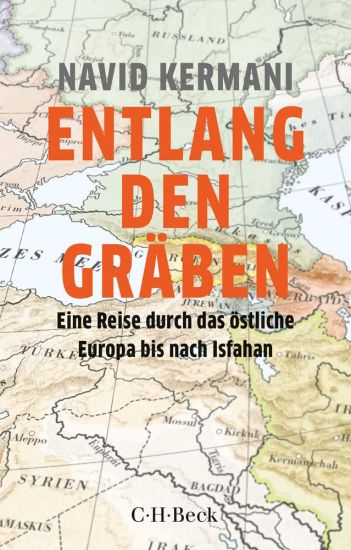
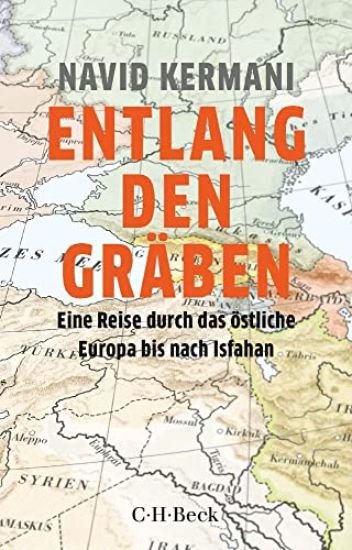
Between Germany and Russia is a region strewn with monuments to the horrors of war, genocide and disaster – the bloodlands where the murderous regimes of Hitler and Stalin unleashed the violence that scarred the twentieth century and shaped so much of the world we know today. In September 2016 the German-Iranian writer Navid Kermani set out to discover this land and to travel along the trenches that are now re-emerging in Europe, from his home in Cologne through eastern Germany to the Baltics, and from there south to the Caucasus and to Isfahan in Iran, the home of his parents. This beautifully written travel diary, enlivened by conversations with the people Kermani meets along the way, brings to life the tragic history of these troubled lands and shows how this history leaves its traces in the present. It will be of great interest to anyone concerned with current affairs and with the events that have shaped, and continue to shape, the world in which we live today.
Between Germany and Russia is a region strewn with monuments to the horrors of war, genocide and disaster – the bloodlands where the murderous regimes of Hitler and Stalin unleashed the violence that scarred the twentieth century and shaped so much of the world we know today. In September 2016 the German-Iranian writer Navid Kermani set out to discover this land and to travel along the trenches that are now re-emerging in Europe, from his home in Cologne through eastern Germany to the Baltics, and from there south to the Caucasus and to Isfahan in Iran, the home of his parents. This beautifully written travel diary, enlivened by conversations with the people Kermani meets along the way, brings to life the tragic history of these troubled lands and shows how this history leaves its traces in the present. It will be of great interest to anyone concerned with current affairs and with the events that have shaped, and continue to shape, the world in which we live today.
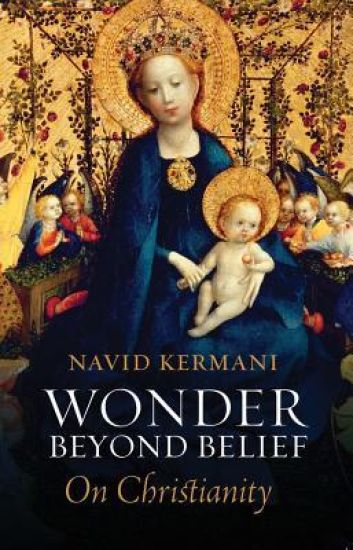
What happens when one of Germany’s most important writers, himself a Muslim, immerses himself in the world of Christian art? In this book, Navid Kermani is awestruck by a religion full of sacrifice and lamentation, love and wonder, the irrational and the unfathomable, the deeply human and the divine – a Christianity that today’s Christians rarely speak of so earnestly, boldly and enthusiastically. With the open-minded curiosity of a non-believer – or rather a believer in another faith – Kermani engages with Christian art in its great richness and diversity. The result is an enchanting reflection which reinvests in Christianity both its spectacular beauty and its terror. Kermani struggles with the cross, falls in love at the sight of Mary, experiences the Orthodox Mass and appreciates the greatness of St Francis. He teaches us to see the questions of our present-day lives in the pictures of old masters such as Botticelli, Caravaggio and Rembrandt – not with lectures on art history or theology, but with an intelligent eye for the essential details and the underlying relations to seemingly remote worlds, to literature and to mystical Islam. Kermani’s poetic school of seeing draws us in as we are carried along by his unique perspective on Christianity, rekindling our interest in great art at the same time. We are captivated by his unique and brilliant Islamic reading of the West.
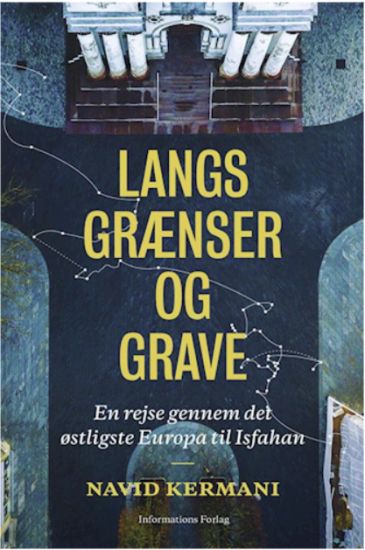
Det store Europa, der øst for Tyskland strækker sig fra Rusland til Orienten, er et historisk krigs- og katastroferamt Europa. Her er tyske Navid Kermani taget på en rejse langs de historiske skyttegrave og mentale ar i søgen efter en forståelse af Europas nye skillelinjer. Fra hjembyen Köln går Kermanis tur til Auschwitz, videre over Litauen, og til strålingsramte Tjernobyl. Han besøger det smukke, knækkede Tjetjenien, et Ukraine klemt mellem Europa og Rusland og afslutter rejsen i forældrenes fødeby Isfahan i et affortryllet og radikaliseret Iran. Gennem møder med unge og gamle, præster, politikere og forfattere, undersøger Navid Kermani de grænser og grave mellem etniciteter, religioner og ideologier, som i århundreder har defineret det østligste Europa og brutalt bestemt så mange menneskeskæbner. Langs grænser og grave er en intellektuel og personlig rejseodyssé båret af en håbefuld fortælling om et bedre Europa. Anmeldelser Fascinerende og medrivende ???? – Politiken "Langs grænser og grave er et tankevækkende bidrag til diskussionen om, hvad Europa er." – Weekendavisen ”Hans bog er en imponerende tour de force.” ???? – Kristeligt Dagblad ”En bog så svulmende og bevægende, at man bør bruge 54 dage – en for hvert kapitel – så man kan dykke ind i en ny verden hver dag” – NDR ”Beretningerne er i særdeleshed et forsvar for Europa – og et nervøst skrift mod dets blodige historie” – Dagbladet Information ”Kritisk rejselitteratur når det er allerbedst” – Wiener ZeitungNavid Kermani (f. 1967) er en toneangivende tysk forfatter, journalist, islamforsker og intellektuel. Han har bl.a. skrevet Wer ist Wir? Deutschland und seine Muslime (2009) og Ungläubiges Staunen. Über das Christentum (2015). Han har vundet adskillige priser for sine værker: bl.a. Kleist Prisen, Joseph Breitbach Prisen, Hannah Arendt Prisen og De Tyske Boghandleres Fredspris i 2015.
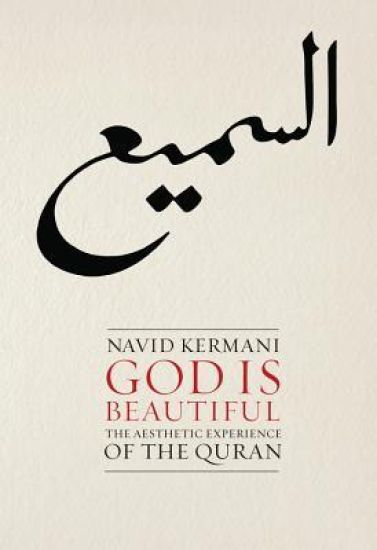
The melodious recitation of the Quran is a fundamental aesthetic experience for Muslims, and the start of a compelling journey of ideas. In this important new book, the prominent German writer and Islamic scholar Navid Kermani considers the manner in which the Quran has been perceived, apprehended and experienced by its recipients from the time of the Prophet to the present day. Drawing on a wide range of Muslim sources, from historians, theologians and philosophers to mystics and literary scholars, Kermani provides a close reading of the nature of this powerful text. He proceeds to analyze ancient and modern testimonies about the impact of Quranic language from a variety of angles. Although people have always reflected on the reception of texts, images and sounds that they find beautiful or moving, Kermani explains that Islam provides a particularly striking example of the close correlation, grounded in a common origin, between art and religion, revelation and poetry, and religious and aesthetic experience. This major new book will enhance the dialogue between Islam and the West and will appeal to students and scholars of Islam and comparative religion, as well as to a wider readership interested in Islam and the Quran.