
Kirjailija
Neal G. Jesse
Kirjat ja teokset yhdessä paikassa: 7 kirjaa, julkaisuja vuosilta 2010–2025, suosituimpiin kuuluu Small States in the International System. Vertaile teosten hintoja ja tarkista saatavuus suomalaisista kirjakaupoista.
Nimi esiintyy myös muodoissa: Neal G Jesse
7 kirjaa
Kirjojen julkaisuvuodet: 2010–2025.

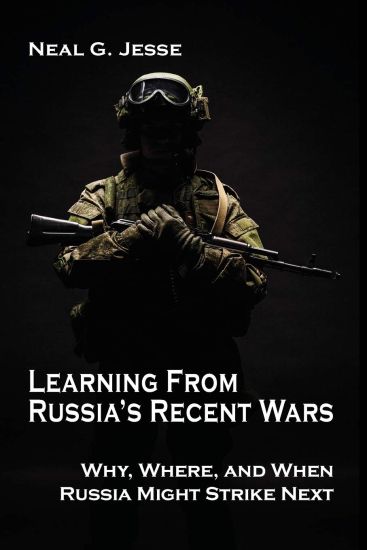
*This book is in the Rapid Communications in Conflict and Security (RCCS) Series (General Editor: Geoffrey R. H. Burn). With the consolidation of the Russian state under the rule of Vladimir Putin, Russia has begun to assert itself on the international stage to a degree that has not been seen since the end of the Soviet Union. In particular, Russia has engaged in a number of aggressive actions against its neighbors (e.g., Georgia, Ukraine) while also re-asserting its interests in Eastern Europe, the Middle East, Central Asia, and more generally in global forums. Chief among this new assertiveness is the development of non-conventional assets of propaganda, information technology, communications, space-based assets, and cyber technology. While many have discussed the rise of asymmetrical warfare, Russian foreign policy, and Russia's post-Soviet wars, what makes this book unique is how it puts these discussions together into a cogent analysis of contemporary Russian foreign policy alongside current international relations theories. This study examines Russia's recent wars in the Caucasus and Eastern Europe and outlines the focus of Russian assertiveness in key regions central to their security interests. Further, it elucidates the threat that Russian conventional and unconventional warfare poses to populations in Eastern Europe, Central Asia, and elsewhere. In addition, the book highlights the propensity of Russian military thinkers to see a blurring of the line between peace and war, and how Russian capabilities are being used to take advantage of this blurred line. In the book's conclusion, prescriptions are made as to how the Western powers, and especially the United States, can attempt to blunt Russian aggression, particularly against NATO nations. Among these prescriptions is that the West must rebut the current Russian information and propaganda campaigns in Europe and elsewhere. Further, the West must recognize the increased Russian flexibility to respond to unexpected and spontaneous events in nations around the globe with the development of its information, cyber, and propaganda assets. The conclusion asserts that defense of key Western allies such as the Baltic Republics requires not only a conventional presence (such as NATO forces) but also the development and deployment of asymmetrical assets to counter the Russian capabilities. Learning from Russia's Recent Wars is an important book for Russian studies, international relations, and foreign policy collections.
*This book is in the Rapid Communications in Conflict and Security (RCCS) Series (General Editor: Geoffrey R. H. Burn). With the consolidation of the Russian state under the rule of Vladimir Putin, Russia has begun to assert itself on the international stage to a degree that has not been seen since the end of the Soviet Union. In particular, Russia has engaged in a number of aggressive actions against its neighbors (e.g., Georgia, Ukraine) while also re-asserting its interests in Eastern Europe, the Middle East, Central Asia, and more generally in global forums. Chief among this new assertiveness is the development of non-conventional assets of propaganda, information technology, communications, space-based assets, and cyber technology. While many have discussed the rise of asymmetrical warfare, Russian foreign policy, and Russia's post-Soviet wars, what makes this book unique is how it puts these discussions together into a cogent analysis of contemporary Russian foreign policy alongside current international relations theories. This study examines Russia's recent wars in the Caucasus and Eastern Europe and outlines the focus of Russian assertiveness in key regions central to their security interests. Further, it elucidates the threat that Russian conventional and unconventional warfare poses to populations in Eastern Europe, Central Asia, and elsewhere. In addition, the book highlights the propensity of Russian military thinkers to see a blurring of the line between peace and war, and how Russian capabilities are being used to take advantage of this blurred line. In the book's conclusion, prescriptions are made as to how the Western powers, and especially the United States, can attempt to blunt Russian aggression, particularly against NATO nations. Among these prescriptions is that the West must rebut the current Russian information and propaganda campaigns in Europe and elsewhere. Further, the West must recognize the increased Russian flexibility to respond to unexpected and spontaneous events in nations around the globe with the development of its information, cyber, and propaganda assets. The conclusion asserts that defense of key Western allies such as the Baltic Republics requires not only a conventional presence (such as NATO forces) but also the development and deployment of asymmetrical assets to counter the Russian capabilities. Learning from Russia's Recent Wars is an important book for Russian studies, international relations, and foreign policy collections.

Small States in the International System addresses the little understood foreign policy choices of small states. It outlines a theoretical perspective of small states that starts from the assumption that small states are not just large states writ small. In essence, small states behave differently from larger and more powerful states. As such, this book compares three theories of foreign policy choice: realism (and its emphasis on structural factors), domestic factors, and social constructivism (emphasizing norms and identity) across seven focused case studies from around the world in the 20th Century. Through an examination of the foreign policy choices of Switzerland, Ireland, Finland, Norway, the Netherlands, Belgium, Ethiopia, Somalia, Vietnam, Bolivia and Paraguay, this book concludes that realist theories built on great power politics cannot adequately explain small state behavior in most instances. When small states are threatened by larger, belligerent states, the small state behaves along the predictions of social constructivist theory; when small states threaten each other, they behave along realist predictions.

Small States in the International System addresses the little understood foreign policy choices of small states. It outlines a theoretical perspective of small states that starts from the assumption that small states are not just large states writ small. In essence, small states behave differently from larger and more powerful states. As such, this book compares three theories of foreign policy choice: realism (and its emphasis on structural factors), domestic factors, and social constructivism (emphasizing norms and identity) across seven focused case studies from around the world in the 20th Century. Through an examination of the foreign policy choices of Switzerland, Ireland, Finland, Norway, the Netherlands, Belgium, Ethiopia, Somalia, Vietnam, Bolivia and Paraguay, this book concludes that realist theories built on great power politics cannot adequately explain small state behavior in most instances. When small states are threatened by larger, belligerent states, the small state behaves along the predictions of social constructivist theory; when small states threaten each other, they behave along realist predictions.
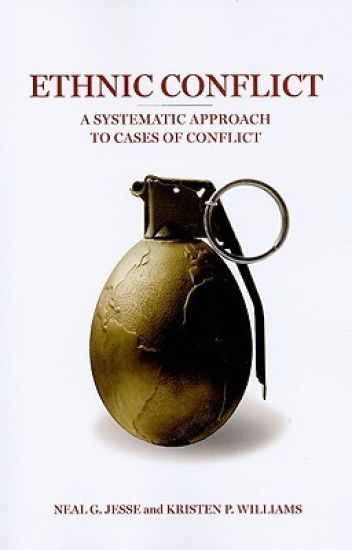
As ethnic groups clash, the international community faces the challenge of understanding the multiple causes of violence and formulating solutions that will bring about peace. Allowing for greater insight, Jesse and Williams bridge two sub-fields of political science in Ethnic Conflict—international relations and comparative politics. They systematically apply a "levels of analysis" framework, looking at the individual, domestic, and international contexts to better explore and understand its complexity. Five case study chapters apply the book’s framework to disputes around the world and include coverage of Bosnia, the Israeli-Palestinian conflict, Northern Ireland, Sri Lanka, and Sudan. Never losing sight of their analytical framework, the authors provide richly detailed case studies that help students understand both the unique and shared causes of each conflict. Students will appreciate the book’s logical presentation and excellent pedagogical features including detailed maps that show political, demographic, and cultural data.