Kirjojen hintavertailu – 12 859 829 kirjaa ja 27 kauppaa
Kirjailija
Neha Gupta
Kirjat ja teokset yhdessä paikassa: 60 kirjaa, julkaisuja vuosilta 2012–2025, suosituimpiin kuuluu Ispol'zowanie biomassy w dizel'noj generatornoj ustanowke dlq älektrifikacii sel'skih rajonow. Vertaile teosten hintoja ja tarkista saatavuus suomalaisista kirjakaupoista.
The book Anatomy of IoT Botnets and Detection Methods delves into the evolving landscape of cybersecurity threats associated with the Internet of Things (IoT), specifically focusing on the anatomy, behavior, and detection of IoT-based botnets. As IoT devices proliferate in both consumer and industrial settings, their inherent vulnerabilities—such as weak authentication, limited processing power, and lack of regular updates—make them prime targets for attackers. The book begins by exploring how IoT botnets are formed, highlighting key attack vectors such as malware propagation, command, and control (C&C) mechanisms, and commonly exploited protocols like Telnet and UPnP. Notable case studies, including the Mirai and Mozi botnets, illustrate real-world impacts, emphasizing the scale and damage these threats can inflict. The core of the book then transitions into detection methodologies, covering both traditional and AI-driven approaches. Techniques such as signature-based detection, anomaly detection using machine learning, network traffic analysis, and honeypot deployment are thoroughly examined. The authors also address the challenges in detecting IoT botnets, including encrypted traffic, device heterogeneity, and low visibility in resource-constrained devices. Furthermore, the book emphasizes the importance of proactive defense strategies, such as firmware hardening, secure boot mechanisms, and real-time behavioral analytics. It underscores the role of collaborative intelligence sharing among stakeholders to enhance detection capabilities. By integrating theoretical concepts with practical insights and current research trends, the book provides a comprehensive guide for researchers, cybersecurity professionals, and IoT developers aiming to understand and counteract botnet threats. Ultimately, Anatomy of IoT Botnet and Detection Methods serves as a crucial resource for strengthening the cybersecurity posture of IoT ecosystems through informed detection and mitigation practices. Bottom of FormThe content of the book categorized in the following sub-sections: Introduction to IoT and Botnets: An overview of IoT technology, its adoption, and the rising threat of botnets. IoT Device Vulnerabilities: Analysis of common security weaknesses in IoT devices that cybercriminals exploit. Botnet Architecture: Detailed examination of how IoT botnets are structured, including command-and-control mechanisms. Infection and Propagation: Methods used by attackers to spread malware across IoT networks. Detection Techniques: Overview of current detection methods, including anomaly detection, signature-based approaches, and machine learning. Mitigation Strategies: Practical advice on how to secure IoT devices, including best practices for manufacturers and users. Case Studies: Real-world examples of IoT botnet attacks and their impact. The book concludes with a discussion on the future of IoT security, emphasizing the need for continuous innovation in detection and prevention methods.

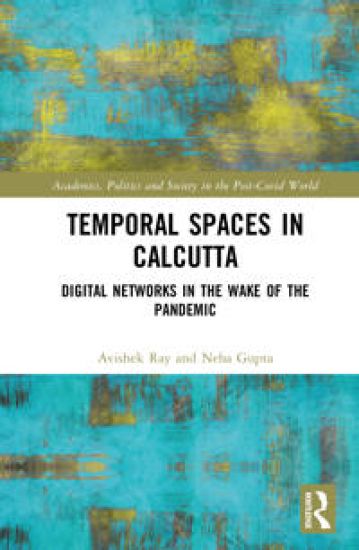
This book explores how the COVID-19 pandemic has reshaped urban spatialities through the rise of digitally mediated “temporal spaces” in Calcutta. Focusing on Uber-enabled mobility, cycling pathways, and cafés, it examines how digital infrastructures and human practices intersect to create fluid, dynamic urban experiences. Challenging fixed notions of place-making, the book interrogates what it means to “return to normal” and how digitality reconfigures urban life, sociality, and imagination. By foregrounding the entanglement of digital and material realms, it offers a critical framework for understanding contemporary urban transformations in the wake of crisis and technological mediation. Part of the Academics, Politics and Society in the Post-Covid World series, this book will be useful for scholars and researchers of sociology, social anthropology, media and cultural studies, digital humanities, human geography, political sociology and post-colonial studies, and those interested in the coronavirus pandemic.
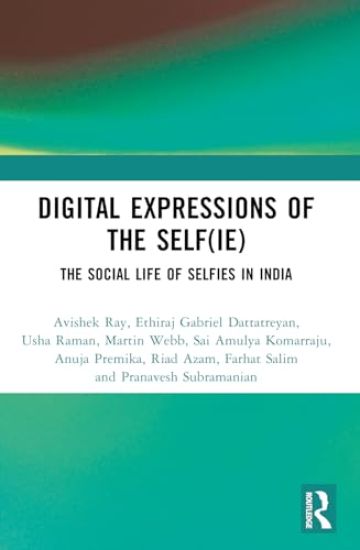
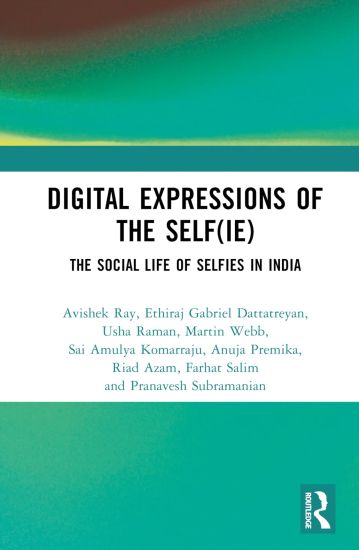
The book examines the social and cultural role of selfies in India. It looks at how the selfie, unlike the photograph, which was a gesture towards an external reality, remains intimately self-referential, yet reconfigures social ordering, identity formation, agency, and spaces in curious ways. This volume approaches questions about the construction and performance of the self through the digital selfie and uses this situated, contextualized, and culturally specific phenomenon as a site to explore the themes of self-making, place-making, gender, subjectivity, and power. Highlighting the specific contexts of production, the authors examine the array of self-expressive capabilities realized in a multitude of uses of the selfie that simultaneously reconfigure the self, the space, and the world. An important study of visual social media culture, the volume will be useful for interpreting everyday media experiences and will be of interest to students and researchers of image studies, visual studies, photography studies, visual culture, media studies, culture studies, cultural anthropology, digital humanities, popular culture, sociology of technology, and South Asian studies.
L'utilisation de l' nergie de la biomasse a suscit un int r t particulier ces derni res ann es en raison de l' puisement progressif des combustibles fossiles conventionnels, qui appelle une utilisation accrue des sources d' nergie renouvelables. Le remplacement des combustibles fossiles conventionnels par la biomasse pour la production d' nergie entra ne la fois une r duction nette des missions de gaz effet de serre et le remplacement de sources d' nergie non renouvelables. Aujourd'hui, l'utilisation du biogaz issu de la biomasse est un combustible plus prometteur pour la production d' lectricit en milieu rural et constitue une technique permettant de contr ler les niveaux d' missions. Le biogaz, un carburant renouvelable, est produit par la fermentation ana robie de mati res organiques et se compose principalement de 55 60 % de m thane qui peut tre br l pour produire de la chaleur et de l' lectricit . Les propri t s du carburant et la compatibilit du biodiesel lui permettent de remplacer le diesel dans les g n rateurs diesel. Ce travail de recherche pr sente le potentiel de la biomasse pour la production d' nergie lectrique et tudie les changements dans les performances et les caract ristiques d' mission des g n rateurs diesel monocylindriques quatre temps aliment s avec de l'huile d'ester m thylique de son de riz (RBME) - du biodiesel de butanol et des m langes de carburant diesel avec des d bits variables de biogaz.
L'utilizzo dell'energia da biomassa ha acquisito particolare interesse negli ultimi anni a causa del progressivo esaurimento dei combustibili fossili convenzionali che richiede un maggiore utilizzo di fonti energetiche rinnovabili. La sostituzione dei combustibili fossili convenzionali con la biomassa per la produzione di energia comporta sia una riduzione netta delle emissioni di gas serra sia la sostituzione di fonti energetiche non rinnovabili. Oggi, l'uso del biogas derivato dalla biomassa un combustibile pi promettente per la produzione di energia elettrica nelle zone rurali e rappresenta una tecnica per controllare i livelli di emissioni. Il biogas, un combustibile rinnovabile, prodotto dalla fermentazione anaerobica di materiale organico ed composto principalmente per il 55-60% da metano che pu essere bruciato per generare calore ed elettricit . Le propriet del carburante e la compatibilit del biodiesel lo rendono in grado di sostituire il gasolio nei generatori diesel. Questo lavoro di ricerca presenta il potenziale della biomassa per la produzione di energia elettrica e studia i cambiamenti nelle prestazioni e nelle caratteristiche di emissione di generatori diesel monocilindrici a quattro tempi alimentati con biodiesel di olio di crusca di riso metilestere (RBME)-butanolo e miscele di carburante diesel con portate variabili di biogas.
A utiliza o da energia da biomassa tem ganho particular interesse nos ltimos anos devido ao esgotamento progressivo dos combust veis f sseis convencionais que exige uma maior utiliza o de fontes de energia renov veis. A substitui o de combust veis f sseis convencionais por biomassa para a produ o de energia resulta numa redu o l quida das emiss es de gases com efeito de estufa e na substitui o de fontes de energia n o renov veis. Atualmente, a utiliza o de biog s derivado da biomassa o combust vel mais promissor para a produ o de energia el ctrica nas zonas rurais e constitui uma t cnica de controlo dos n veis de emiss es. O biog s, um combust vel renov vel, produzido a partir da fermenta o anaer bica de material org nico e consiste principalmente em 55-60 % de metano, que pode ser queimado para gerar calor e eletricidade. As propriedades do combust vel e a compatibilidade do biodiesel permitem-lhe substituir o gas leo no gerador a gas leo. Este trabalho de investiga o apresenta o potencial da biomassa para a produ o de energia el ctrica e investiga as altera es no desempenho e nas carater sticas das emiss es de geradores a gas leo de um cilindro a quatro tempos alimentados com leo de ster met lico de farelo de arroz (RBME) - biodiesel de butanol e misturas de gas leo com caudais vari veis de biog s.
Die Nutzung von Biomasse zur Energiegewinnung hat in den letzten Jahren aufgrund der fortschreitenden Ersch pfung konventioneller fossiler Brennstoffe, die eine verst rkte Nutzung erneuerbarer Energiequellen erforderlich macht, an Bedeutung gewonnen. Die Substitution konventioneller fossiler Brennstoffe durch Biomasse f r die Energieerzeugung f hrt sowohl zu einer Netto-Reduzierung der Treibhausgasemissionen als auch zur Ersetzung nicht erneuerbarer Energiequellen. Heutzutage ist die Nutzung von aus Biomasse gewonnenem Biogas ein vielversprechenderer Brennstoff f r die Stromerzeugung im l ndlichen Raum und befasst sich mit Techniken zur Kontrolle der Emissionswerte. Biogas, ein erneuerbarer Brennstoff, wird durch anaerobe Fermentation von organischem Material hergestellt und besteht haupts chlich aus 55-60 % Methan, das zur Erzeugung von W rme und Strom verbrannt werden kann. Aufgrund seiner Eigenschaften und Kompatibilit t mit Dieselkraftstoff kann Biodiesel Diesel in Dieselgeneratoren ersetzen.
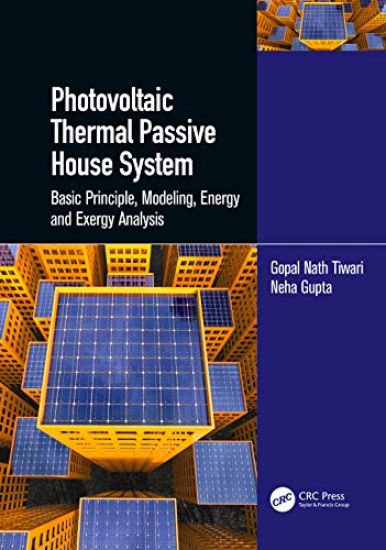
Sustainable Advanced Solar Passive House provides a platform to disseminate knowledge regarding the basics of solar energy, heat transfer, and solar houses, including designing concepts. Apart from a brief introduction to solar physics and thermodynamics, the book primarily deals with the technical description of solar houses and associated concepts. Different types of photovoltaic modules and their integration with the buildings are discussed with case studies, including energy balance equations and fundamental energy matrices. It discusses concepts like energy matrices, solar passive heating/cooling, architecture design, low-cost building, energy/exergy analysis, building integrated photovoltaic, and energy conservation.
The book examines the social and cultural role of selfies in India. It looks at how the selfie, unlike the photograph, which was a gesture towards an external reality, remains intimately self-referential, yet reconfigures social ordering, identity formation, agency, and spaces in curious ways. This volume approaches questions about the construction and performance of the self through the digital selfie and uses this situated, contextualized, and culturally specific phenomenon as a site to explore the themes of self-making, place-making, gender, subjectivity, and power. Highlighting the specific contexts of production, the authors examine the array of self-expressive capabilities realized in a multitude of uses of the selfie that simultaneously reconfigure the self, the space, and the world. An important study of visual social media culture, the volume will be useful for interpreting everyday media experiences and will be of interest to students and researchers of image studies, visual studies, photography studies, visual culture, media studies, culture studies, cultural anthropology, digital humanities, popular culture, sociology of technology, and South Asian studies.
This book presents fundamental concepts of optimization problems and its real-world applications in various fields. The core concepts of optimization, formulations and solution procedures of various real-world problems are provided in an easy-to-read manner. The unique feature of this book is that it presents unified knowledge of the modelling of real-world decision-making problems and provides the solution procedure using the appropriate optimization techniques. The book will help students, researchers, and faculty members to understand the need for optimization techniques for obtaining optimal solution for the decision-making problems. It provides a sound knowledge of modelling of real-world problems using optimization techniques. It is a valuable compendium of several optimization techniques for solving real-world application problems using optimization software LINGO. The book is useful for academicians, practitioners, students and researchers in the field of OR. It is written in simple language with a detailed explanation of the core concepts of optimization techniques. Readers of this book will understand the formulation of real-world problems and their solution procedures obtained using the appropriate optimization techniques.
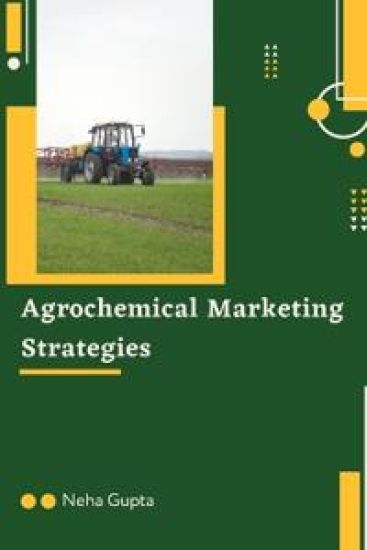
Neha Gupta's book, "Agrochemical Marketing Strategies," delves into the realm of agrochemical marketing and provides valuable insights into the strategies employed by companies in this sector. With the ever-growing demand for agrochemical products and services, understanding effective marketing approaches becomes crucial for companies to thrive in the competitive market. This comprehensive study explores various facets of marketing strategies adopted by agrochemical companies, ranging from product development and positioning to distribution channels and promotional activities. It sheds light on the unique challenges and opportunities faced by these companies in targeting agricultural markets and meeting the needs of farmers and other stakeholders. Drawing upon extensive research and analysis, Neha Gupta examines the key elements of successful agrochemical marketing, including market segmentation, branding, pricing strategies, and customer relationship management. The book investigates the impact of digital marketing, social media, and other emerging trends on the agrochemical industry, providing practical insights for companies looking to adapt to the evolving landscape. Furthermore, the author delves into the regulatory and ethical considerations surrounding agrochemical marketing, highlighting the importance of responsible and sustainable practices in this sector. The book also explores the role of market research, competitor analysis, and market intelligence in shaping effective marketing strategies for agrochemical companies. This book serves as a valuable resource for professionals, researchers, and students interested in agrochemical marketing and agriculture-related industries. It offers a comprehensive overview of the marketing strategies employed by agrochemical companies and provides practical recommendations for enhancing market competitiveness and achieving sustainable growth.