
Kirjailija
Nehemiah Adams
Kirjat ja teokset yhdessä paikassa: 111 kirjaa, julkaisuja vuosilta 1899–2025, suosituimpiin kuuluu Boston Common. Vertaile teosten hintoja ja tarkista saatavuus suomalaisista kirjakaupoista.
111 kirjaa
Kirjojen julkaisuvuodet: 1899–2025.



A South-Side View of Slavery; Or, Three Months at the South, in 1854
Nehemiah Adams
Trieste Publishing
2018
nidottu
![A South-Side View of Slavery; Or, Three Months at the South, in 1854. [boston-1854]](/covers/9780649065028.jpg)
A South-Side View of Slavery; Or, Three Months at the South, in 1854. [boston-1854]
Nehemiah Adams
Trieste Publishing
2018
nidottu

This work has been selected by scholars as being culturally important, and is part of the knowledge base of civilization as we know it. This work was reproduced from the original artifact, and remains as true to the original work as possible. Therefore, you will see the original copyright references, library stamps (as most of these works have been housed in our most important libraries around the world), and other notations in the work. This work is in the public domain in the United States of America, and possibly other nations. Within the United States, you may freely copy and distribute this work, as no entity (individual or corporate) has a copyright on the body of the work. As a reproduction of a historical artifact, this work may contain missing or blurred pages, poor pictures, errant marks, etc. Scholars believe, and we concur, that this work is important enough to be preserved, reproduced, and made generally available to the public. We appreciate your support of the preservation process, and thank you for being an important part of keeping this knowledge alive and relevant.
Discussion of the Scripturalness of Future Endless Punishment
Nehemiah Adams; Sylvanus Cobb
Hansebooks
2018
nidottu

Broadcast is an unchanged, high-quality reprint of the original edition of 1863. Hansebooks is editor of the literature on different topic areas such as research and science, travel and expeditions, cooking and nutrition, medicine, and other genres. As a publisher we focus on the preservation of historical literature. Many works of historical writers and scientists are available today as antiques only. Hansebooks newly publishes these books and contributes to the preservation of literature which has become rare and historical knowledge for the future.
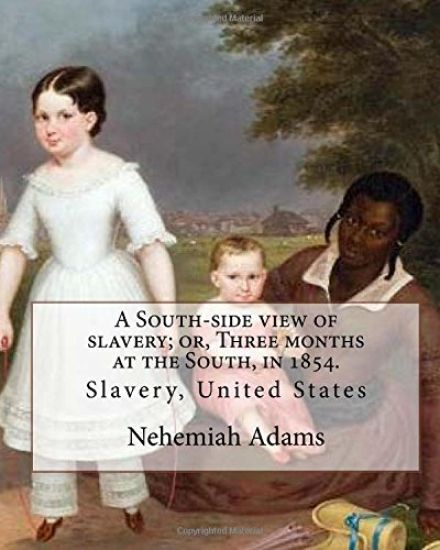
A South-side view of slavery; or, Three months at the South, in 1854. By: Nehemiah Adams: Slavery, United States
Nehemiah Adams
Createspace Independent Publishing Platform
2017
nidottu
Reverend Nehemiah Adams (February 19, 1806 - October 6, 1878) was an American clergyman and writer. Biography: He was born in Salem, Massachusetts, in 1806 to Nehemiah Adams and Mehitabel Torrey Adams. He graduated from Harvard University in 1826, and from Andover Theological Seminary in 1829. That same year, he was ordained as co-pastor, with Abiel Holmes, of the First Congregational Church in Cambridge, Massachusetts. In 1832, he married Martha Hooper. In 1834, he became pastor of Union Congregational Church in Boston, Massachusetts. He would remain in that position until his death in 1878. In 1850, he married again, to Sarah Brackett. In 1854, he took a trip to the American South, and wrote a book entitled A South-Side View of Slavery (Boston, 1854). In the book, he lauded slavery as beneficial to the Negroes' religious character. This book was one of several polemic works he wrote. It caused a great sensation, and he received much hostile criticism. The book was attacked by abolitionists for its perceived moderation; the abolitionist newspaper The Liberator called it "as vile a work as was ever written, in apology and defence of 'the sum of all villanies'". In 1861, Adams wrote a successor volume, The Sable Cloud, a Southern tale with Northern Comments, to answer his attackers, and it was met with a similar response. He also wrote The Cross in the Cell, Scriptural Argument for Endless Punishment, Broadcast, At Eventide, and a Life of John Eliot. He was a member of the American Tract Society and the American Board for Foreign Missions. In 1869, in consequence of his failing health, his people procured an associate pastor and gave Adams a long leave of absence. He made a voyage round the world and described it in Under the Mizzenmast (1871). Adams died in 1878, aged 72. He left nine children.

The life of John Eliot: with an account of the early missionary efforts among the Indians of New England. By: Nehemiah Adams: Eliot, John, 160
Nehemiah Adams
Createspace Independent Publishing Platform
2017
nidottu
John Eliot (c. 1604 - May 21, 1690) was a Puritan missionary to the American Indians whom some called "the apostle to the Indians" and the founder of Roxbury Latin School in the Massachusetts Bay Colony in 1645. John Eliot was born in Widford, Hertfordshire, England and lived at Nazeing as a boy. He attended Jesus College, Cambridge. After college, he became assistant to Thomas Hooker at a private school at Little Baddow, Essex. After Hooker was forced to flee to Holland, Eliot emigrated to Boston, Massachusetts, arranging passage as chaplain on the ship Lyon and arriving on November 3, 1631. Eliot became minister and "teaching elder" at the First Church in Roxbury. From 1637 to 1638 Eliot participated in both the civil and church trials of Anne Hutchinson during the Antinomian Controversy. Eliot disapproved of Hutchinson's views and actions, and was one of the two ministers representing Roxbury in the proceedings which led to her excommunication and exile. In 1645, Eliot founded the Roxbury Latin School. He and fellow ministers Thomas Weld (also of Roxbury), Thomas Mayhew of Martha's Vineyard, and Richard Mather of Dorchester, are credited with editing the Bay Psalm Book, the first book published in the British North American colonies (1640). From 1649 to 1674, Samuel Danforth assisted Eliot in his Roxbury ministry.......... ........... Reverend Nehemiah Adams (February 19, 1806 - October 6, 1878) was an American clergyman and writer. Biography: He was born in Salem, Massachusetts, in 1806 to Nehemiah Adams and Mehitabel Torrey Adams. He graduated from Harvard University in 1826, and from Andover Theological Seminary in 1829. That same year, he was ordained as co-pastor, with Abiel Holmes, of the First Congregational Church in Cambridge, Massachusetts. In 1832, he married Martha Hooper. In 1834, he became pastor of Union Congregational Church in Boston, Massachusetts. He would remain in that position until his death in 1878. In 1850, he married again, to Sarah Brackett. In 1854, he took a trip to the American South, and wrote a book entitled A South-Side View of Slavery (Boston, 1854). In the book, he lauded slavery as beneficial to the Negroes' religious character. This book was one of several polemic works he wrote. It caused a great sensation, and he received much hostile criticism. The book was attacked by abolitionists for its perceived moderation; the abolitionist newspaper The Liberator called it "as vile a work as was ever written, in apology and defence of 'the sum of all villanies'". In 1861, Adams wrote a successor volume, The Sable Cloud, a Southern tale with Northern Comments, to answer his attackers, and it was met with a similar response. He also wrote The Cross in the Cell, Scriptural Argument for Endless Punishment, Broadcast, At Eventide, and a Life of John Eliot. He was a member of the American Tract Society and the American Board for Foreign Missions. In 1869, in consequence of his failing health, his people procured an associate pastor and gave Adams a long leave of absence. He made a voyage round the world and described it in Under the Mizzenmast (1871). Adams died in 1878, aged 72. He left nine children. ...........
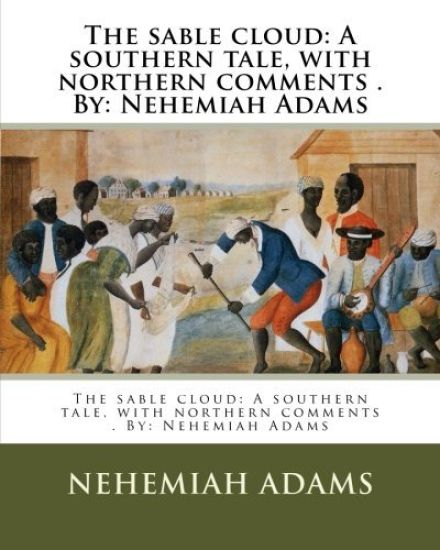
The sable cloud: A southern tale, with northern comments . By: Nehemiah Adams
Nehemiah Adams
Createspace Independent Publishing Platform
2017
nidottu