
Kirjojen hintavertailu – 12 903 724 kirjaa ja 27 kauppaa

Kirjailija

Neil Boister

Kirjat ja teokset yhdessä paikassa: 2 kirjaa, julkaisuja vuosilta 2008–2018, suosituimpiin kuuluu An Introduction to Transnational Criminal Law. Vertaile teosten hintoja ja tarkista saatavuus suomalaisista kirjakaupoista.

2 kirjaa

Kirjojen julkaisuvuodet: 2008–2018.

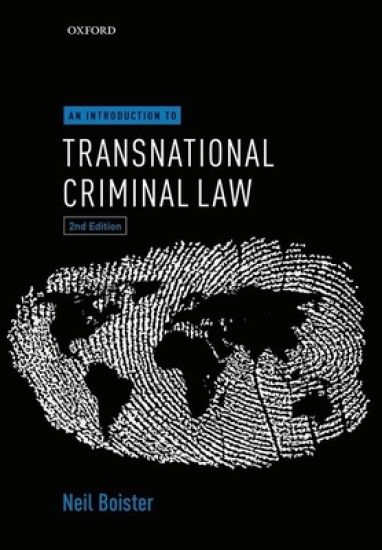
An Introduction to Transnational Criminal Law

An Introduction to Transnational Criminal Law

Neil Boister

Oxford University Press
2018
nidottu
National borders are permeable to all types of illicit action and contraband goods, whether it is trafficking humans, body parts, digital information, drugs, weapons, or money. Whilst criminals exist in a borderless world where territorial boundaries allow them to manipulate different markets in illicit goods, the authorities who pursue them can remain constrained inside their own jurisdictions. In a new edition of his ground-breaking work, Boister examines how states must cooperate to tackle some of the greatest security threats in this century so far, analyses to what extent vested interests have determined the course of global policy and law enforcement, and illustrates how responding to transnational crime itself becomes a form of international relations which reorders global political power and becomes, at least in part, an end in itself. Arguing that transnational criminal law is currently geared towards suppressing criminal activity, but is not as committed to ensuring justice, Boister suggests that it might be more strongly influenced by individual moral panics and a desire for criminal retribution than an interest in ensuring a proportional response to offences, protection of human rights, and the preservation of the rule of law.
The Tokyo International Military Tribunal - A Reappraisal

The Tokyo International Military Tribunal - A Reappraisal

Neil Boister; Robert Cryer

Oxford University Press
2008
sidottu
The Tokyo International Military Tribunal (IMT) is not frequently discussed in the literature on international criminal law, and it is often thought that it was little more (and possibly less) than a footnote to the Nuremberg proceedings. This work seeks to dispel this widely held belief, by showing the way in which the Tokyo IMT was both similar and different to its Nuremberg counterpart, the extent to which the critiques of the Tokyo IMT have purchase, and the Tribunal's contemporary relevance. The book also shows how the IMT needs to be treated, not just as one overarching entity, but also as being made up of different sets of people, who made up the prosecution, the defence and the judges. These disagreed with each other, and at times internally, over the way in which the trial should proceed, and the book shows how each had an impact on the proceedings. The book is a comprehensive legal analysis of the Tokyo IMT, covering its law, theory, practice and the lessons it may teach to those prosecuting and defending international crimes today. It also places the trial in its political and historical context. The work is based in part on extensive archival research undertaken by the authors, which has unearthed large quantities of documents that have previously been ignored by those who have studied the Tribunal.