Kirjailija
Neil Elliott
Kirjat ja teokset yhdessä paikassa: 12 kirjaa, julkaisuja vuosilta 2005–2026, suosituimpiin kuuluu Currents in the Interpretation of Paul. Vertaile teosten hintoja ja tarkista saatavuus suomalaisista kirjakaupoista.
12 kirjaa
Kirjojen julkaisuvuodet: 2005–2026.
The apostle Paul has long been championed, or criticized, as a Christian thinker, as a brilliant theological genius, or an enthusiastic convert who spun arguments to justify his new allegiances. In these essays, Neil Elliott engages some of the most provocative currents in contemporary scholarship, including Paul and the nature of violence; the presumptions of religious, cultural, or national innocence in particular interpretations of the apostle; the recent enthusiasm for Paul in some streams of Marxist thought; competing construals of economic realities in Paul's day (and our own); and questions surrounding Paul's legacy today.

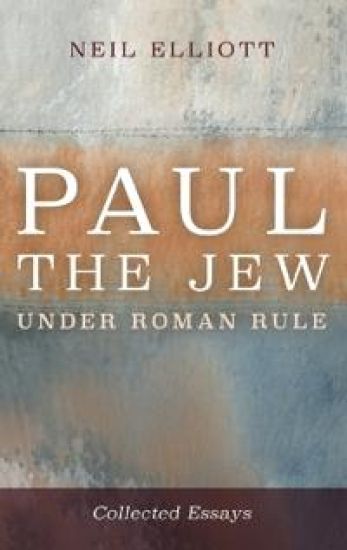
Some of the most heated contests around the apostle Paul today concern the effort to understand him wholly "within Judaism," and the effort to interpret him over against the culture and ideology of the early Roman Empire. In this collection of essays, Neil Elliott shows that these two conversations belong together and must be resolved together, by understanding Paul as a Jew living out Israel's ancient hopes under the pressures of Roman imperial power.
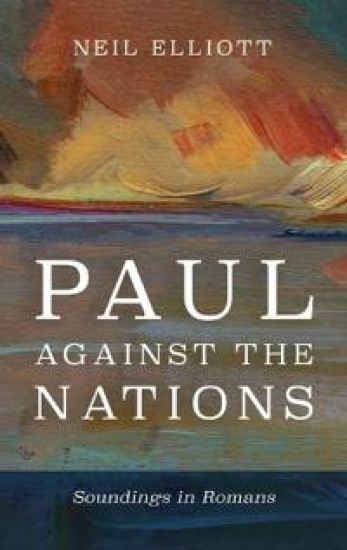
Some of the most heated contests around the apostle Paul today concern the effort to understand him wholly "within Judaism," and the effort to interpret him over against the culture and ideology of the early Roman Empire. Here, Neil Elliott argues that these two conversations belong together and must be resolved together, by understanding Paul as a Jew living out Israel's ancient hopes under the pressures of Roman imperial power.
Some of the most heated contests around the apostle Paul today concern the effort to understand him wholly "within Judaism," and the effort to interpret him over against the culture and ideology of the early Roman Empire. Here, Neil Elliott argues that these two conversations belong together and must be resolved together, by understanding Paul as a Jew living out Israel's ancient hopes under the pressures of Roman imperial power.
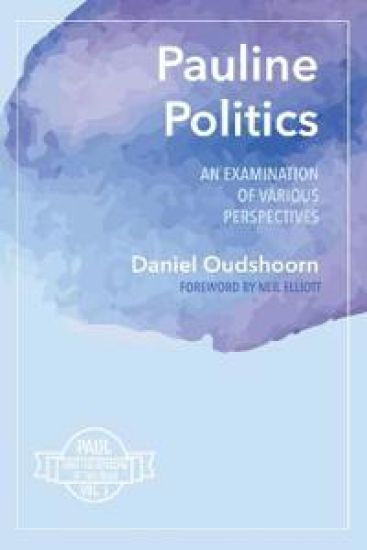
The Pauline Epistles have been claimed as a useful ally by parties across the political spectrum. Neoconservatives claim that Paul and his coworkers were law-abiding, authority-honoring, devoutly religious people oriented around their respect for hard work, private property, and family values. Liberals claim that the Pauline faction was devoted to the celebration of diversity, internally transcending social markers of status, and the embrace of peace. Radicals claim that Paul was a leader within an anti-imperial revolutionary movement sweeping across the eastern portion of the Roman Empire. However, it is rare for these (and still other ) parties to engage in dialogue with each other because each party tends to operate with presuppositions that make open engagement difficult. Pauline Politics examines the main positions taken in relation to Paul and politics and then engages in a thorough examination of the underlying arguments used to argue that this-or-that position is more or less plausible. Underlying arguments tend to relate to two things: first, positions on the socioeconomic status of Paul, his coworkers, and other early Jesus loyalists; and second, positions on Pauline eschatology. This volume will comprehensively explore these matters.
The Pauline Epistles have been claimed as a useful ally by parties across the political spectrum. Neoconservatives claim that Paul and his coworkers were law-abiding, authority-honoring, devoutly religious people oriented around their respect for hard work, private property, and family values. Liberals claim that the Pauline faction was devoted to the celebration of diversity, internally transcending social markers of status, and the embrace of peace. Radicals claim that Paul was a leader within an anti-imperial revolutionary movement sweeping across the eastern portion of the Roman Empire. However, it is rare for these (and still other ) parties to engage in dialogue with each other because each party tends to operate with presuppositions that make open engagement difficult. Pauline Politics examines the main positions taken in relation to Paul and politics and then engages in a thorough examination of the underlying arguments used to argue that this-or-that position is more or less plausible. Underlying arguments tend to relate to two things: first, positions on the socioeconomic status of Paul, his coworkers, and other early Jesus loyalists; and second, positions on Pauline eschatology. This volume will comprehensively explore these matters.
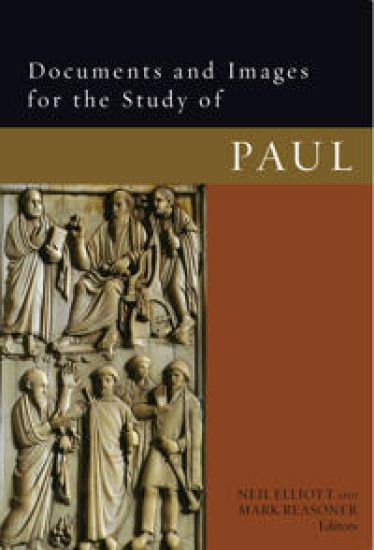
Documents and Images for the Study of Paul
Neil Elliott; Mark Reasoner
Augsburg Fortress
2010
pokkari
The world surrounding Paul and the assemblies comes vividly to life here. Documents and Images for the Study of Paul gathers representative texts illustrating Jewish practices, Greco-Roman moral exhortation, biblical interpretation, Roman ideology, apocalyptic visions, epistolary conventions, and more to illustrate the complex cultural environment in which Paul carried out his apostolic workand the manifold ways in which his legacy was reshaped in early Christianity. Paul is the focus of intense and often controversial scholarly attention today. Brief, insightful introductions orient the reader to the significance of ancient sources for different contemporary interpretations of Paul's life and thought. Photographs illustrate the visual environment of the Greco-Roman world; a map, a timeline, and an index of scripture passages make the sourcebook the perfect companion text for studying Paul and his letters.
Neil Elliott offers an interpretation of Paul's letter to the Romans in the context of Roman imperial ideology, setting it alongside Roman works and bringing to the text recent insights from classical studies, rhetorical criticism, postcolonial criticism and people's history.