Kirjojen hintavertailu – 12 859 819 kirjaa ja 27 kauppaa

Kirjailija

Neil Gershenfeld

Kirjat ja teokset yhdessä paikassa: 4 kirjaa, julkaisuja vuosilta 2000–2017, suosituimpiin kuuluu Fab. Vertaile teosten hintoja ja tarkista saatavuus suomalaisista kirjakaupoista.

4 kirjaa

Kirjojen julkaisuvuodet: 2000–2017.

Designing Reality

Designing Reality

Neil Gershenfeld; Alan Gershenfeld; Joel Cutcher-Gershenfeld

Basic Books
2017
sidottu
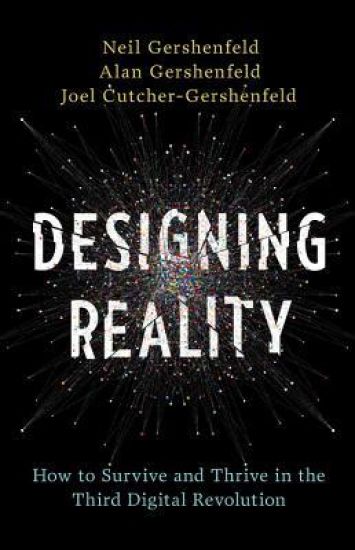
The 20th century witnessed two digital revolutions. Computing power has revolutionized every industry, from finance to agriculture to pharmaceuticals. We've got computers at work and at home, in our pockets and our bags, on our wrists, and even embedded in the architecture of our houses. At the same time a revolution in digital communication unfolded, which has forever altered our lives-work, social, and private-by enabling a world in which we're never impossible to reach and have nearly limitless power to express ourselves. But no one saw the downsides of these: powerful computers threaten to displace human labor from a range of jobs, both blue and white collar, and, after an election in which the Internet played such a pivotal role in spreading disinformation-not to mention the simple problem of never being able to escape our jobs if our email goes with us everywhere-the possible pitfalls of free communication become clearer. And now, as Neil Gershenfeld, Joel Cutcher-Gershenfeld, and Alan Gershenfeld make clear, we are in the early years of the third digital revolution: from computation and communication comes fabrication. Fabrication includes everything from 3D printing to laser cutters to machines that can assemble anything, including themselves, by precisely controlling the placement of individual atoms. We will soon be able to program matter the same way we can now program a computer. This may sound outlandish, but just as the smartphone is the logical conclusion of trends in computing that began in the 1960s, so is this fabrication technology of the future the extension of today's trends in manufacturing. Neil Gershenfeld, an MIT professor, is at the forefront of making it a reality, through his scientific work as well as his championing of Fab Labs, a sort of low-cost personal factory. In Designing Reality, he and his brothers Alan and Joel explore not just the promise but the perils of this revolution in fabrication. On one extreme, it promises self-sufficient cities, the end of work, and the ability for each of us to design and create anything we can imagine. On the other, it could lead to the concentration of wealth in very few hands. Neither guaranteeing utopia nor insisting that our worst nightmares are about to come true, the Gershenfelds are trying to anticipate the future and teach us how best to prepare for it, personally and as a society, across education, employment and more. The first two digital revolutions caught us flat-footed, and there has been a heavy price to pay. Let us prepare for the future, not simply react to it.
The Physics of Information Technology

The Physics of Information Technology

Neil Gershenfeld

Cambridge University Press
2011
pokkari

Halvin toimitettuna 82,40 €

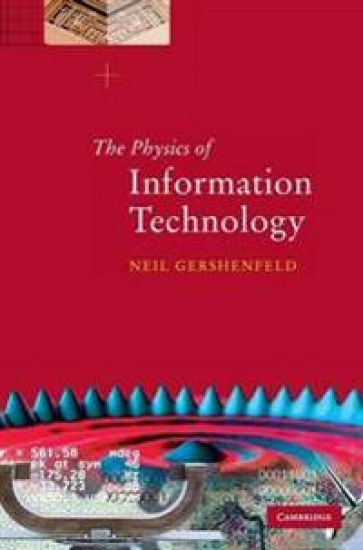
The Physics of Information Technology explores the familiar devices that we use to collect, transform, transmit, and interact with electronic information. Many such devices operate surprisingly close to very many fundamental physical limits. Understanding how such devices work, and how they can (and cannot) be improved, requires deep insight into the character of physical law as well as engineering practice. The book starts with an introduction to units, forces, and the probabilistic foundations of noise and signalling, then progresses through the electromagnetics of wired and wireless communications, and the quantum mechanics of electronic, optical, and magnetic materials, to discussions of mechanisms for computation, storage, sensing, and display. This self-contained volume will help both physical scientists and computer scientists see beyond the conventional division between hardware and software to understand the implications of physical theory for information manipulation.
Fab

Fab

Neil Gershenfeld

Basic Books
2007
pokkari
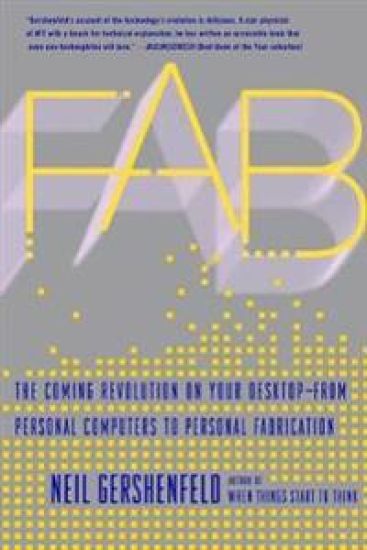
What if you could someday put the manufacturing power of an automobile plant on your desktop? According to Neil Gershenfeld, the renowned MIT scientist and inventor, the next big thing is personal fabrication-the ability to design and produce your own products, in your own home, with a machine that combines consumer electronics and industrial tools. Personal fabricators are about to revolutionize the world just as personal computers did a generation ago, and Fab shows us how.
The Physics of Information Technology

The Physics of Information Technology

Neil Gershenfeld

Cambridge University Press
2000
sidottu
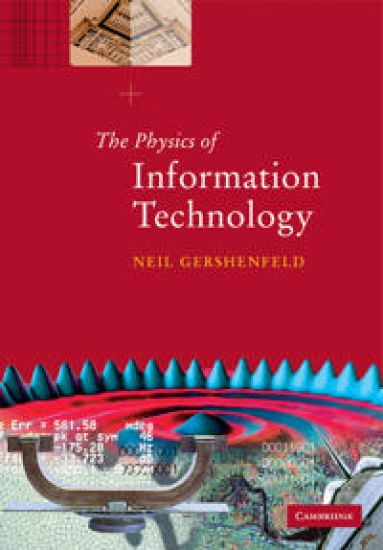
The Physics of Information Technology explores the familiar devices that we use to collect, transform, transmit, and interact with electronic information. Many such devices operate surprisingly close to very many fundamental physical limits. Understanding how such devices work, and how they can (and cannot) be improved, requires deep insight into the character of physical law as well as engineering practice. The book starts with an introduction to units, forces, and the probabilistic foundations of noise and signalling, then progresses through the electromagnetics of wired and wireless communications, and the quantum mechanics of electronic, optical, and magnetic materials, to discussions of mechanisms for computation, storage, sensing, and display. This self-contained volume will help both physical scientists and computer scientists see beyond the conventional division between hardware and software to understand the implications of physical theory for information manipulation.