Kirjojen hintavertailu – 12 859 819 kirjaa ja 27 kauppaa

Kirjailija

Neil Malhotra

Kirjat ja teokset yhdessä paikassa: 4 kirjaa, julkaisuja vuosilta 2022–2026, suosituimpiin kuuluu Majority Opinions. Vertaile teosten hintoja ja tarkista saatavuus suomalaisista kirjakaupoista.

4 kirjaa

Kirjojen julkaisuvuodet: 2022–2026.

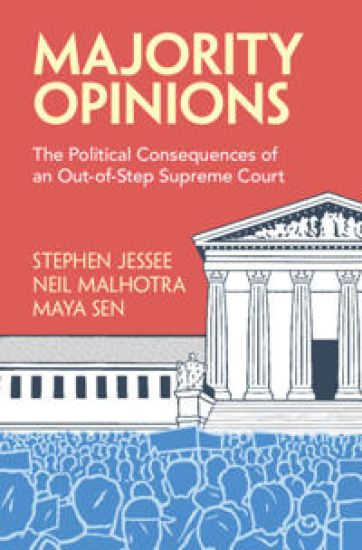
Majority Opinions

Majority Opinions

Stephen Jessee; Neil Malhotra; Maya Sen

Cambridge University Press
2026
pokkari
The Supreme Court's composition tends to remain stable over time, yet its docket and rulings change, affecting our understanding of the Court's broader political ramifications. In Majority Opinions, Stephen Jessee, Neil Malhotra and Maya Sen examine how the Supreme Court's alignment with public opinion shifts dramatically, shaping its legitimacy, approval, and vulnerability to reform. Introducing an empirical method and framework that systematically compares Americans' preferences on case outcomes with the Court's actual rulings, the authors uncover yawning gaps and unexpected alignments across issues and terms. They show how changes in court composition-Amy Coney Barrett replacing Ruth Bader Ginsburg, for example-can shift the Court's trajectory rightward, while docket choices can move rulings closer to public sentiment after unpopular rulings. Examining how the Supreme Court navigates a polarized political environment, the authors reveal how its choices have profoundly affect influence, legitimacy, and national policy.
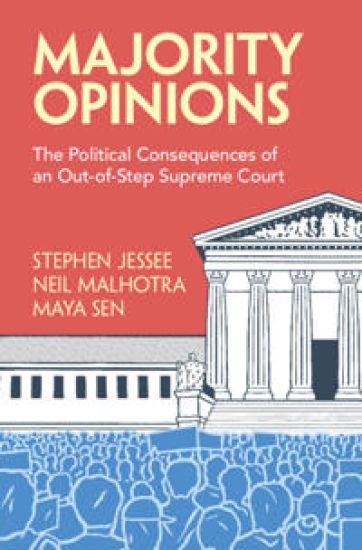
Majority Opinions

Majority Opinions

Stephen Jessee; Neil Malhotra; Maya Sen

Cambridge University Press
2026
sidottu
The Supreme Court's composition tends to remain stable over time, yet its docket and rulings change, affecting our understanding of the Court's broader political ramifications. In Majority Opinions, Stephen Jessee, Neil Malhotra and Maya Sen examine how the Supreme Court's alignment with public opinion shifts dramatically, shaping its legitimacy, approval, and vulnerability to reform. Introducing an empirical method and framework that systematically compares Americans' preferences on case outcomes with the Court's actual rulings, the authors uncover yawning gaps and unexpected alignments across issues and terms. They show how changes in court composition-Amy Coney Barrett replacing Ruth Bader Ginsburg, for example-can shift the Court's trajectory rightward, while docket choices can move rulings closer to public sentiment after unpopular rulings. Examining how the Supreme Court navigates a polarized political environment, the authors reveal how its choices have profoundly affect influence, legitimacy, and national policy.
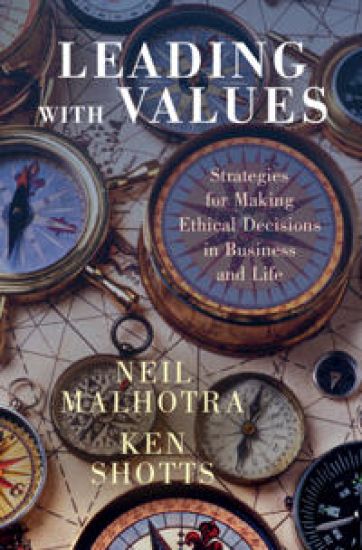
Leading With Values

Leading With Values

Neil Malhotra; Ken Shotts

Cambridge University Press
2026
nidottu
As societies become more polarized, there is increasing pressure for business leaders to have a sense of purpose and to make moral decisions. Being a good leader requires both a keen understanding of the realities of human decision making as well as an analysis of what is right and wrong. This book integrates lessons from three intellectual traditions – psychology, philosophy, and political economy – to guide readers on a journey to rigorously explore their values and decision making. The authors begin by examining people's intuitions about right and wrong. They then clarify principles that embody these intuitions and help readers engage with others whose intuitions or principles differ from their own. Ultimately, this book teaches readers how to be strategic as they lead with their values: as individuals, as designers of organizations, and as businesspeople interacting with societal institutions.
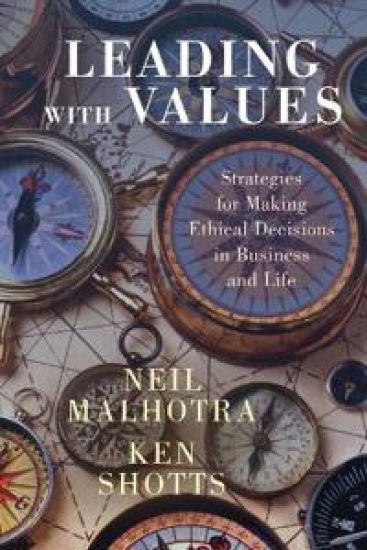
Leading With Values

Leading With Values

Neil Malhotra; Ken Shotts

Cambridge University Press
2022
sidottu
As societies become more polarized, there is increasing pressure for business leaders to have a sense of purpose and to make moral decisions. Being a good leader requires both a keen understanding of the realities of human decision making as well as an analysis of what is right and wrong. This book integrates lessons from three intellectual traditions – psychology, philosophy, and political economy – to guide readers on a journey to rigorously explore their values and decision making. The authors begin by examining people's intuitions about right and wrong. They then clarify principles that embody these intuitions and help readers engage with others whose intuitions or principles differ from their own. Ultimately, this book teaches readers how to be strategic as they lead with their values: as individuals, as designers of organizations, and as businesspeople interacting with societal institutions.